Business
4 Best Practices for Effective Enterprise Cloud Consulting
Published June 2, 2026
Introduction
Organizations face significant challenges in selecting effective cloud solutions, particularly as the landscape of enterprise technology continues to evolve rapidly. Effective enterprise cloud consulting plays a crucial role in helping organizations navigate these challenges by offering tailored strategies that enhance operational efficiency and mitigate risks related to data security and compliance. Organizations often find themselves overwhelmed by the multitude of cloud solutions available, making it difficult to identify the most suitable practices for their specific needs. Without a strategic approach to cloud consulting, organizations risk not only their operational efficiency but also their data security and compliance standing.
Define Enterprise Cloud Consulting and Its Importance
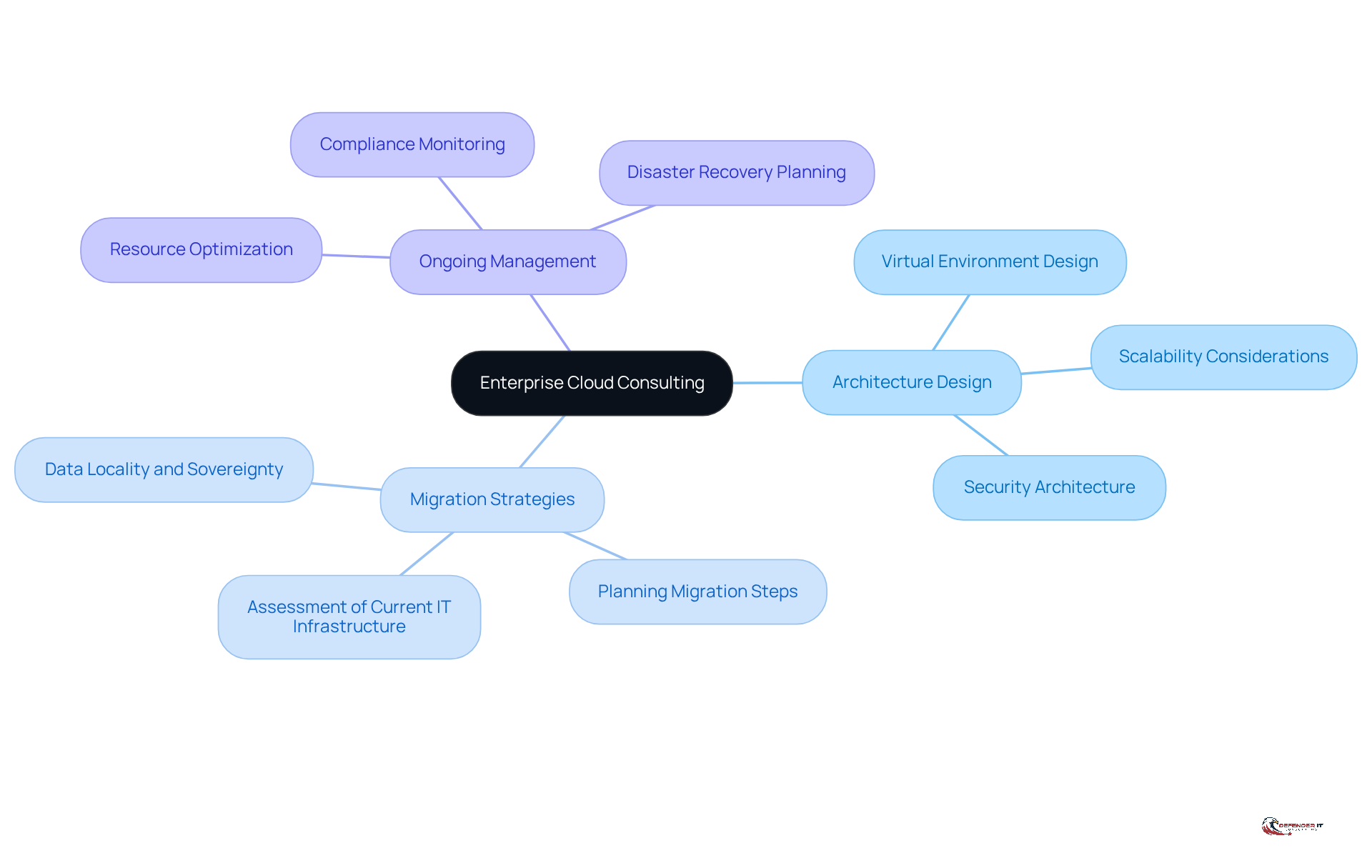
Navigating the complexities of enterprise technology adoption requires enterprise cloud consulting that offers strategic guidance tailored to specific business needs. Enterprise cloud consulting refers to the strategic guidance offered to businesses in adopting, managing, and optimizing cloud technologies. This advisory service includes key components such as:
- Architecture design for virtual environments
- Migration strategies
- Ongoing management of online resources
The significance of enterprise cloud consulting lies in its ability to assist organizations in overcoming challenges associated with adopting enterprise technology systems. It ensures that businesses can leverage the scalability, flexibility, and cost-effectiveness of such solutions while maintaining security and compliance. With companies increasingly relying on internet-based technologies, having effective advisory services is essential for maximizing virtual investments and minimizing risks associated with data breaches and regulatory violations.
According to Omdia, worldwide expenditure on infrastructure services for online storage hit US$110.9 billion in Q4 2025, underscoring the critical role of advisory services in maintaining secure and compliant digital environments. In 2026, businesses are expected to prioritize data locality and sovereignty, driven by regulatory pressures and the need for operational resilience. This shift highlights the importance of knowledgeable online approaches, as organizations must adapt to evolving compliance mandates and potential challenges, such as increased workloads from stricter cybersecurity protocols and more defined regulations. Organizations that neglect to prioritize expert advisory services may find themselves vulnerable to compliance failures and security breaches.
Identify Key Benefits of Enterprise Cloud Consulting
Engaging in enterprise cloud consulting offers organizations a strategic opportunity to improve operational efficiency and cut costs.
- Cost Efficiency: Organizations can achieve significant reductions in IT expenses by optimizing resource usage and implementing effective cost management strategies. For instance, expert consultants in technology can achieve 25-40% cost savings within the first quarter of engagement, as noted in recent studies.
- Scalability: Cloud consulting empowers businesses to adjust their IT resources dynamically based on demand, ensuring they only pay for what they use. This adaptability is essential, as 39% of entities are now employing hybrid computing strategies to improve their scalability, indicating a rising trend in the sector.
- Enhanced Security: With the increasing prevalence of cyber threats, expert consultants play a vital role in implementing robust security measures. This ensures sensitive information is protected and regulations are followed, acknowledging that misconfigurations represent 65% of security incidents, underscoring the significance of expert supervision.
- Enhanced Agility: Utilizing digital technologies enables companies to react quickly to market shifts and client needs. This agility comes from the rapid deployment of applications and services, crucial in today’s competitive landscape. Incorporating expert opinions on agility can further substantiate this point.
- Streamlined Operations: Cloud consulting aids in automating processes and optimizing workflows, leading to increased efficiency and productivity across the organization. Organizations that implement online services frequently indicate a 20-25% increase in employee productivity through improved collaboration tools, showcasing the concrete advantages of digital integration.
- Access to Expertise: Organizations gain access to specialized knowledge and skills that may not be available in-house. This ensures that strategies related to the digital infrastructure are aligned with industry best practices, enabling businesses to navigate the complexities of management effectively.
Ultimately, leveraging expert enterprise cloud consulting can transform an organization’s operational landscape, positioning it for sustained success in a competitive market.

Implement Best Practices for Effective Cloud Consulting
To navigate the complexities of enterprise cloud consulting effectively, organizations must adopt a structured approach that encompasses key best practices:
- Conduct a Comprehensive Assessment: Begin with a thorough evaluation of your current IT infrastructure, business objectives, and readiness for the adoption of online solutions. This assessment should identify gaps and opportunities for improvement, providing a clear picture of security, compliance, and governance challenges that may arise during migration. Identifying these gaps is essential to avoid pitfalls during migration. A well-executed assessment serves as a strategic roadmap for success in the digital landscape.
- Develop a Clear Online Strategy: Create a detailed roadmap that outlines objectives, timelines, and resources necessary for digital migration and optimization. This approach should not only align with overall business goals but also consider the unique regulatory requirements of your industry. Clearly defined objectives guide the migration process, ensuring critical aspects are not overlooked.
- Choose the Right Model: Select the suitable deployment model-public, private, or hybrid-based on your organization’s specific needs, regulatory requirements, and budget constraints. A hybrid strategy, for instance, allows for flexibility and scalability, accommodating varying workloads and compliance needs.
- Establish Strong Governance Frameworks: Implement governance practices that include monitoring usage, managing configurations, and ensuring compliance with industry regulations. This framework should address potential risks associated with online service adoption, such as unauthorized resources and misconfigurations, which can lead to significant security vulnerabilities. Recognizing that misconfigured settings are a primary cause of data breaches is crucial for effective governance.
- Prioritize Security and Compliance: Integrate security measures into every stage of consulting, from planning to implementation. Consistently assess and revise security protocols to tackle new threats, guaranteeing that your entity sustains a robust security stance throughout the online journey. Understanding shared security responsibilities is crucial to prevent costly data breaches and ensure compliance with regulations like GDPR and HIPAA.
- Foster Continuous Improvement: Encourage a culture of learning and adaptation by regularly reviewing performance metrics and seeking feedback from stakeholders. This iterative method enables organizations to enhance strategies and practices, ensuring that solutions remain aligned with evolving business needs and technological advancements. A recent survey revealed that 44% of respondents are looking to shift more workloads to online storage in the coming year, highlighting the need for continuous assessment and adjustment.
By implementing these best practices in enterprise cloud consulting, organizations can not only mitigate risks but also fully leverage the transformative potential of cloud technology.

Evaluate and Adapt Cloud Consulting Strategies Regularly
To maximize the effectiveness of cloud consulting strategies, organizations must adopt a proactive approach:
- Monitor Performance Metrics: Regularly track key performance indicators (KPIs) such as CPU usage, memory utilization, network latency, and security incidents. Ongoing assessments help organizations evaluate their digital strategies and pinpoint areas for improvement.
- Solicit Stakeholder Feedback: Engaging with users and stakeholders is essential for gathering insights on their experiences with online services. This feedback can highlight potential challenges and areas for enhancement, fostering a collaborative environment that drives project success.
- Stay Informed of Industry Trends: Keeping up with emerging technologies, regulatory changes, and best practices in online services is essential. Staying informed ensures that strategies remain relevant and effective in a rapidly changing landscape.
- Conduct Regular Security Audits: Implementing routine security assessments is vital for identifying vulnerabilities and ensuring compliance with industry standards such as GDPR, HIPAA, and PCI DSS. These audits help maintain a robust security posture and protect sensitive data.
- Adapt Strategies as Needed: Organizations must be prepared to pivot and adjust their consulting strategies based on performance data and stakeholder feedback. This adaptability is key to optimizing outcomes and ensuring alignment with business objectives.
- Provide Training and Support: Offering tailored training and assistance to stakeholders impacted by new computing systems is essential for facilitating transitions and minimizing resistance. Customized training sessions empower stakeholders with knowledge and skills, increasing their confidence in using new technologies.
- Highlight Risk Management: Effective risk management is essential for securing stakeholder confidence in online computing projects. Recognizing possible risks early and creating plans for mitigation fosters trust and equips stakeholders for challenges that may occur.
- Learn from Case Studies: Incorporating particular case studies that showcase the effectiveness of stakeholder involvement and feedback in technology advisory can offer practical insights and strengthen the best practices discussed.
- Address Common Pitfalls: Be aware of common pitfalls related to stakeholder feedback or performance monitoring to help avoid misapplication of the practices. Comprehending these challenges can result in more effective execution of plans.
Ultimately, a commitment to continuous improvement can significantly enhance the success of cloud consulting initiatives.

Conclusion
Organizations often struggle to keep pace with rapid technological advancements and the complexities they introduce. Engaging in enterprise cloud consulting offers a strategic advantage for organizations aiming to navigate these challenges effectively. By leveraging expert guidance, businesses can manage their cloud strategies efficiently, ensuring they meet operational needs while optimizing technology investments.
Throughout the article, several key benefits of enterprise cloud consulting were highlighted, including:
- Cost efficiency
- Scalability
- Enhanced security
- Streamlined operations
These advantages underscore the critical role that knowledgeable consultants play in helping organizations adapt to evolving market demands and regulatory requirements. Furthermore, implementing best practices, such as conducting comprehensive assessments and prioritizing security, is essential for maximizing the effectiveness of cloud consulting efforts.
In a landscape defined by rapid change, the ability to adapt and innovate through expert consulting will determine long-term success. As organizations increasingly rely on cloud technologies, embracing continuous improvement and staying informed about industry trends will be vital for sustained success. By adopting a proactive approach and engaging with expert consultants, businesses can not only mitigate risks but also unlock the full potential of their cloud investments, positioning themselves favorably in a competitive landscape.
Frequently Asked Questions
What is enterprise cloud consulting?
Enterprise cloud consulting refers to the strategic guidance offered to businesses in adopting, managing, and optimizing cloud technologies. It includes services such as architecture design for virtual environments, migration strategies, and ongoing management of online resources.
Why is enterprise cloud consulting important?
It is important because it helps organizations overcome challenges associated with adopting enterprise technology systems. It enables businesses to leverage the scalability, flexibility, and cost-effectiveness of cloud solutions while ensuring security and compliance.
What are the key components of enterprise cloud consulting?
The key components include architecture design for virtual environments, migration strategies, and ongoing management of online resources.
How does enterprise cloud consulting help with security and compliance?
Enterprise cloud consulting assists organizations in maintaining security and compliance by providing expert guidance that helps them navigate regulatory pressures and adapt to evolving compliance mandates, thereby minimizing risks associated with data breaches and regulatory violations.
What trends are influencing enterprise cloud consulting in the coming years?
Trends include an increased focus on data locality and sovereignty due to regulatory pressures and the need for operational resilience. Organizations are expected to adapt to stricter cybersecurity protocols and more defined regulations.
What are the risks of neglecting enterprise cloud consulting?
Organizations that neglect expert advisory services may become vulnerable to compliance failures and security breaches, which can have significant financial and reputational consequences.
List of Sources
- Define Enterprise Cloud Consulting and Its Importance
- Cloud Strategy Consulting: Is it Right for Your Company? (https://deployflow.co/blog/is-cloud-strategy-consulting-right-for-your-business)
- Why cloud computing is now a business leadership priority in 2026 (https://digital4business.eu/cloud-computing-business-leadership-2026)
- A pivotal 2026 for cloud strategy (https://cloudcomputing-news.net/news/cloud-strategy-uk-2026-market-changes-dynamics)
- 28 Captivating Cloud Computing Statistics (https://leftronic.com/blog/cloud-computing-statistics)
- 100+ Cloud Computing Statistics for 2026 | Complete Report (https://softjourn.com/insights/cloud-computing-stats)
- Identify Key Benefits of Enterprise Cloud Consulting
- Does Your Business Really Need Expert Cloud Computing in 2026? Here’s (https://otgconsulting.net/blog/does-your-business-really-need-expert-cloud-computing-in-2026-heres-the-truth)
- Cloud Services 2026: 7 Reasons Businesses Can’t Wait | Cyfuture (https://cyfuture.com/blog/from-cost-savings-to-scalability-7-reasons-to-embrace-cloud-services-in-2026)
- 49 Cloud Computing Statistics You Need to Know in 2026 (https://finout.io/blog/49-cloud-computing-statistics-in-2026)
- 100+ Cloud Computing Statistics: A 2026 Market Snapshot (https://cloudzero.com/blog/cloud-computing-statistics)
- 55 Cloud Computing Statistics for 2026 (https://spacelift.io/blog/cloud-computing-statistics)
- Implement Best Practices for Effective Cloud Consulting
- Cloud Readiness Assessment – Everything You Need to Know | Cloudflight (https://cloudflight.io/en/blog/cloud-readiness-assessment-everything-you-need-to-know)
- A Comprehensive Guide to Cloud Assessment | kloudr (https://kloudr.com/uncover-your-cloud-strategy-a-comprehensive-guide-to-cloud-assessment)
- What Is Cloud Assessment? | NetWitness (https://netwitness.com/cyber-glossary/cloud-assessment)
- Cloud Assessments: Imperitive for Successful Cloud Migration (https://blog.technologent.com/using-cloud-assessments-to-prepare-for-cloud-migration)
- Cloud Readiness Assessment: A Complete Roadmap to Migration (https://tierpoint.com/blog/cloud/cloud-readiness-assessments-help-reduce-cloud-migration-risks)
- Evaluate and Adapt Cloud Consulting Strategies Regularly
- Why cloud projects need a small team of effective IT stakeholders to keep things going (https://cloudcomputing-news.net/news/why-cloud-projects-need-small-team-effective-it-stakeholders-keep-things-going)
- Cloud Monitoring Metrics (https://meegle.com/en\_us/topics/cloud-monitoring/cloud-monitoring-metrics)
- Why Project Stakeholder Feedback is Critical for Success | PMAlliance, Inc (https://pm-alliance.com/project-stakeholder-feedback)
- Here’s how you can engage stakeholders effectively in cloud computing projects. (https://linkedin.com/advice/1/heres-how-you-can-engage-stakeholders-effectively-z73pc)
- The Metrics That Make or Break Your Cloud Performance (https://newhorizons.com/resources/blog/cloud-performance-metrics)