Social Media Marketing
Understanding the Risk Definition in Cybersecurity for Leaders
Published May 14, 2026
Introduction
Organizations are increasingly confronted with a diverse range of cyber threats that pose risks to operational integrity and sensitive data. Leaders must grasp what cybersecurity risk entails to effectively safeguard their organizations, as it informs resource allocation and compliance strategies while ensuring business continuity. As cyber threats evolve, organizations struggle to keep pace with the necessary defenses. Given the rising complexity of these risks, particularly with the advent of new technologies, leaders must develop effective strategies to assess and manage these threats. Without a robust strategy to assess and manage these risks, organizations may face severe operational disruptions and financial repercussions.
Define Cybersecurity Risk: A Comprehensive Overview
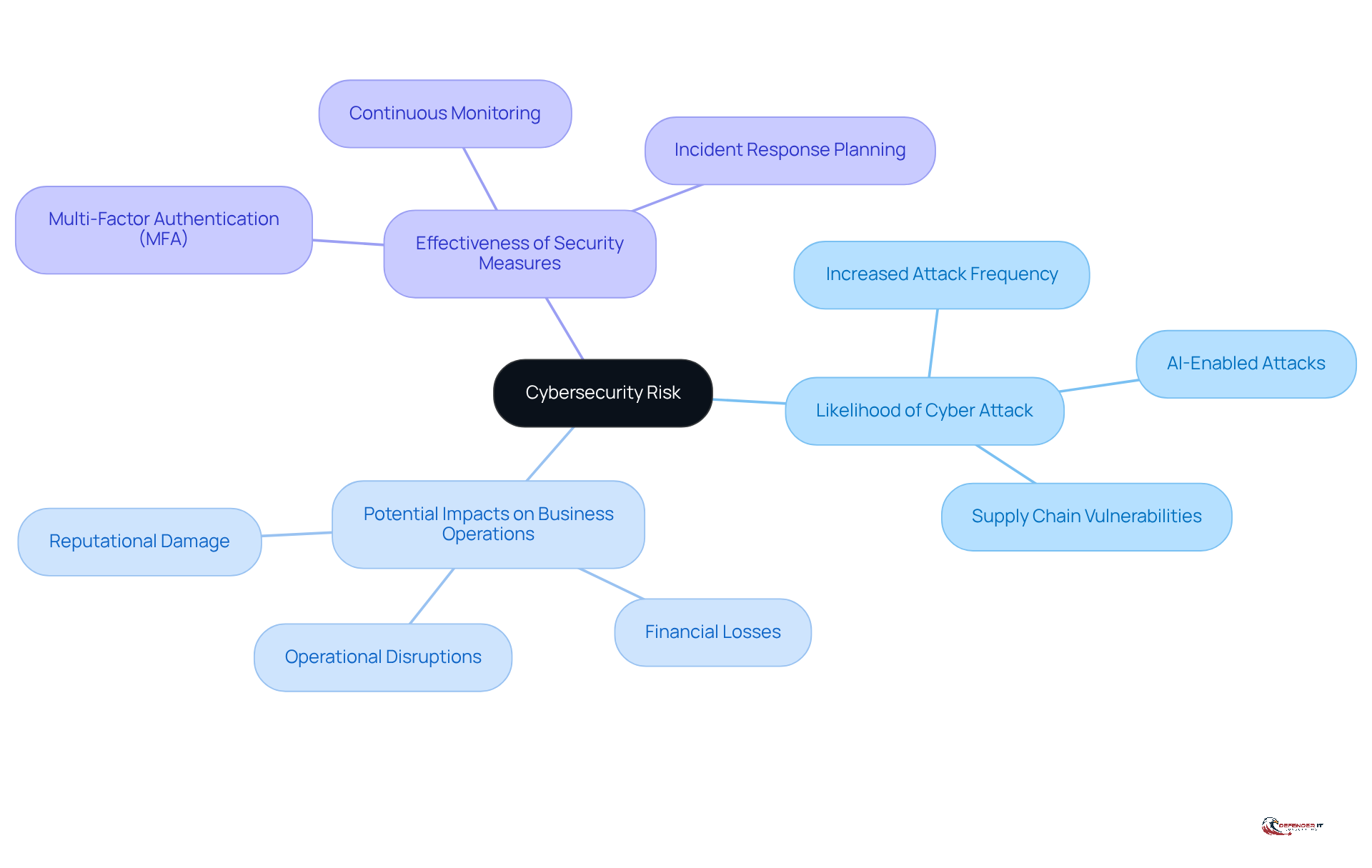
Organizations are increasingly vulnerable to cyber threats, which can lead to severe operational disruptions. The risk definition in cyber security encompasses various factors, such as:
- The likelihood of a cyber attack
- Potential impacts on business operations
- The effectiveness of existing security measures
Understanding these threats is crucial for leaders because it shapes how they allocate resources, ensure compliance, and maintain business continuity. For instance, a financial organization may face significant security threats due to the sensitive nature of its information, necessitating robust protective measures to mitigate potential breaches. Ultimately, a robust understanding of cybersecurity threats is essential for maintaining operational integrity and protecting sensitive information.
Contextualize Cybersecurity Risk: Importance for Business Leaders
For business leaders, the implications of digital security challenges extend far beyond technical issues; they are integral to effective business management. As organizations increasingly depend on digital infrastructure, the potential for cyber incidents expands, making the risk definition in cyber security essential for leaders to prioritize in their strategic planning. Effectively managing security threats enhances business resilience, protects brand reputation, and ensures compliance with regulatory requirements.
In 2026, cyber incidents rank as the top global threat for the fifth consecutive year, with a score of 42% of responses, underscoring the urgency for leaders to adopt proactive measures. For instance, a healthcare entity that neglects to tackle digital security threats may encounter not only financial repercussions but also a decline in patient confidence. This neglect can lead to significant financial losses and a deterioration of trust among stakeholders, with 30% of breaches involving stolen or misused credentials.
According to 49% of executives, conducting frequent evaluations of cyber threats is one of the top three strategies for mitigating technology risks, which aligns with the risk definition in cyber security and offers a specific measure that leaders can implement to improve their overall resilience.

Explore the Origins of Cybersecurity Risk: Historical Development
The landscape of digital security threats has evolved dramatically since computing began, presenting new challenges for organizations. Initially, online security concerns focused on basic data protection. As technology advanced, cyber threats became increasingly complex. The arrival of the internet in the 1990s marked a significant turning point, leading to a surge in cybercrime and the need for comprehensive management strategies.
Events such as:
- The Morris Worm in 1988
- The rise of ransomware in the 2000s
have shaped our understanding of cybersecurity challenges, prompting organizations to adopt more proactive measures. Today, leaders face complex challenges that necessitate a historical perspective to guide their strategies.

Identify Key Characteristics of Cybersecurity Risk: Components and Variations
The risk definition in cyber security encompasses critical elements such as danger, vulnerability, and impact, necessitating a comprehensive understanding for effective management. Risks can arise from various sources, including cybercriminals, insider threats, and even natural disasters. Vulnerabilities represent weaknesses within a company’s systems that can be exploited by these threats. The consequences of security incidents can be severe, affecting not just finances but also an organization’s reputation.
In 2026, organizations face a troubling rise in cybersecurity challenges, marked by an 89% increase in attacks from AI-enabled adversaries. This trend underscores the need for organizations to proactively enhance their defenses to address these evolving threats. For instance, vulnerability exploitation serves as the initial access vector for 20% of all breaches, a figure that has risen by 34% year-over-year. Additionally, there has been a 42% increase in zero-day vulnerabilities exploited prior to public disclosure, highlighting the critical need for robust vulnerability assessments. Furthermore, 40% of vulnerabilities exploited by China-nexus adversaries targeted edge devices, emphasizing the specific threats organizations face in 2026.
The variations in cybersecurity threats are often dictated by industry-specific factors and regulatory requirements. Heavily monitored sectors like finance and healthcare encounter distinct challenges, including stringent compliance mandates that necessitate tailored management approaches. Conversely, smaller businesses may face different risk profiles, often lacking the resources to implement comprehensive security measures. This disparity highlights the significance of conducting thorough threat and vulnerability assessments customized to the unique context of each organization.
Understanding these dynamics is essential for organizations to develop robust security strategies that ensure resilience in an increasingly digital landscape. As Michelle Moore, PhD, notes, “AI-powered cyber-attacks are emerging as a significant challenge in the cybersecurity arena.

Conclusion
In today’s digital landscape, the complexity of cybersecurity risks poses significant challenges for organizational leaders. Understanding the intricacies of cybersecurity threats is essential for informed decision-making that safeguards organizations from potential attacks and operational disruptions. This knowledge enhances resource allocation. It also fortifies compliance and business continuity efforts.
The article delves into several critical aspects of cybersecurity risk, including the likelihood of attacks, potential impacts on operations, and the effectiveness of current security measures. It highlights the historical evolution of cyber threats, the increasing complexity of risks, and the necessity for tailored strategies based on industry-specific vulnerabilities. Moreover, it emphasizes the importance of regular evaluations of cyber threats as a proactive measure for enhancing organizational resilience.
Neglecting cybersecurity can lead to severe repercussions for organizations. Therefore, it is essential for leaders to prioritize cybersecurity risk management within their strategic frameworks. By fostering a culture of awareness and vigilance, organizations can not only protect their sensitive information but also maintain their reputation and trust among stakeholders. Ultimately, neglecting cybersecurity risk management can jeopardize not only an organization’s assets but also its very existence in the digital realm.
Frequently Asked Questions
What is cybersecurity risk?
Cybersecurity risk refers to the potential threats and vulnerabilities that organizations face regarding cyber attacks, which can lead to severe operational disruptions.
What factors contribute to the definition of cybersecurity risk?
The definition of cybersecurity risk encompasses the likelihood of a cyber attack, the potential impacts on business operations, and the effectiveness of existing security measures.
Why is understanding cybersecurity threats important for organizations?
Understanding cybersecurity threats is crucial for leaders as it influences how they allocate resources, ensure compliance, and maintain business continuity.
How do different organizations face varying levels of cybersecurity risk?
Different organizations, such as financial institutions, may face significant security threats due to the sensitive nature of their information, necessitating robust protective measures to mitigate potential breaches.
What is the ultimate goal of understanding cybersecurity threats?
The ultimate goal is to maintain operational integrity and protect sensitive information from cyber threats.
List of Sources
- Define Cybersecurity Risk: A Comprehensive Overview
- Top Cybersecurity Trends, 2026: Cyber Defenses Face a New Age of Risk | Datos Insights (https://datos-insights.com/reports/top-cybersecurity-trends-2026-cyber-defenses-face-a-new-age-of-risk)
- Navigating the Cyber Threat Landscape: 2026 Outlook and Emerging Risks (https://panorays.com/blog/cyber-threat-landscape-2026-emerging-risks)
- 2026 Global Threat Report | Latest Cybersecurity Trends & Insights | CrowdStrike (https://crowdstrike.com/en-us/global-threat-report)
- Top Cybersecurity Threats [2025] (https://onlinedegrees.sandiego.edu/top-cyber-security-threats)
- 205 Cybersecurity Stats and Facts for 2026 (https://vikingcloud.com/blog/cybersecurity-statistics)
- Contextualize Cybersecurity Risk: Importance for Business Leaders
- Cyber Ranks as Top Business Threat, According to 2026 Allianz Risk Barometer – Cybersecurity Magazine (https://cybersecurity-magazine.com/cyber-ranks-as-top-business-threat-according-to-2026-allianz-risk-barometer)
- How Business Leaders Should Evaluate Cybersecurity Solutions in 2026 (https://meriplex.com/how-business-leaders-should-evaluate-cybersecurity-solutions-in-2026)
- Cyber Risk in 2026: Closing the Executive Decision Gap (https://aon.com/en/insights/articles/cyber-risk-in-2026-closing-the-executive-decision-gap)
- Gartner Identifies the Top Cybersecurity Trends for 2026 (https://gartner.com/en/newsroom/press-releases/2026-02-05-gartner-identifies-the-top-cybersecurity-trends-for-2026)
- Allianz Risk Barometer 2026: Cyber and AI as major business risks (https://allianz.com/en/mediacenter/news/articles/260203-allianz-risk-barometer-2026-cyber-and-ai-as-major-business-risks.html)
- Explore the Origins of Cybersecurity Risk: Historical Development
- mitsloan.mit.edu (https://mitsloan.mit.edu/ideas-made-to-matter/mit-report-details-new-cybersecurity-risks)
- Top Cybersecurity Statistics: Facts, Stats and Breaches for 2025 (https://fortinet.com/resources/cyberglossary/cybersecurity-statistics)
- 205 Cybersecurity Stats and Facts for 2026 (https://vikingcloud.com/blog/cybersecurity-statistics)
- Identify Key Characteristics of Cybersecurity Risk: Components and Variations
- 2026 Global Threat Report | Latest Cybersecurity Trends & Insights | CrowdStrike (https://crowdstrike.com/en-us/global-threat-report)
- Experts share top cybersecurity concerns for 2026 (https://news.vt.edu/articles/2026/02/top-cybersecurity-concerns-2026-experts.html)
- Top Cyber Risks in 2026: How to Avoid Hidden Network Vulnerabilities (https://zeronetworks.com/blog/top-cyber-risks-in-2026-how-to-avoid-hidden-network-vulnerabilities)
- Top Cybersecurity Threats [2025] (https://onlinedegrees.sandiego.edu/top-cyber-security-threats)
- Cybersecurity Statistics 2026 Report (https://ordr.net/cybersecurity-statistics)