Cyber Insurance
Understanding the Third Party Risk Management Process for Security Leaders
Published May 11, 2026
Introduction
Organizations increasingly face vulnerabilities as they depend on third-party vendors, exposing them to security and compliance risks. The third-party risk management (TPRM) process emerges as a vital framework for identifying, assessing, and mitigating these threats, ensuring that external partnerships do not jeopardize an organization’s integrity. However, as regulatory scrutiny intensifies and operational complexities mount, what strategies can security leaders employ to tackle the challenges of TPRM? Addressing these challenges is essential for security leaders to fortify their organizations against potential threats.
Define Third Party Risk Management (TPRM)
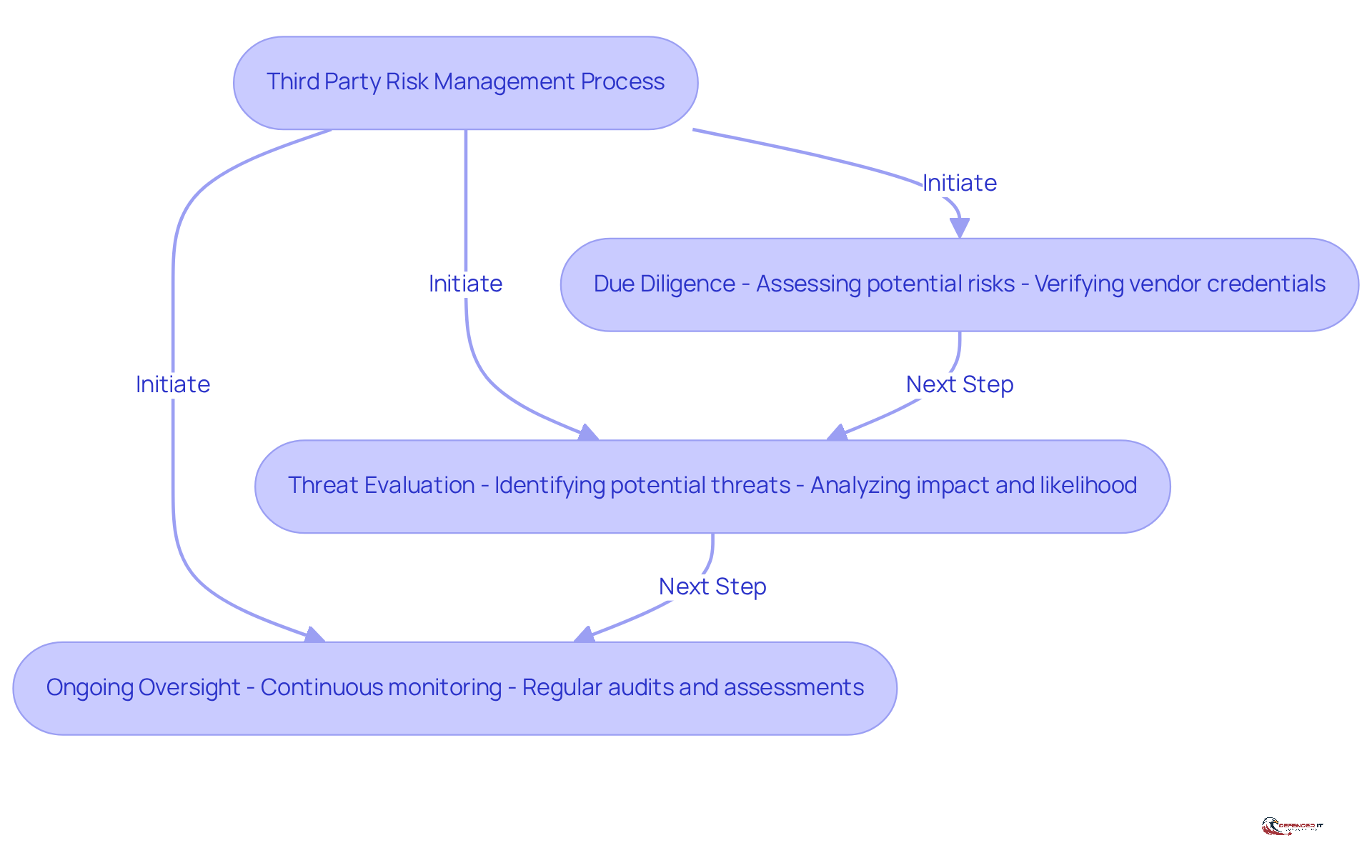
Organizations often struggle to maintain security and compliance due to the complexities introduced by third-party relationships. The third party risk management process is a structured method for recognizing, evaluating, and reducing threats associated with a company’s connections to outside vendors, suppliers, or partners. In today’s interconnected business environment, where reliance on third parties for various services is prevalent, the third party risk management process has become essential. This process, known as the third party risk management process, involves actions such as:
to ensure that third-party relationships do not compromise the entity’s security stance or compliance responsibilities. Effective management of the third party risk management process safeguards data and operations while also protecting the entity’s reputation from external threats.
As organizations encounter increased scrutiny and regulatory requirements, especially in sectors like finance and healthcare, the importance of strong third-party management practices is underscored by the reality that operational challenges remain a primary concern for executives. Moreover, successful applications of third-party management in regulated sectors demonstrate that proactive threat management enhances resilience and compliance, making it a critical focus for security leaders today. Thus, prioritizing the third party risk management process is not just a regulatory requirement but a strategic imperative for organizations aiming to thrive in a complex landscape.
Explain the Importance of TPRM in Business Operations
In an era where reliance on external providers is growing, the importance of the third party risk management process cannot be overstated. As organizations increasingly depend on external providers for essential functions, they inadvertently expose themselves to a complex web of vulnerabilities that must be navigated carefully. This exposure includes risks such as data breaches, compliance failures, and reputational harm. A significant breach at Navia Benefit Solutions, which compromised sensitive health information for nearly 2.7 million individuals, exemplifies the dire consequences of insufficient supplier evaluations. These incidents show that a vendor’s cybersecurity weaknesses can lead to significant vulnerabilities across the organization.
Furthermore, the third party risk management process is facing intensifying regulatory scrutiny. Authorities are emphasizing the necessity for operational proof rather than just contractual guarantees. In 2026, failure to adapt could lead to severe financial repercussions and reputational damage, as highlighted in the FCA’s report indicating that 40% of incidents involved third-party failures. This shift necessitates that organizations implement proactive strategies within their third party risk management process to enhance operational resilience and safeguard their integrity. Notably, 88% of cybersecurity leaders express concern regarding supply chain challenges, underscoring the need for robust third-party management processes.
A strong third party risk management process not only identifies and mitigates threats but also fosters accountability and transparency in supplier relationships. Organizations frequently overlook the need to reevaluate dependency or concentration concerns after onboarding a vendor, which can result in significant vulnerabilities. By aligning specific services with essential business processes, organizations can reveal concealed dependencies and concentration challenges, facilitating faster and more informed decision-making during disruptions. As the landscape of third-party risk continues to evolve, a robust third party risk management process is essential for maintaining compliance and safeguarding organizational assets.

Outline the Phases of the Third Party Risk Management Process
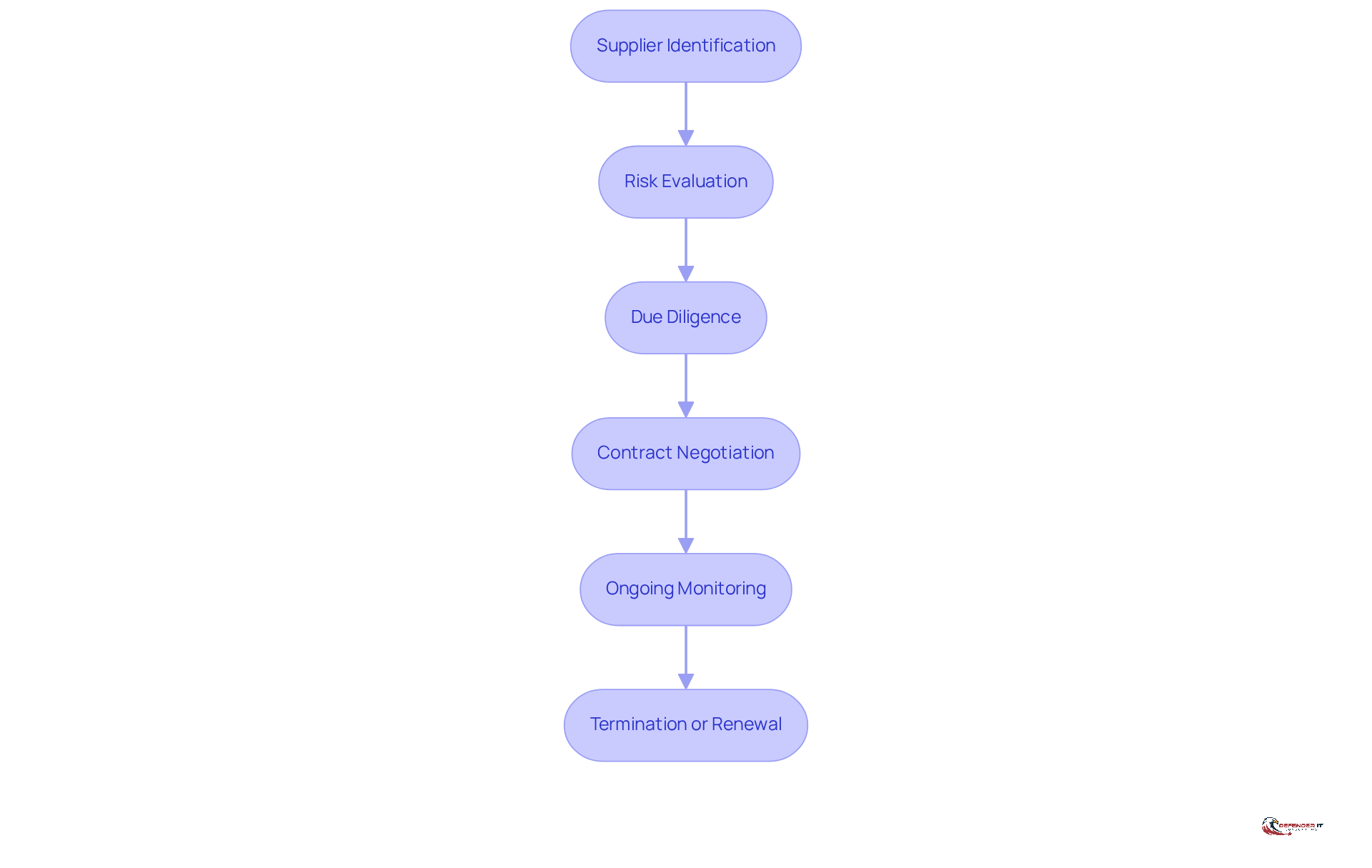
Navigating the complexities of third-party relationships can pose significant challenges for organizations. The Third Party Risk Management (TPRM) process typically consists of several key phases:
- Supplier Identification: Recognizing all external partners and their roles within the organization.
- Risk Evaluation: Assessing the inherent threats linked to each supplier, including their security measures and compliance status.
- Due Diligence: Conducting thorough investigations into the supplier’s background, financial stability, and security measures.
- Contract Negotiation: Establishing clear terms and conditions that outline security expectations and responsibilities.
- Ongoing Monitoring: Continuously evaluating the supplier’s performance and threat profile to ensure compliance and security standards are upheld.
- Termination or Renewal: Determining whether to maintain the relationship based on the vendor’s performance and evaluation outcomes.
By implementing a structured third party risk management process, organizations can significantly mitigate risks and enhance their operational resilience.
Identify Challenges in Implementing TPRM
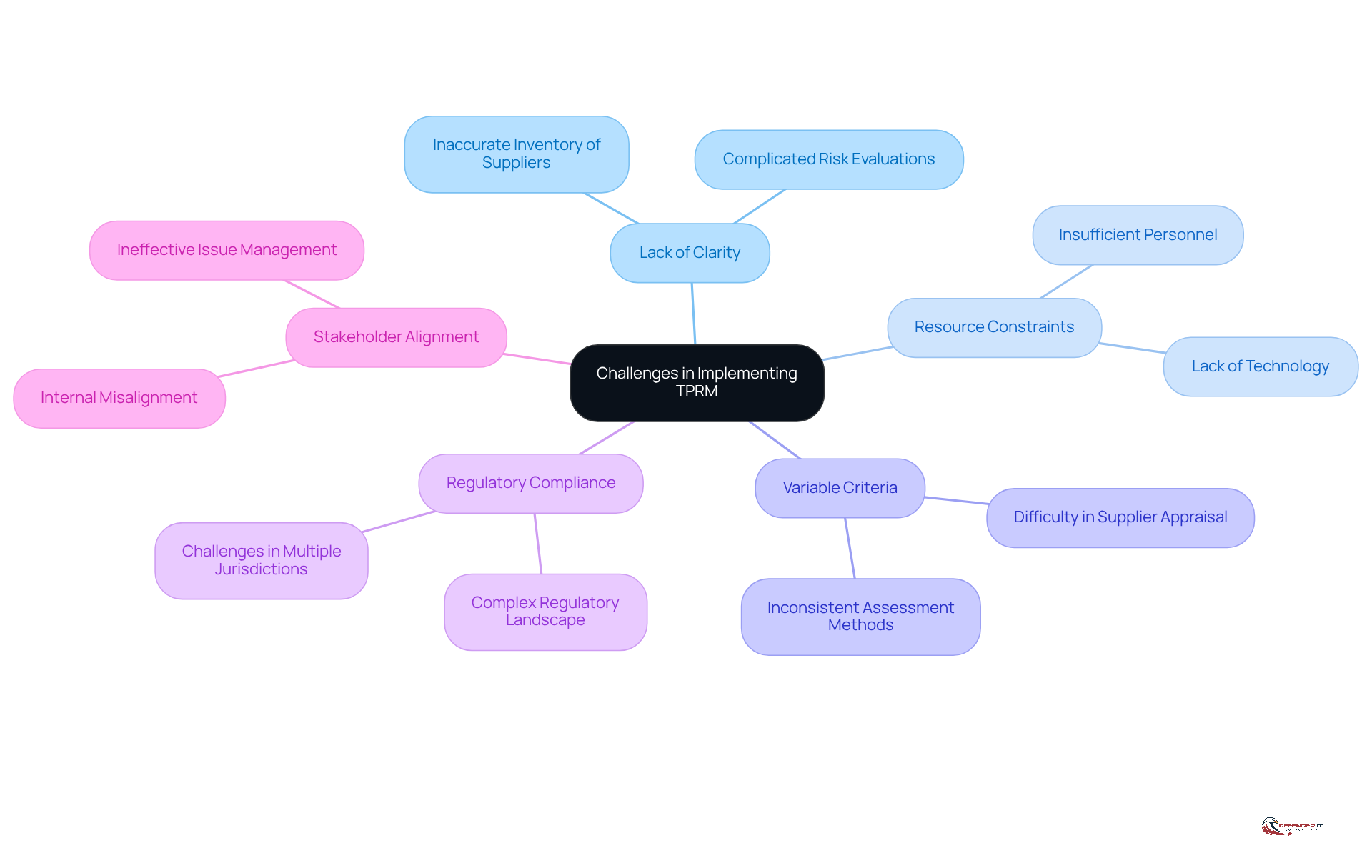
Establishing a successful third party risk management process is fraught with challenges that can undermine its effectiveness. These challenges include:
- Lack of Clarity: Organizations struggle to maintain an accurate inventory of their third-party suppliers, complicating risk evaluations.
- Resource Constraints: Many entities lack the necessary resources, including personnel and technology, to implement comprehensive TPRM processes.
- Variable Criteria: Without uniform assessment methods, companies may encounter difficulties in appraising suppliers consistently.
- Regulatory Compliance: Navigating the complex landscape of regulations can be daunting, especially for entities operating in multiple jurisdictions.
- Stakeholder Alignment: Ensuring that all internal parties comprehend and endorse third-party management initiatives can be challenging, leading to misalignment and ineffective issue management.
A strategic approach is essential to overcoming these obstacles and ensuring a robust third party risk management process.
Present Best Practices for Effective Third Party Risk Management
To effectively manage third-party risks, organizations must adopt a structured approach that encompasses several best practices:
- Establish Clear Policies: Create thorough TPRM policies that outline roles, responsibilities, and procedures for managing third-party threats. This clarity is essential for ensuring accountability and consistency in management efforts related to uncertainties.
- Conduct Regular Evaluations: Establish a timetable for ongoing evaluations to continuously monitor and manage vendor challenges. Frequent assessments assist companies in remaining proactive against potential weaknesses and adjusting to evolving threat environments. Regular monitoring is crucial because it helps organizations react quickly to new threats.
- Utilize Technology: Leverage third-party management software and tools to automate processes, improve data accuracy, and enhance visibility into vendor challenges. Technology solutions can offer real-time insights. This capability allows organizations to respond quickly to new threats. As third-party risk management develops, organizations should concentrate on implementing more intelligent, quicker, and justifiable decision-making technologies that correspond with the digital economy.
- Engage Stakeholders: Foster collaboration among internal teams, including IT, compliance, and procurement, to ensure a unified approach to TPRM. Cross-disciplinary collaboration improves the effectiveness of management strategies and aligns organizational goals.
- Provide Training: Offer training programs for employees to enhance awareness about third-party challenges and the significance of compliance. Trained personnel are better prepared to recognize and reduce challenges associated with vendor relationships.
By implementing these optimal methods, companies can greatly bolster their third-party risk management process, thus improving their durability against possible threats associated with external partnerships. Addressing these gaps in TPRM integration is essential for organizations aiming to safeguard against the complexities of third-party relationships.

Conclusion
In today’s interconnected business landscape, effective third party risk management is essential for organizational success. Organizations must identify, evaluate, and mitigate risks from third-party relationships to safeguard their operations and reputations.
Throughout this discussion, key insights have emerged, highlighting the critical phases of the third party risk management process, including:
- Supplier identification
- Risk evaluation
- Ongoing monitoring
The importance of adopting best practices, such as:
- Clear policies
- Regular evaluations
- Stakeholder engagement
has been emphasized as essential to overcoming challenges in implementing effective TPRM. Furthermore, given the growing regulatory scrutiny, organizations must remain proactive in their risk management efforts.
Given these challenges, organizations must prioritize strengthening their third party risk management processes. By doing so, they can ensure compliance and bolster their resilience against the myriad of risks associated with third-party dependencies. Neglecting TPRM can expose organizations to significant risks, undermining their operational integrity and stakeholder trust.
Frequently Asked Questions
What is Third Party Risk Management (TPRM)?
Third Party Risk Management (TPRM) is a structured process that organizations use to recognize, evaluate, and reduce threats associated with their relationships with outside vendors, suppliers, or partners. It aims to ensure that these relationships do not compromise security or compliance responsibilities.
Why is TPRM important in today’s business environment?
TPRM is crucial because organizations increasingly rely on external providers for essential functions, exposing themselves to risks such as data breaches, compliance failures, and reputational harm. Effective TPRM helps safeguard data and operations while protecting the organization’s reputation.
What actions are involved in the third party risk management process?
The TPRM process includes due diligence, threat evaluation, and ongoing oversight to manage risks associated with third-party relationships effectively.
How do regulatory requirements affect TPRM?
Regulatory scrutiny on TPRM is intensifying, with authorities requiring operational proof rather than just contractual guarantees. Organizations that fail to adapt to these requirements may face financial repercussions and reputational damage.
What are some consequences of insufficient TPRM?
Insufficient TPRM can lead to significant vulnerabilities, such as data breaches and compliance failures. An example is the breach at Navia Benefit Solutions, which compromised sensitive health information for nearly 2.7 million individuals.
How does TPRM contribute to operational resilience?
A strong TPRM process identifies and mitigates threats, fosters accountability, and enhances transparency in supplier relationships. It also helps organizations reevaluate dependencies and concentration concerns, facilitating informed decision-making during disruptions.
What percentage of cybersecurity leaders are concerned about supply chain challenges?
88% of cybersecurity leaders express concern regarding supply chain challenges, highlighting the need for robust TPRM processes.
Why should organizations prioritize TPRM?
Prioritizing TPRM is essential not just for regulatory compliance but also as a strategic imperative to thrive in a complex landscape, ensuring the protection of organizational assets and integrity.
List of Sources
- Define Third Party Risk Management (TPRM)
- thehackernews.com (https://thehackernews.com/2026/04/why-third-party-risk-is-biggest-gap-in.html)
- openpr.com (https://openpr.com/news/4470562/third-party-risk-market-outlook-to-2032-18-5-cagr)
- thehackernews.com (https://thehackernews.com/2026/01/new-research-64-of-3rd-party.html)
- cybersecuritydive.com (https://cybersecuritydive.com/news/third-party-risk-cyberattacks-supply-chain-ey-survey/746877)
- app.govly.com (https://app.govly.com/public/signals/84721)
- Explain the Importance of TPRM in Business Operations
- ncontracts.com (https://ncontracts.com/nsight-blog/march-2026-vendor-management-news)
- businesswire.com (https://businesswire.com/news/home/20260312118257/en/Ncontracts-Releases-2026-State-of-Third-Party-Risk-Management-Survey-Report)
- forbes.com (https://forbes.com/councils/forbestechcouncil/2026/03/31/evolving-from-third-party-risk-management-to-third-party-resilience)
- piranirisk.com (https://piranirisk.com/blog/why-third-party-risk-will-be-the-first-domino-to-fall-in-2026)
- secureframe.com (https://secureframe.com/blog/third-party-risk-statistics)
- Outline the Phases of the Third Party Risk Management Process
- isaca.org (https://isaca.org/resources/news-and-trends/industry-news/2026/enhancing-third-party-risk-management-moving-from-questionnaire-fatigue-to-contextual-assurance)
- forbes.com (https://forbes.com/councils/forbestechcouncil/2026/03/31/evolving-from-third-party-risk-management-to-third-party-resilience)
- oceg.org (https://oceg.org/2026-key-trends-in-third-party-risk-management)
- vanta.com (https://vanta.com/collection/tprm/tprm-lifecycle)
- surecloud.com (https://surecloud.com/blog-hub/third-party-risk-management-key-trends-to-expect-in-2026)
- Identify Challenges in Implementing TPRM
- upguard.com (https://upguard.com/blog/tprm-trends)
- tprassociation.org (https://tprassociation.org/post/2026-tprm-state-of-the-industry)
- kpmg.com (https://kpmg.com/us/en/articles/2025/renewed-urgency-third-party-risk-management.html)
- resilientx.com (https://resilientx.com/blog/common-third-party-risk-management-challenges)
- oceg.org (https://oceg.org/2026-key-trends-in-third-party-risk-management)
- Present Best Practices for Effective Third Party Risk Management
- ncontracts.com (https://ncontracts.com/nsight-blog/march-2026-vendor-management-news)
- tprassociation.org (https://tprassociation.org/post/2026-tprm-state-of-the-industry)
- isaca.org (https://isaca.org/resources/news-and-trends/industry-news/2026/enhancing-third-party-risk-management-moving-from-questionnaire-fatigue-to-contextual-assurance)
- ganintegrity.com (https://ganintegrity.com/resources/blog/tprm-is-now-a-supply-chain-resilience-imperative)
- kpmg.com (https://kpmg.com/nz/en/insights/risk-management/the-2026-kpmg-global-third-party-risk-management-survey.html)