Social Media Marketing
What Is Risk in Cyber Security? Understanding Its Impact Today
Published April 7, 2026
Introduction
In an era where digital infrastructure is paramount, the stakes of cyber security have reached unprecedented heights. Organizations are confronted with a formidable range of threats, including:
- Advanced ransomware attacks
- Vulnerabilities that arise from remote work
- Vulnerabilities that arise from cloud computing
Grasping the essence of risk in cyber security is crucial for navigating this intricate landscape; it encompasses not only technical vulnerabilities but also the human factors that can precipitate breaches. As cyber threats continue to evolve and intensify, organizations must consider how to effectively protect their assets while simultaneously cultivating a culture of security awareness among employees.
Define Cyber Security Risk
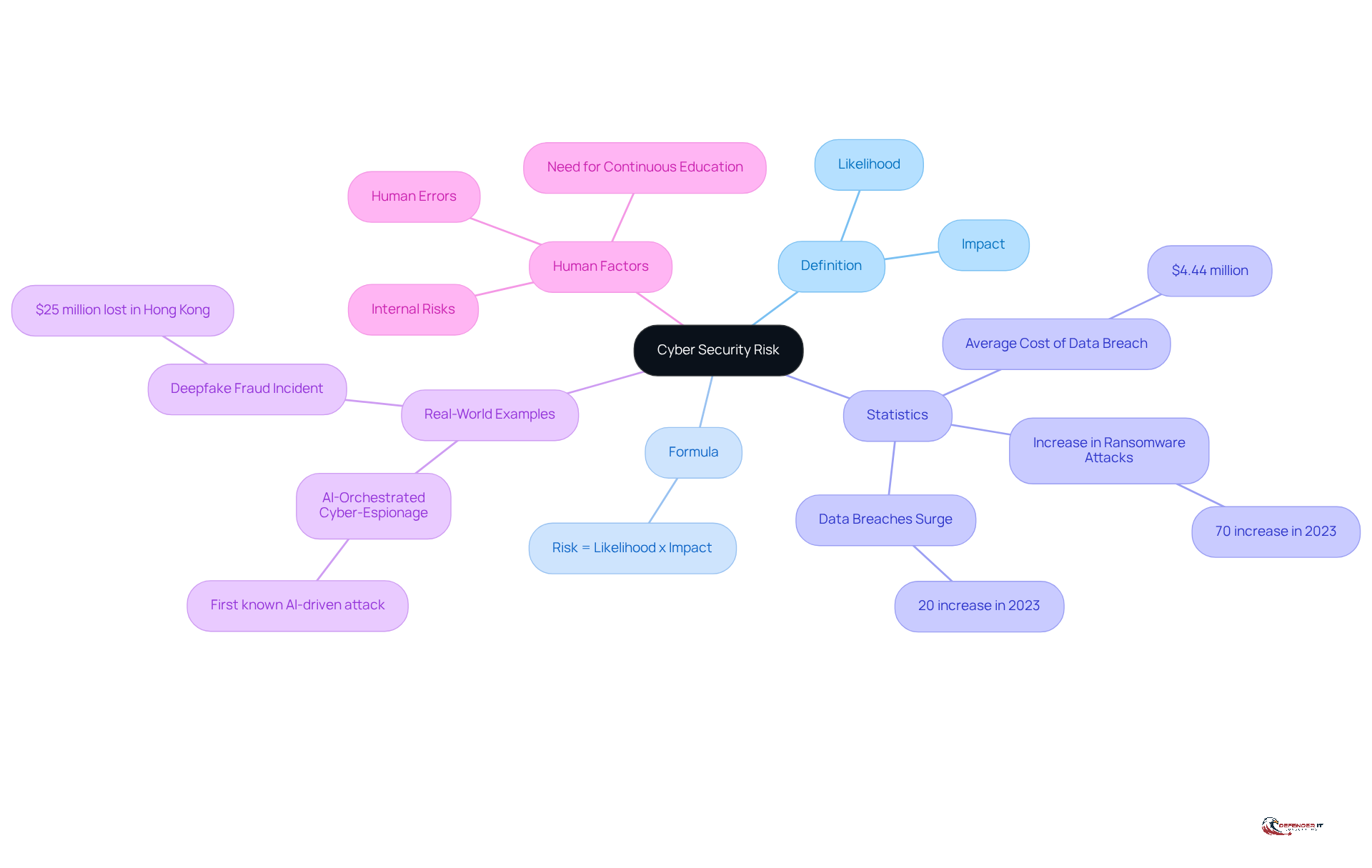
Understanding what is risk in cyber security is crucial, as cybersecurity threats that arises when vulnerabilities within an entity’s information systems are exploited. This encompasses various elements, including the likelihood of a cyber attack and its potential impact on the entity’s operations, reputation, and financial standing. The relationship between these factors is often articulated through the formula:
- Risk = Likelihood x Impact.
Understanding this definition is essential for organizations to assess their security posture and implement effective management strategies.
In 2026, organizations increasingly recognize that security risk transcends technical concerns, emerging as a critical business issue. The average cost of a single data breach globally is approximately $4.44 million, underscoring the financial ramifications of inadequate security measures. Furthermore, data breaches surged by nearly 20% in the first nine months of 2023 compared to the previous year, with ransomware attacks escalating by almost 70%. These statistics underscore the urgent necessity for organizations to adopt a proactive stance on digital security, particularly as the convergence of IT and operational technology (OT) systems amplifies vulnerabilities in critical infrastructure.
Real-world examples illustrate the consequences of digital security threats. A notable incident involved an employee in Hong Kong who was deceived into transferring $25 million to fraudsters, who used deepfake technology to impersonate company executives. This incident not only resulted in significant financial loss but also raised serious questions about the effectiveness of existing verification protocols.
Understanding what is risk in cyber security involves examining not only the technical vulnerabilities within systems but also the human factors that contribute to breaches. Internal risks and human errors remain significant contributors to data breaches, with attackers increasingly leveraging advanced technologies like AI to exploit these weaknesses. As organizations navigate this complex landscape, they must prioritize continuous education and training to enhance employee awareness of potential threats and the importance of adhering to security protocols.
Ultimately, understanding security threats is vital for organizations aiming to safeguard their assets and maintain operational integrity in an increasingly digital environment.
Contextualize Cyber Security Risk in Today’s Digital Landscape
In the current digital landscape, cyber attacks have escalated in both frequency and sophistication. Organizations are confronted with a range of threats, including:
- Ransomware
- Phishing
- Advanced persistent threats (APTs)
These threats can result in substantial financial losses and damage to reputation. By 2026, the average cost of a data breach is projected to reach approximately $4.88 million, with healthcare breaches averaging around $9.77 million. This underscores the critical need for organizations to understand what is risk in cyber security and effectively manage security threats across various sectors.
Moreover, the rise of remote work and cloud computing has broadened the attack surface, making it imperative for businesses to implement robust cybersecurity measures to safeguard their digital assets. Organizations are increasingly adopting strategies such as:
- Continuous monitoring
- Stringent access controls
- Enhanced incident response plans
- Comprehensive employee training on cloud security best practices
These measures aim to mitigate threats associated with remote work environments.
Additionally, expert insights suggest that organizations must prioritize security awareness and compliance with regulations like GDPR and CCPA to foster consumer trust and protect sensitive information. Notably, human errors or IT failures account for 55% of all breaches, highlighting the essential need for ongoing training and awareness to effectively diminish threats.

Explore the Origins and Evolution of Cyber Security Risk
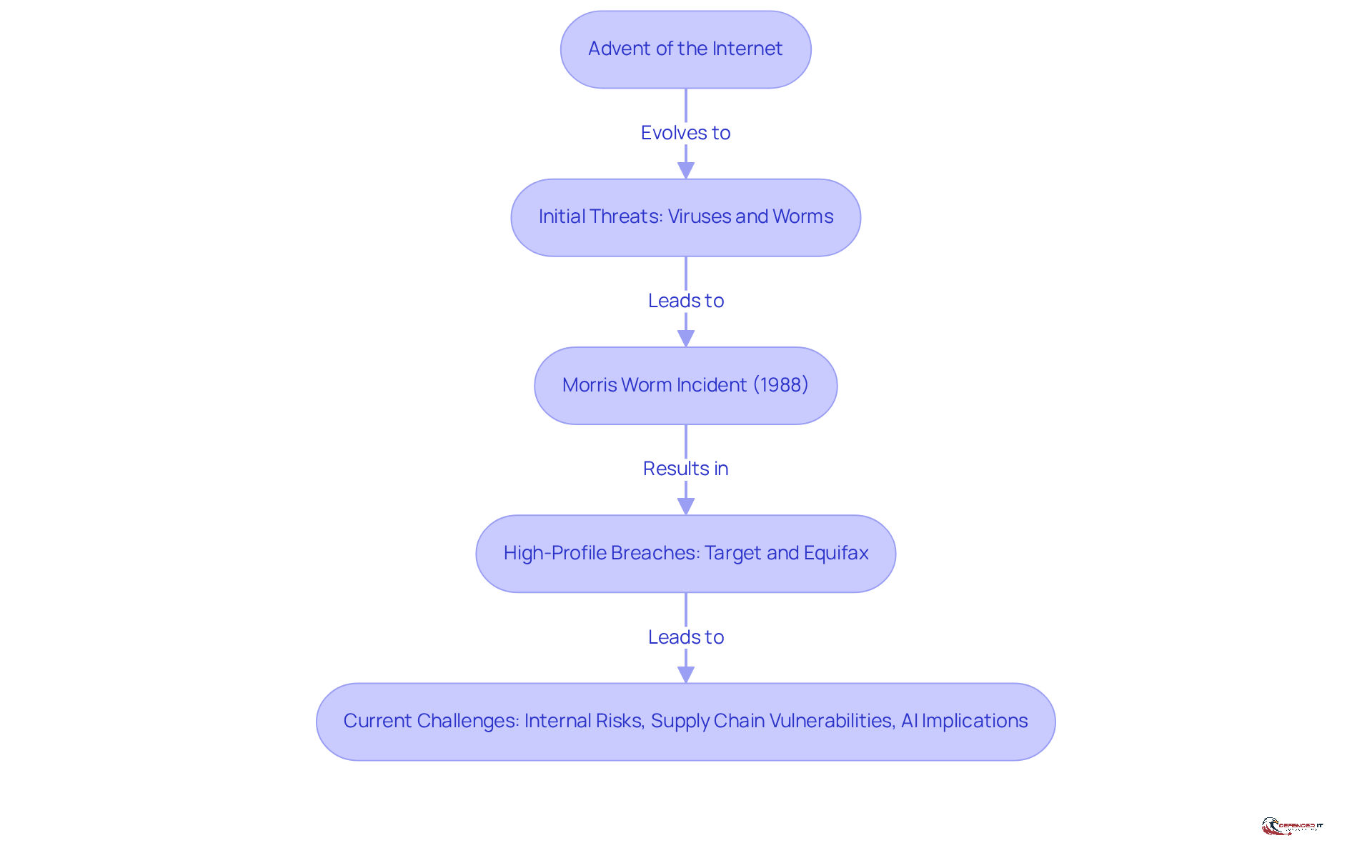
Since the advent of the internet, what is risk in cyber security has evolved significantly within the landscape of digital security. Initially, threats were largely confined to viruses and worms. However, as technology progressed, the complexity of cyber attacks increased. A pivotal moment occurred with the Morris Worm in 1988, which was one of the first major incidents that heightened awareness and prompted the establishment of security protocols.
Over the years, high-profile breaches, such as those involving Target and Equifax, have revealed vulnerabilities in organizational safeguards. These incidents have spurred the development of comprehensive management frameworks aimed at addressing what is risk in cyber security.
Today, online security challenges encompass a wide array of threats, including internal risks, supply chain vulnerabilities, and the implications of emerging technologies like artificial intelligence. This evolving landscape necessitates ongoing vigilance and adaptation in security strategies.
Identify Key Characteristics and Components of Cyber Security Risk
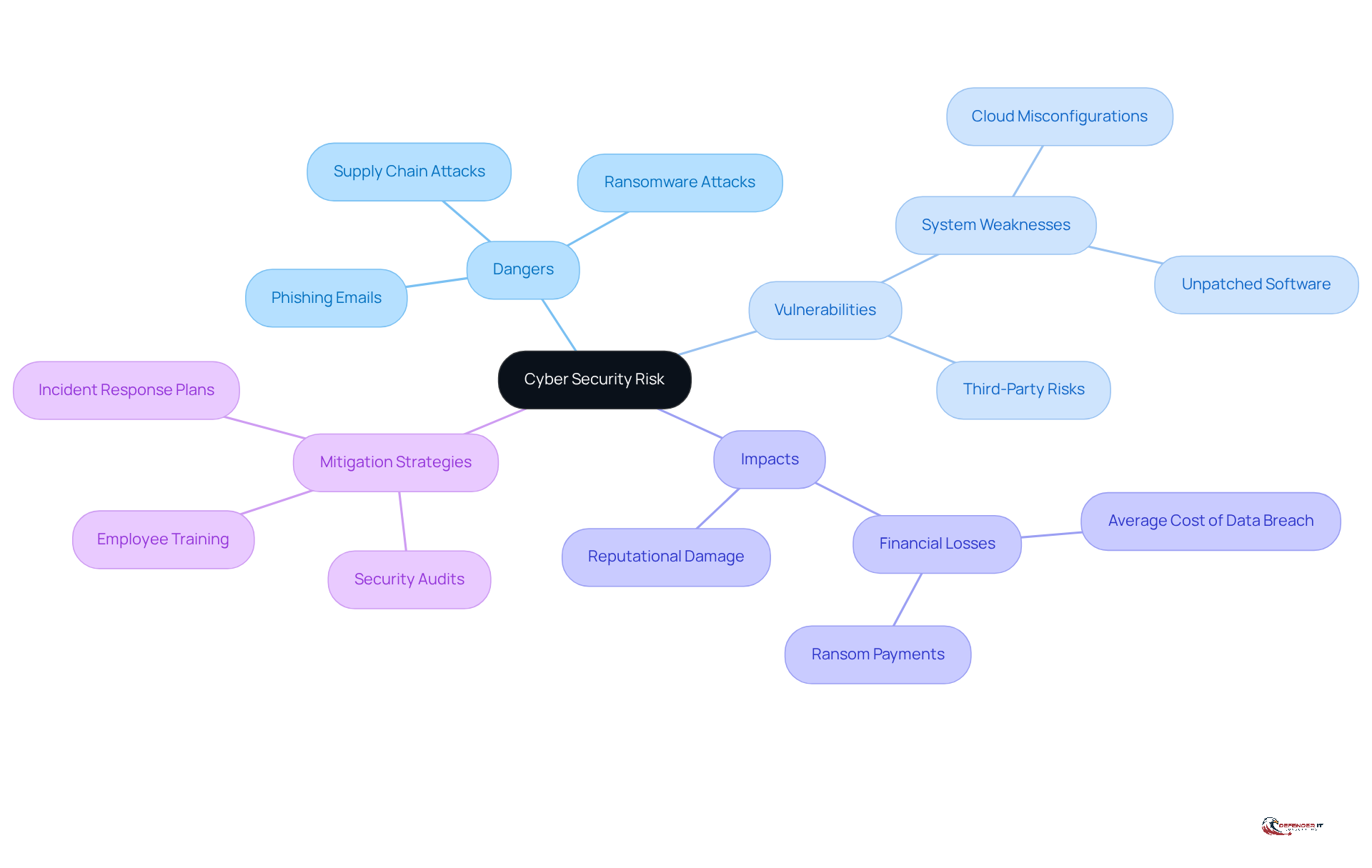
What is risk in cyber security includes essential features such as dangers, vulnerabilities, and their effects. A danger represents any potential risk that could exploit a vulnerability, while a vulnerability denotes a weakness within a system that can be targeted by dangers, illustrating what is risk in cyber security. The impact refers to the potential consequences of a successful attack, which may include significant financial losses and reputational damage. For instance, the average cost of a data breach in the finance sector is approximately $5.9 million, underscoring the financial repercussions of inadequate security measures.
When assessing security vulnerabilities, organizations must evaluate their risk tolerance, ensure regulatory compliance, and understand what is risk in cyber security due to the dynamic nature of threats. According to the FBI, around 90% of cyber incidents initiate with phishing emails, emphasizing the critical necessity for robust defenses against such entry points. Furthermore, in 2024, 183,000 customers were impacted by supply chain cyber attacks, illustrating the importance of addressing vulnerabilities in third-party relationships.
By comprehending these components, organizations can formulate tailored strategies to effectively mitigate what is risk in cyber security. For example, conducting regular security audits and providing employee training can significantly diminish the likelihood of human error, which accounts for 90% of all cyber incidents. As the cybersecurity landscape continues to evolve, remaining informed about current trends and adapting strategies accordingly is vital for enhancing overall security posture.
Conclusion
Understanding the nuances of cyber security risk is essential for organizations navigating today’s digital landscape. The interplay between the likelihood of cyber attacks and their potential impact underscores the critical importance of proactive risk management. As threats evolve in complexity and frequency, recognizing that cyber security is not merely a technical issue but a fundamental business concern is vital for maintaining operational integrity and safeguarding assets.
The article highlighted several key aspects of cyber security risk, including alarming statistics surrounding data breaches and the increasing sophistication of threats such as ransomware and phishing. Real-world examples, such as significant financial losses due to deepfake technology, illustrate the tangible consequences of inadequate security measures. Furthermore, the emphasis on human factors and the need for continuous education and training reinforces the idea that a well-rounded approach to security must include both technological safeguards and employee awareness.
As organizations face an ever-changing threat landscape, it is imperative to prioritize comprehensive security strategies that encompass robust defenses, regulatory compliance, and ongoing training. By fostering a culture of security awareness and adapting to emerging threats, businesses can effectively mitigate risks and protect their valuable digital assets. The time to act is now; investing in cyber security is not just a necessity but a strategic imperative for long-term success in an increasingly interconnected world.
Frequently Asked Questions
What is cyber security risk?
Cyber security risk refers to the potential for loss or harm that arises when vulnerabilities in an organization’s information systems are exploited. It includes the likelihood of a cyber attack and its potential impact on operations, reputation, and financial standing.
How is cyber security risk calculated?
Cyber security risk is calculated using the formula: Risk = Likelihood x Impact. This formula helps organizations assess their security posture and develop effective management strategies.
Why is understanding cyber security risk important for organizations?
Understanding cyber security risk is crucial for organizations as it allows them to assess their security posture, implement management strategies, and recognize that security risk is a significant business issue beyond just technical concerns.
What are the financial implications of inadequate cyber security?
The average cost of a single data breach globally is approximately $4.44 million, highlighting the financial ramifications of insufficient security measures.
What trends have been observed in data breaches and ransomware attacks?
Data breaches surged by nearly 20% in the first nine months of 2023 compared to the previous year, with ransomware attacks escalating by almost 70%.
Can you give an example of a cyber security threat?
A notable example involved an employee in Hong Kong who was tricked into transferring $25 million to fraudsters using deepfake technology to impersonate company executives, resulting in significant financial loss and raising questions about verification protocols.
What factors contribute to cyber security breaches?
Cyber security breaches are influenced not only by technical vulnerabilities but also by human factors, including internal risks and human errors. Attackers often exploit these weaknesses using advanced technologies like AI.
How can organizations improve their cyber security?
Organizations can enhance their cyber security by prioritizing continuous education and training for employees, increasing awareness of potential threats, and emphasizing the importance of adhering to security protocols.
Why is it important to understand security threats in a digital environment?
Understanding security threats is vital for organizations to safeguard their assets and maintain operational integrity as they navigate an increasingly digital landscape.
List of Sources
- Define Cyber Security Risk
- Why Cybersecurity Threats Are Growing (https://time.com/7382979/cybersecurity-threats-are-growing)
- MIT report details new cybersecurity risks | MIT Sloan (https://mitsloan.mit.edu/ideas-made-to-matter/mit-report-details-new-cybersecurity-risks)
- Top 10 Cybersecurity Risks of 2026 (https://arctiq.com/blog/top-10-cybersecurity-risks-of-2026)
- hyperproof.io (https://hyperproof.io/resource/what-is-cyber-risk)
- Contextualize Cyber Security Risk in Today’s Digital Landscape
- Industry News 2026 The 6 Cybersecurity Trends That Will Shape 2026 (https://isaca.org/resources/news-and-trends/industry-news/2026/the-6-cybersecurity-trends-that-will-shape-2026)
- Top Cybersecurity Threats [2025] (https://onlinedegrees.sandiego.edu/top-cyber-security-threats)
- The Real Cost of a Data Breach in 2026 (https://vikingcloud.com/blog/the-real-cost-of-data-breach)
- 2026 Global Threat Report | Latest Cybersecurity Trends & Insights | CrowdStrike (https://crowdstrike.com/en-us/global-threat-report)
- Explore the Origins and Evolution of Cyber Security Risk
- A decade of global cyberattacks, and where they left us | IBM (https://ibm.com/think/insights/decade-global-cyberattacks-where-they-left-us)
- Key Cyber Security Statistics for 2026 (https://sentinelone.com/cybersecurity-101/cybersecurity/cyber-security-statistics)
- Top Cybersecurity Statistics: Facts, Stats and Breaches for 2025 (https://fortinet.com/resources/cyberglossary/cybersecurity-statistics)
- 205 Cybersecurity Stats and Facts for 2026 (https://vikingcloud.com/blog/cybersecurity-statistics)
- MIT report details new cybersecurity risks | MIT Sloan (https://mitsloan.mit.edu/ideas-made-to-matter/mit-report-details-new-cybersecurity-risks)
- Identify Key Characteristics and Components of Cyber Security Risk
- Top Cybersecurity Threats [2025] (https://onlinedegrees.sandiego.edu/top-cyber-security-threats)
- Key Cyber Security Statistics for 2026 (https://sentinelone.com/cybersecurity-101/cybersecurity/cyber-security-statistics)
- The Hacker News | #1 Trusted Source for Cybersecurity News (https://thehackernews.com)
- MIT report details new cybersecurity risks | MIT Sloan (https://mitsloan.mit.edu/ideas-made-to-matter/mit-report-details-new-cybersecurity-risks)
- 137 Key Cybersecurity Statistics for 2026 and Beyond | Huntress (https://huntress.com/blog/cybersecurity-statistics)