Business
5 Steps to Choose the Right Cloud Solutions Consultant for Manufacturing
Published May 28, 2026
Introduction
Choosing the right cloud solutions consultant is crucial for manufacturing businesses seeking to improve operational efficiency and security. As technology evolves rapidly, organizations face challenges in navigating the complex requirements to find a consultant that understands their specific needs.
Identifying the essential steps to ensure the chosen consultant aligns with industry standards and promotes continuous improvement is vital. Failure to choose a suitable partner can lead to inefficiencies and security vulnerabilities that hinder operational success. The right consultant can be the difference between operational success and ongoing challenges in a rapidly evolving technological landscape.
Identify Your Business Requirements for Cloud Solutions
To effectively select a solutions consultant, it is imperative to first delineate your business requirements. This process necessitates a systematic approach that includes several key steps:
- Assessing Current Infrastructure: Conduct a thorough evaluation of your existing IT infrastructure to pinpoint gaps and areas needing enhancement. Identifying gaps in your IT infrastructure can be challenging without a systematic approach. Focus on critical factors such as scalability, performance, and security requirements. A report by Edge Delta shows that 94% of companies experience enhanced security after transitioning to the online environment, emphasizing the significance of a strong infrastructure.
- Defining Objectives: Clearly outline your goals for adopting online solutions. These objectives may include enhancing operational efficiency, reducing costs, or bolstering data security. For example, according to CloudZero, organizations that transition to online services can decrease carbon emissions by as much as 84%, highlighting the ecological and operational advantages of adopting these technologies.
- Involving Stakeholders: Engage key stakeholders from various departments – such as IT, finance, and operations – to gather insights on their specific needs and expectations regarding online solutions. This collaborative approach ensures that all perspectives are considered, leading to a more comprehensive understanding of requirements.
- Documenting Requirements: Compile a detailed document listing all identified requirements. This document will serve as a reference point when assessing potential advisors, ensuring that the chosen partner aligns with your organization’s specific needs.
This meticulous preparation will empower your organization to thrive in a digital landscape.

Evaluate Consultant Qualifications and Experience
Identifying the right service provider is crucial for ensuring successful digital transformation in the manufacturing sector. Once business needs are identified, the next step is to assess potential service providers. Consider the following guidelines:
- Check Credentials: Look for relevant certifications such as AWS Certified Solutions Architect or Microsoft Certified: Azure Solutions Architect Expert. These credentials indicate a specialist’s proficiency in online technologies, which is essential for successful task execution.
- Review Experience: Evaluate the professional’s experience specifically within the manufacturing sector. Request case studies or examples of past projects that demonstrate their ability to provide effective digital solutions. For instance, AdvancedMD’s migration to AWS ensured data security and availability, showcasing the importance of industry-specific experience. In the manufacturing industry, salaries for specialists can vary significantly, with entry-level positions starting around $70,000 to $90,000 annually, underscoring the economic impact of hiring skilled professionals.
- Seek References: Request references from previous clients to gain insights into the professional’s reliability, communication skills, and ability to meet deadlines. This feedback can provide valuable context regarding their performance and client satisfaction.
- Evaluate Technical Skills: Ensure the advisor is proficient in the specific internet-based technologies you plan to implement, such as AWS, Azure, or Google Cloud Platform. Their technical expertise should align with your organization’s needs to facilitate a smooth transition.
By thoroughly evaluating these aspects, you can choose an advisor who not only meets technical requirements but also understands the unique challenges and opportunities within the manufacturing industry. Ultimately, a well-chosen advisor can significantly enhance your organization’s digital capabilities and competitive edge.

Ensure Compliance and Security Alignment with Your Consultant
Choosing a solutions advisor for the online environment requires careful consideration of adherence and safety standards. To ensure alignment with industry standards, consider the following steps:
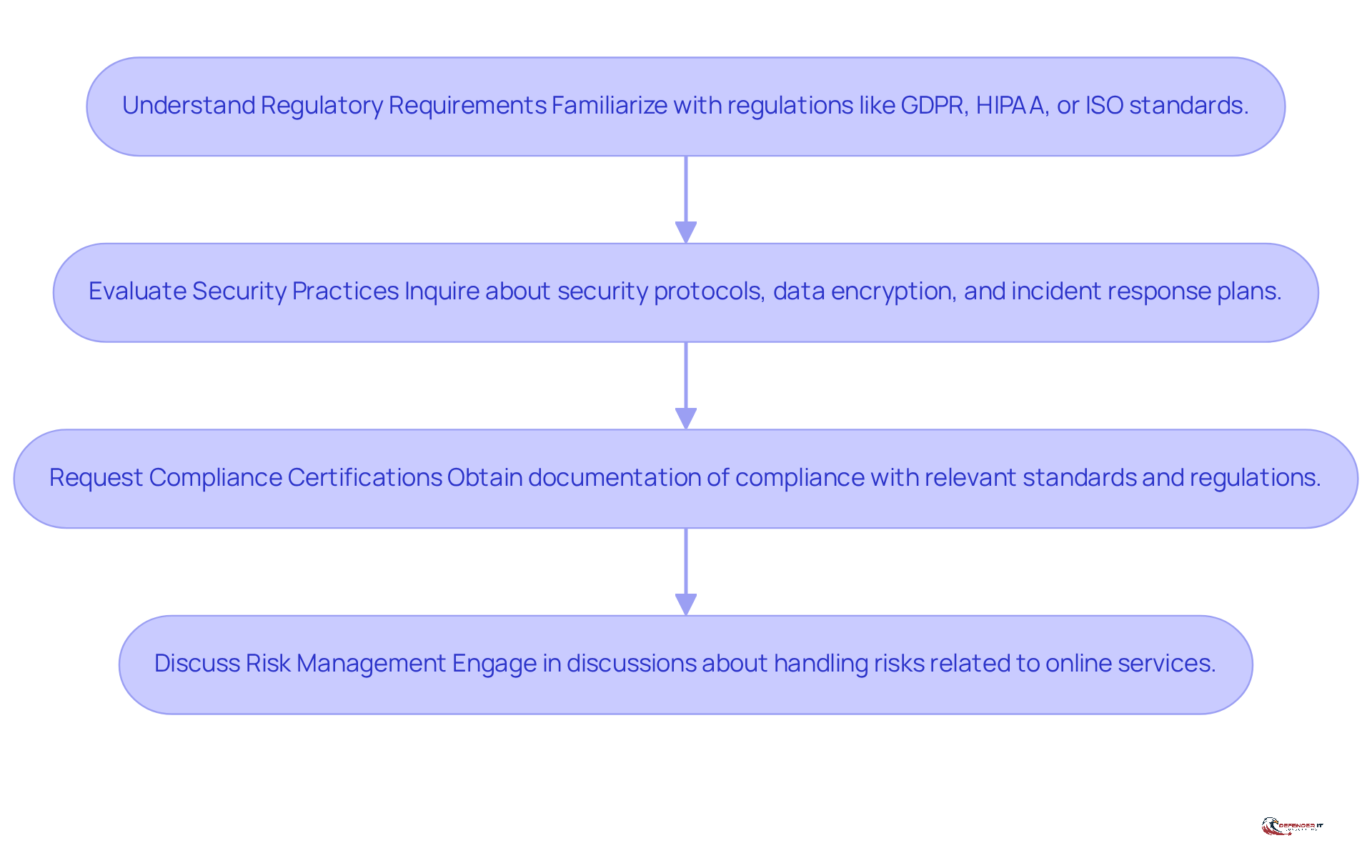
- Understand Regulatory Requirements: Familiarize yourself with the specific regulations applicable to your industry, such as GDPR, HIPAA, or ISO standards. In 2026, compliance will be the foundation of trust for organizations, making this knowledge essential.
- Evaluate Security Practices: It’s important to ask about the advisor’s security protocols, such as data encryption, access controls, and incident response plans. With over half of breaches related to human error, it is vital to ensure they adhere to best practices for online security.
- Request Compliance Certifications: Ask for documentation that demonstrates the advisor’s compliance with relevant standards and regulations. This may include third-party audits or certifications, which can provide assurance of their commitment to maintaining high security standards.
- Discuss Risk Management: Engage in discussions about how the advisor plans to handle risks related to online services, including data breaches and service interruptions. Understanding their risk management strategies is crucial, especially considering that the average cost of a data breach in the manufacturing industry reached $5.56 million in 2024.
Aligning with compliance and security standards not only mitigates risks but also strengthens your operational resilience.
Establish Clear Communication and Expectations
Effective collaboration with your cloud solutions consultant hinges on establishing clear communication and expectations from the outset:
- Define Roles and Responsibilities: Clearly outline who is accountable for what within the initiative. This includes both your internal team and the consultant’s team. Assigning specific responsibilities clarifies ownership and increases accountability, which is vital for the success of the initiative.
- Set Project Milestones: Establish a timeline with specific milestones to track progress. Milestones are key indicators of a team’s progress, helping to ensure that the task remains on schedule. For instance, in cloud implementation for manufacturing, milestones might include initial assessments, infrastructure setup, and final testing phases. This organized method allows for timely adjustments, as failure to communicate effectively can lead to project delays and increased costs. Additionally, 69% of finished endeavors have successfully achieved their initial objectives and targeted commercial scope, highlighting that clear communication and defined expectations are critical for achieving project success.
- Regular Check-Ins: Schedule regular meetings to discuss progress, address concerns, and make necessary adjustments. This keeps everyone informed and engaged throughout the process. Effective communication is essential, as companies risk $135 million for every $1 billion invested in an endeavor due to poor communication.
- Document Everything: Maintain comprehensive records of all communications, decisions, and alterations made throughout the endeavor. This documentation acts as a reference point and can assist in addressing any conflicts that may occur, ensuring that all stakeholders are aligned and informed of developments.
By prioritizing communication and establishing clear expectations, you can improve collaboration and ensure a smoother implementation process. Ultimately, the success of your project may depend on how well you communicate and set expectations with your cloud solutions consultant.

Plan for Ongoing Support and Training
To maximize the benefits of cloud adoption, organizations must prioritize ongoing support and training after selecting a cloud solutions consultant:
- Identify Training Needs: Conduct a thorough assessment of your team’s skills and knowledge gaps related to the new cloud solutions. This evaluation helps customize development programs to meet specific needs. It ensures that all team members can effectively utilize the technology. According to the American Society for Training and Development, firms with effective development programs achieve a 218% increase in revenue, highlighting the significance of focused instruction.
- Develop a Learning Plan: Collaborate with your consultant to create a comprehensive learning strategy that encompasses both initial instruction and ongoing education. This plan should include updates on new features and best practices, as continuous learning is vital for adapting to evolving cloud technologies. Research indicates that 92% of employees think well-structured development programs positively influence engagement, making it essential to keep your team informed.
- Establish Support Channels: Determine the avenues through which your team can access support from the consultant after implementation. Options may include dedicated support lines, online resources, or scheduled check-ins, all of which facilitate timely assistance and guidance. For instance, 94% of employees would stay longer at a company investing in their development, emphasizing the need for robust support systems.
- Monitor and Evaluate: Continuously assess the effectiveness of the education and support provided. Regular assessments are crucial to keep the program relevant and effective. Consistently collect feedback from your team to identify areas for improvement and make necessary adjustments to the development programs.
Ultimately, a commitment to continuous learning and support can significantly enhance an organization’s competitive edge in the manufacturing sector. This approach not only enhances operational efficiency but also fosters a culture of continuous improvement and adaptability.

Conclusion
The selection of a cloud solutions consultant is pivotal for manufacturing organizations aiming to navigate their digital transformation effectively. By thoroughly understanding business requirements, evaluating consultant qualifications, ensuring compliance and security alignment, establishing clear communication, and planning for ongoing support, businesses can position themselves for success in the evolving digital landscape.
This article outlines essential steps for selecting a consultant, including:
- Assessing current infrastructure
- Defining objectives
- Engaging stakeholders
- Documenting requirements
It emphasizes the importance of evaluating consultants based on their credentials, industry experience, and technical skills, while also highlighting the necessity of compliance with regulatory standards and robust security practices. Effective communication and clear expectations are vital components for collaboration, ensuring that projects remain on track and achieve desired outcomes.
Organizations should understand that choosing a cloud solutions consultant is just the beginning of a longer journey. It involves a commitment to ongoing training and support, fostering a culture of continuous improvement and adaptability. Failure to adhere to these strategies may result in operational inefficiencies and a weakened competitive position. By prioritizing these strategies, organizations can not only achieve successful digital transformation but also position themselves for sustained growth in an increasingly competitive landscape.
Frequently Asked Questions
What are the initial steps to identify business requirements for cloud solutions?
The initial steps include assessing current infrastructure, defining objectives, involving stakeholders, and documenting requirements.
How can I assess my current IT infrastructure?
Conduct a thorough evaluation to identify gaps and areas needing enhancement, focusing on factors such as scalability, performance, and security requirements.
What objectives should I consider when adopting online solutions?
Objectives may include enhancing operational efficiency, reducing costs, or improving data security. Transitioning to online services can also lead to reduced carbon emissions.
Why is it important to involve stakeholders in the requirements identification process?
Engaging key stakeholders from various departments ensures that all perspectives are considered, leading to a comprehensive understanding of the organization’s needs and expectations regarding online solutions.
What should be included in the documentation of requirements?
Compile a detailed document listing all identified requirements, which will serve as a reference point when assessing potential advisors.
What are the key qualifications to evaluate when selecting a consultant for cloud solutions?
Check for relevant certifications, review their experience in the manufacturing sector, seek references from previous clients, and evaluate their technical skills in specific internet-based technologies.
Why are industry-specific experiences important when selecting a service provider?
Industry-specific experience ensures that the consultant understands the unique challenges and opportunities within the manufacturing sector, which can significantly enhance your organization’s digital capabilities.
How can I verify a consultant’s reliability and performance?
Request references from previous clients to gain insights into their reliability, communication skills, and ability to meet deadlines.
What technical skills should a consultant possess?
Ensure the advisor is proficient in the specific internet-based technologies you plan to implement, such as AWS, Azure, or Google Cloud Platform, to facilitate a smooth transition.
List of Sources
- Identify Your Business Requirements for Cloud Solutions
- How Many Companies Use Cloud Computing? [Key Stats] (https://edgedelta.com/company/knowledge-center/how-many-companies-use-cloud-computing)
- Cloud Quotes: What CIOs Have to Say About Cloud Computing (https://statetechmagazine.com/article/2013/10/cloud-quotes-what-cios-have-say-about-cloud-computing)
- 100+ Cloud Computing Statistics for 2026 | Complete Report (https://softjourn.com/insights/cloud-computing-stats)
- Cloud Computing Market Size, Share & Growth Report, 2034 (https://fortunebusinessinsights.com/cloud-computing-market-102697)
- 100+ Cloud Computing Statistics: A 2026 Market Snapshot (https://cloudzero.com/blog/cloud-computing-statistics)
- Evaluate Consultant Qualifications and Experience
- Good Consulting Quotes To Inspire, Motivate & Get You Thinking (https://consultingsuccess.com/good-consulting-quotes-to-inspire-motivate-and-get-you-thinking)
- Harnessing AI in the Cloud: Case Studies of Transformative Success (https://computer.org/publications/tech-news/trends/harnessing-cloud-ai-case-studies)
- 10 Important Cloud Migration Case Studies You Need To Know (https://medium.com/@distillerytech/10-important-cloud-migration-case-studies-you-need-to-know-67b6f7e1661d)
- Forecasting Cloud Consultant Salaries: What to Expect – The THOR Group (https://thorgroup.com/blog/forecasting-cloud-consultant-salaries)
- Unlock Career Growth with Cloud Certifications (https://netcomlearning.com/blog/Top-Cloud-Computing-Certifications)
- Ensure Compliance and Security Alignment with Your Consultant
- 9 Quotes that Capture the State of Offensive Security (https://netspi.com/blog/executive-blog/security-industry-trends/quotes-on-the-state-of-offensive-security)
- Understanding IT Compliance: Key Regulations for 2026 | Prime Secured (https://primesecured.com/it-compliance-key-regulations-2026)
- 130+ Compliance Statistics & Trends to Know for 2026 (https://secureframe.com/blog/compliance-statistics)
- The Future of Compliance: Emerging RegTech Trends for 2026 – Proxymity (https://proxymity.io/views/the-future-of-compliance-emerging-regtech-trends)
- 205 Cybersecurity Stats and Facts for 2026 (https://vikingcloud.com/blog/cybersecurity-statistics)
- Establish Clear Communication and Expectations
- Project Milestones: Definition, Examples & Strategies (https://productive.io/blog/project-milestones-definition-examples-strategies)
- Importance of Using Milestones in Project Planning (https://lucid.co/blog/importance-of-using-milestones-in-project-planning)
- Effective Communication In Project Management | NETRIO (https://netrio.com/effective-communication-in-project-management)
- 49 Cloud Computing Statistics for 2025 (Trends & Insights) (https://n2ws.com/blog/cloud-computing-statistics)
- Project Management Statistics: 52 Statistics You Should Know (https://wimi-teamwork.com/en/blog/project-management/project-management-statistics)
- Plan for Ongoing Support and Training
- Learning Curves: Effective Training Strategies for Technology Adoption (https://youraspire.com/blog/software-implementation-training-strategies)
- Employee Training Statistics & Data in the U.S. (2024/2025) (https://high5test.com/employee-training-statistics)
- Essential Employee Training Statistics for 2026 | Levelup LMS (https://leveluplms.com/key-employee-training-statistics-data-driven-trends-for-2026)
- Employee Training Statistics | Updated for 2026 (https://cloudassess.com/blog/employee-training-statistics)
- Cloud Computing Statistics and Facts (2026) (https://scoop.market.us/cloud-computing-statistics)