General
What Is the Correct Banner Marking for Unclassified Documents with CUI?
Published April 11, 2026
Introduction
Understanding the complexities of Controlled Unclassified Information (CUI) is crucial for organizations that manage sensitive government data. Alarmingly, nearly 60% of entities remain unaware of CUI regulations, making the correct banner marking for unclassified documents a vital concern. Organizations must ensure compliance and protect against unauthorized disclosures while navigating the intricacies of CUI labeling. This article explores the significance of proper marking, identifies common pitfalls, and outlines best practices that can strengthen an organization’s security posture.
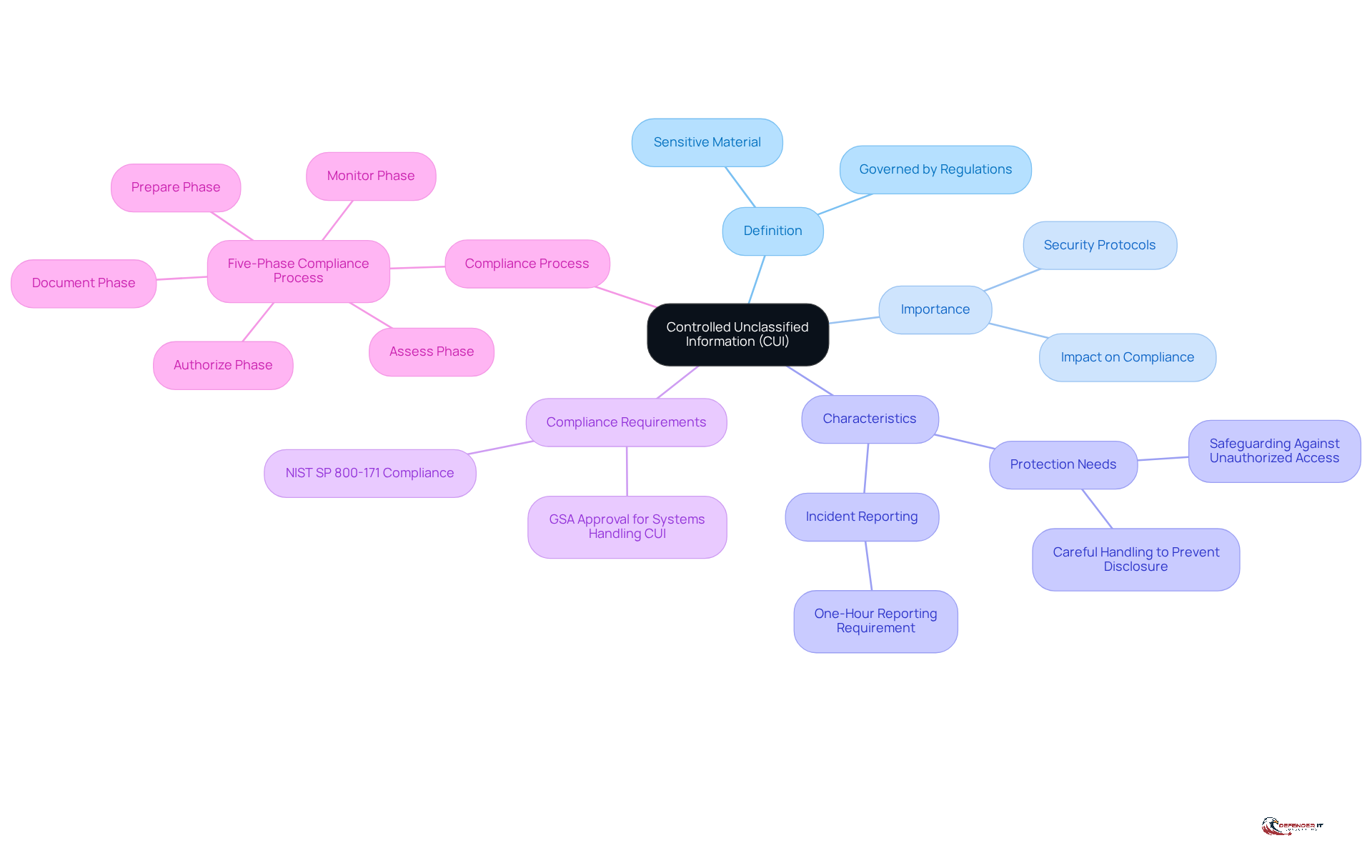
Define Controlled Unclassified Information (CUI)
Controlled Unclassified Data (CUI) is sensitive material created or possessed by the U.S. government that requires safeguarding or dissemination controls but does not meet the criteria for classification. Governed by laws, regulations, or government-wide policies, CUI encompasses various forms of data, including personally identifiable information (PII), proprietary business details, and sensitive but unclassified material. Proper handling of CUI is crucial to prevent unauthorized access or disclosure.
Understanding CUI is essential for organizations managing government-related information, as it directly impacts compliance with regulations and security protocols. As of 2026, awareness of CUI regulations is critical; studies indicate that approximately 60% of organizations remain unfamiliar with these requirements. Key characteristics of CUI include the necessity for protection against unauthorized access and careful handling to prevent disclosure, particularly given the one-hour incident reporting requirement for cybersecurity incidents involving CUI.
Organizations such as defense contractors and civilian contractors must prioritize adherence to CUI regulations to mitigate risks and enhance their cybersecurity posture. Furthermore, the five-phase compliance process established by the GSA offers a structured approach for organizations to effectively manage CUI compliance.
Explain the Importance of Correct Banner Marking for CUI
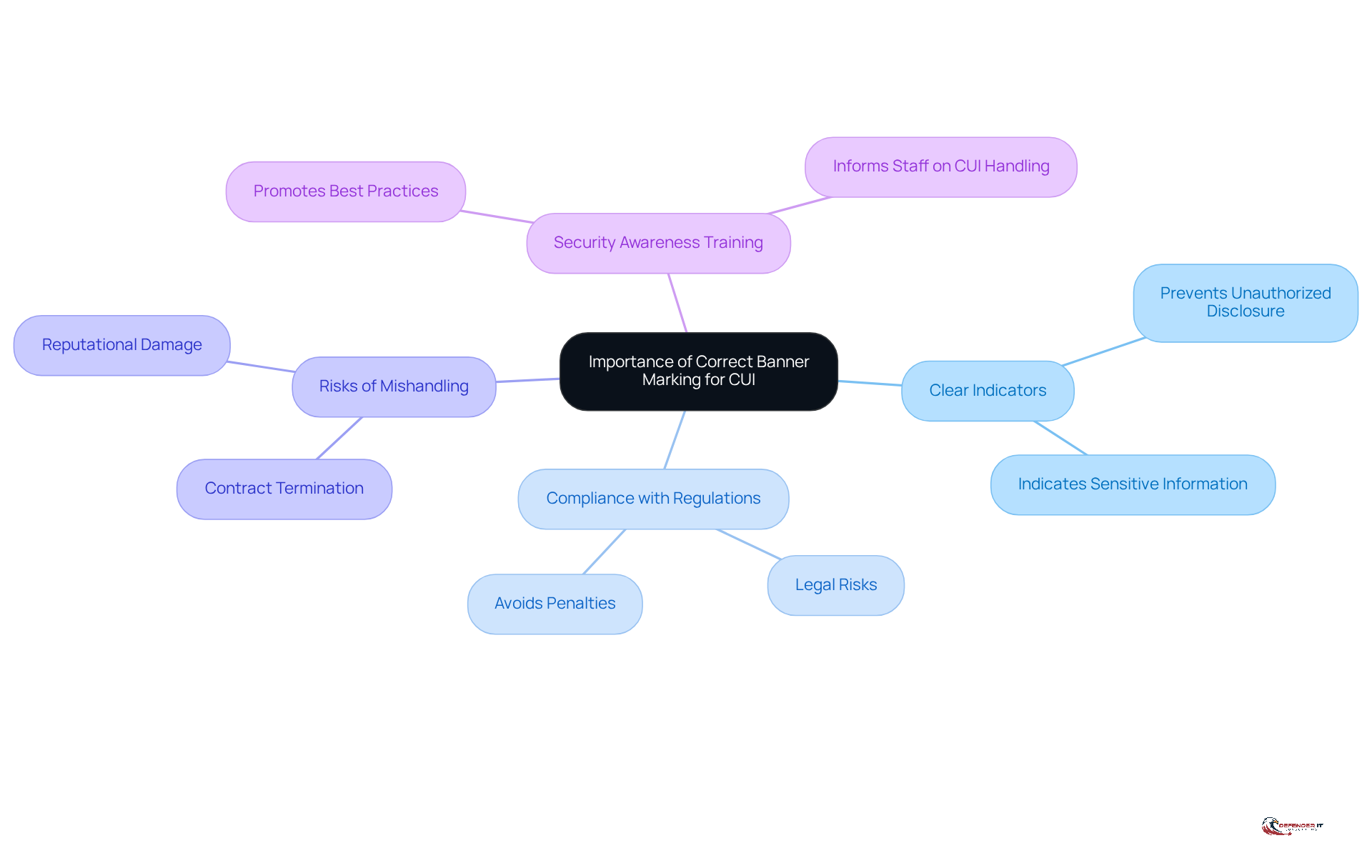
It is essential to understand what the correct banner marking for unclassified documents with CUI is for several reasons. It serves as a clear indicator that the document contains sensitive information requiring special handling, which is vital in environments where multiple individuals may access the document; thus, the correct banner marking for unclassified documents with CUI is essential. This labeling helps prevent unauthorized disclosure, thereby protecting the organization from potential breaches.
Moreover, ensuring that the correct banner marking for unclassified documents with CUI is used is crucial for compliance with federal regulations, significantly reducing legal risks and potential penalties for organizations that fail to adequately safeguard CUI. In 2023, audits revealed that nearly 50% of examined documents lacked the necessary designation indicator block, underscoring the compliance risks associated with improper labeling. Organizations that mishandle CUI may face severe consequences, including contract termination and reputational damage, as evidenced by the ongoing scrutiny of the Department of Defense’s labeling practices.
Additionally, clear banner signs promote a culture of security awareness within organizations, reinforcing the importance of protecting sensitive information and encouraging best practices in information handling. To mitigate risks associated with CUI mishandling, it is imperative that all staff receive training on the significance of these labels, as emphasized by the National Archives and Records Administration (NARA). By ensuring that staff are well-informed, organizations can bolster their overall security posture.
Outline Guidelines for Banner Marking of Unclassified Documents with CUI
To ensure proper handling and compliance, it is essential to know what the [[correct banner marking for [[[[[[[[[unclassified documents with CUI](https://defenderit.consulting/what-is-vulnerability-scanning-importance-and-types-explained/)\](https://defenderit.consulting/what-is-vulnerability-scanning-importance-and-types-explained/)\](https://defenderit.consulting/what-is-vulnerability-scanning-importance-and-types-explained/)\](https://defenderit.consulting/what-is-vulnerability-scanning-importance-and-types-explained/)\](https://defenderit.consulting/what-is-vulnerability-scanning-importance-and-types-explained/)\](https://defenderit.consulting/what-is-vulnerability-scanning-importance-and-types-explained/)\](https://defenderit.consulting/what-is-vulnerability-scanning-importance-and-types-explained/)\](https://defenderit.consulting/what-is-vulnerability-scanning-importance-and-types-explained/)\](https://defenderit.consulting/what-is-vulnerability-scanning-importance-and-types-explained/)\](https://dla.mil/About-DLA/News/News-Article-View/Article/4022931/cui-101-controlled-unclassified-information-markings-refresher)\](https://dla.mil/About-DLA/News/News-Article-View/Article/4022931/cui-101-controlled-unclassified-information-markings-refresher) is. The following guidelines should be adhered to:
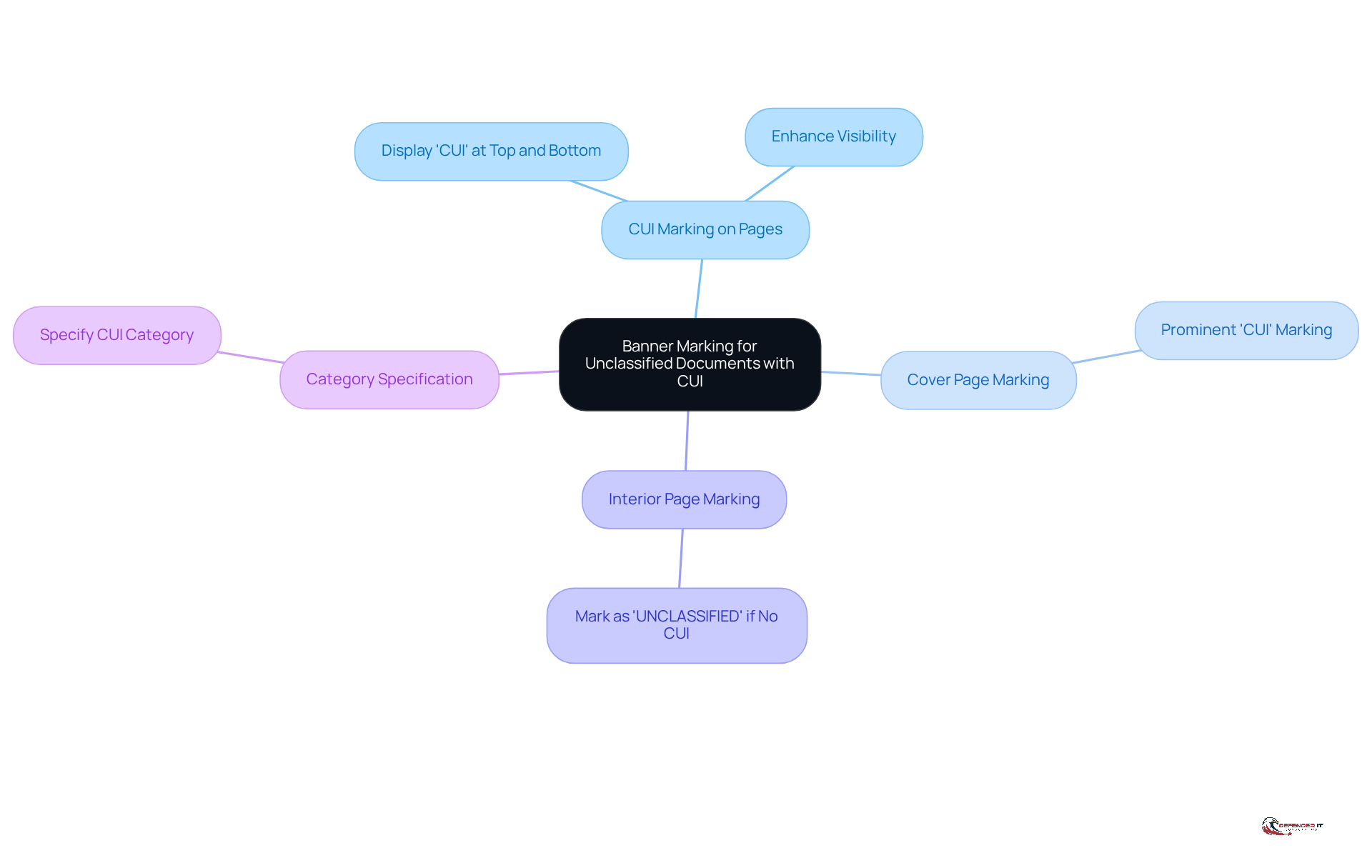
- The correct banner marking for unclassified documents with CUI is that the acronym ‘CUI’ must be prominently displayed at both the top and bottom of each page to enhance visibility.
- Any document with a cover page should prominently feature the ‘CUI’ marking.
- If interior pages do not contain CUI, then the correct banner marking for unclassified documents with CUI is ‘UNCLASSIFIED.’
- Where applicable, include the correct banner marking that specifies the category of CUI being handled.
Following these guidelines increases awareness among staff regarding the sensitive nature of the content and strengthens the need for suitable handling practices to avoid unauthorized disclosure. Familiarity with the CUI registry is crucial for recognizing CUI information and ensuring adherence. Furthermore, it is important to note that the public reporting workload for adhering to these guidelines is estimated to average 6 minutes per response, underscoring the significance of efficiency in reporting practices. Understanding the distinction between CUI Basic and CUI Specified is also vital, as it informs the level of control and compliance required for different types of CUI.
Identify Common Mistakes in CUI Banner Marking
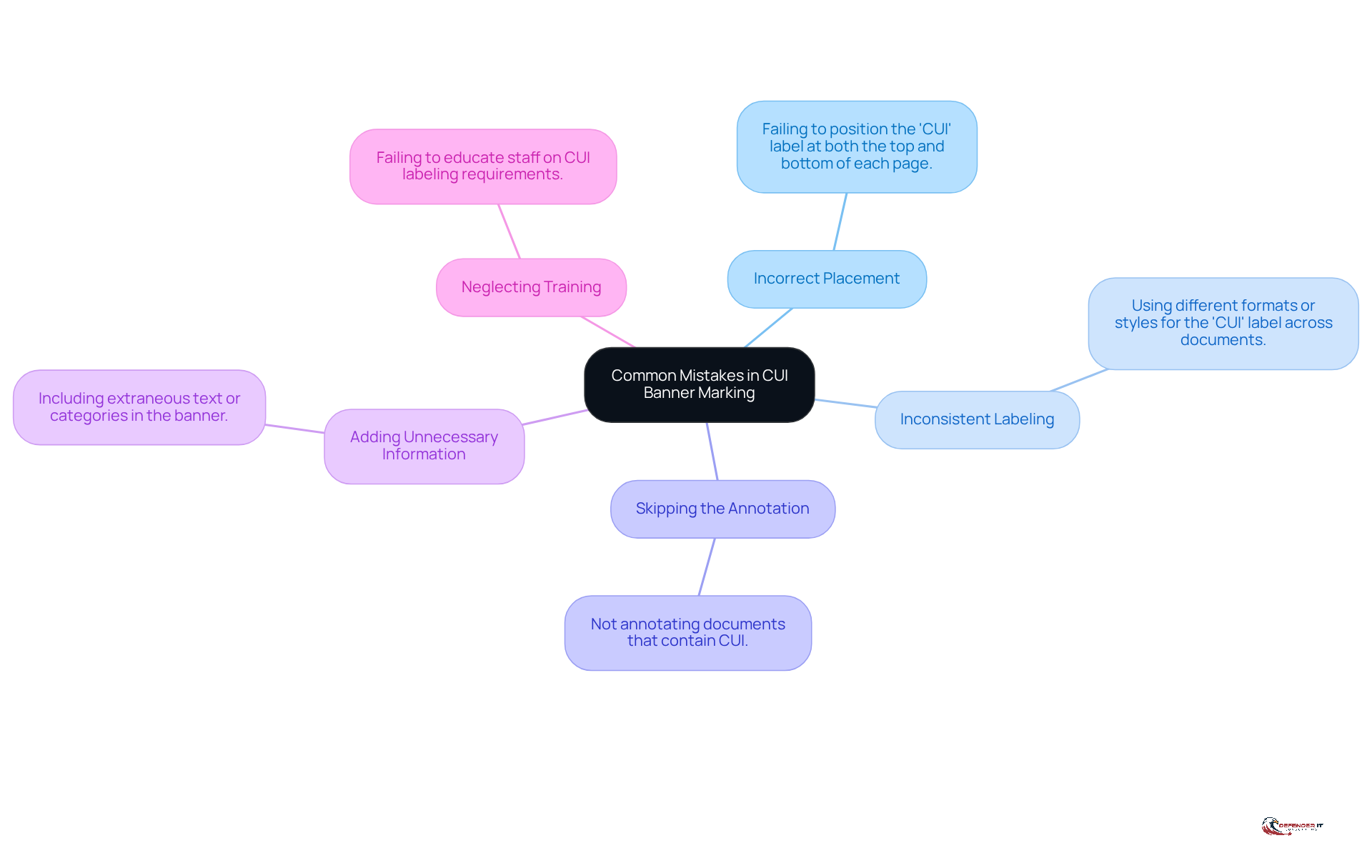
Common errors in CUI banner labeling can significantly impact compliance and the protection of sensitive information, especially if the correct banner marking for unclassified documents with CUI is not used. These errors include:
- Incorrect Placement: Failing to position the ‘CUI’ label at both the top and bottom of each page can lead to confusion regarding the document’s sensitivity.
- Inconsistent Labeling: Utilizing different formats or styles for the ‘CUI’ label across various documents creates ambiguity and diminishes the label’s effectiveness.
- Skipping the Annotation: Not annotating documents that contain CUI is a serious compliance failure that may result in unauthorized disclosures.
- Adding Unnecessary Information: Including extraneous text or categories in the banner can dilute the clarity of the labeling.
- Neglecting Training: Failing to educate staff on the significance of [[[[[[[[[[CUI labeling and its specific requirements](https://trustedsec.com/blog/dealing-with-unmarked-and-mismarked-cui)\](https://trustedsec.com/blog/dealing-with-unmarked-and-mismarked-cui)\](https://trustedsec.com/blog/dealing-with-unmarked-and-mismarked-cui)\](https://trustedsec.com/blog/dealing-with-unmarked-and-mismarked-cui)\](https://trustedsec.com/blog/dealing-with-unmarked-and-mismarked-cui)\](https://trustedsec.com/blog/dealing-with-unmarked-and-mismarked-cui)\](https://trustedsec.com/blog/dealing-with-unmarked-and-mismarked-cui)\](https://trustedsec.com/blog/dealing-with-unmarked-and-mismarked-cui)\](https://trustedsec.com/blog/dealing-with-unmarked-and-mismarked-cui)\](https://trustedsec.com/blog/dealing-with-unmarked-and-mismarked-cui) can lead to repeated mistakes.
Organizations must remain vigilant in adhering to marking protocols, particularly understanding what the correct banner marking for unclassified documents with CUI is, to ensure compliance and safeguard sensitive information.
Conclusion
Accurate banner marking for unclassified documents containing Controlled Unclassified Information (CUI) is essential for protecting sensitive data and ensuring compliance. Proper labeling not only indicates the need for special handling but also plays a crucial role in safeguarding organizations against potential breaches and legal consequences.
Key points throughout this discussion underscore the importance of CUI awareness, adherence to specific marking guidelines, and the common pitfalls in the labeling process. Organizations must prioritize the correct placement and consistency of the ‘CUI’ label. Additionally, fostering a culture of security awareness among staff through training and education is vital. This proactive approach significantly mitigates risks associated with mishandling sensitive information.
The importance of accurate CUI banner marking transcends mere compliance; it cultivates a secure environment for managing sensitive information. Organizations are encouraged to adopt best practices in marking and handling CUI, not only to protect their interests but also to contribute to a broader culture of security within the community. By prioritizing these practices, organizations can enhance their cybersecurity posture and ensure compliance with necessary regulatory requirements.
Frequently Asked Questions
What is Controlled Unclassified Information (CUI)?
Controlled Unclassified Information (CUI) is sensitive material created or possessed by the U.S. government that requires safeguarding or dissemination controls but does not meet the criteria for classification. It includes various forms of data such as personally identifiable information (PII), proprietary business details, and sensitive but unclassified material.
Why is understanding CUI important for organizations?
Understanding CUI is essential for organizations managing government-related information because it directly impacts compliance with regulations and security protocols. Proper handling of CUI is crucial to prevent unauthorized access or disclosure.
What percentage of organizations are unfamiliar with CUI regulations as of 2026?
As of 2026, studies indicate that approximately 60% of organizations remain unfamiliar with CUI regulations.
What are the key characteristics of CUI?
Key characteristics of CUI include the necessity for protection against unauthorized access and careful handling to prevent disclosure. There is also a one-hour incident reporting requirement for cybersecurity incidents involving CUI.
Who must prioritize adherence to CUI regulations?
Organizations such as defense contractors and civilian contractors must prioritize adherence to CUI regulations to mitigate risks and enhance their cybersecurity posture.
What compliance process is established for managing CUI?
The General Services Administration (GSA) has established a five-phase compliance process that offers a structured approach for organizations to effectively manage CUI compliance.
List of Sources
- Define Controlled Unclassified Information (CUI)
- GSA’s New CUI Cybersecurity Certification Process Walks Softly but Carries a Big Stick | Miller & Chevalier (https://millerchevalier.com/publication/gsas-new-cui-cybersecurity-certification-process-walks-softly-carries-big-stick)
- GSA’s New CUI Requirements: What Government Contractors Need to Know | Insights | Holland & Knight (https://hklaw.com/en/insights/publications/2026/03/gsas-new-cui-security-requirements-what-government-contractors)
- DoD still failing to properly mark CUI data years after initial audit | Federal News Network (https://federalnewsnetwork.com/defense-news/2026/04/dod-still-failing-to-properly-mark-cui-data-years-after-initial-audit)
- The White House just released a 2026 cyber strategy, and every MSP with a federal client needs to read it (https://msn.com/en-us/news/technology/the-white-house-just-released-a-2026-cyber-strategy-and-every-msp-with-a-federal-client-needs-to-read-it/ar-AA1Zbdhy)
- Explain the Importance of Correct Banner Marking for CUI
- Controlled Unclassified Information (https://federalregister.gov/documents/2015/05/08/2015-10260/controlled-unclassified-information)
- Understanding CUI Markings (https://isidefense.com/blog/understanding-cui-markings)
- DoD still failing to properly mark CUI data years after initial audit | Federal News Network (https://federalnewsnetwork.com/defense-news/2026/04/dod-still-failing-to-properly-mark-cui-data-years-after-initial-audit)
- US DoW IG Raises Concerns Over CUI Marking Inconsistencies | Darron Makrokanis posted on the topic | LinkedIn (https://linkedin.com/posts/darronmakrokanis\_cui-cui-cmmc-activity-7430609090764165121-9CYa)
- Outline Guidelines for Banner Marking of Unclassified Documents with CUI
- CUI 101: Controlled Unclassified Information markings refresher (https://dla.mil/About-DLA/News/News-Article-View/Article/4022931/cui-101-controlled-unclassified-information-markings-refresher)
- DoD still failing to properly mark CUI data years after initial audit | Federal News Network (https://federalnewsnetwork.com/defense-news/2026/04/dod-still-failing-to-properly-mark-cui-data-years-after-initial-audit)
- CUI: The Complete Guide to Controlled Unclassified Information (https://summit7.us/cui)
- Identify Common Mistakes in CUI Banner Marking
- DoD still failing to properly mark CUI data years after initial audit | Federal News Network (https://federalnewsnetwork.com/defense-news/2026/04/dod-still-failing-to-properly-mark-cui-data-years-after-initial-audit)
- Dealing With Unmarked and Mismarked CUI (https://trustedsec.com/blog/dealing-with-unmarked-and-mismarked-cui)