General
Master the 48 CFR CMMC: Key Steps for Compliance Success
Published March 20, 2026
Introduction
Understanding the complexities of the 48 CFR CMMC regulation is essential for contractors seeking to secure government contracts. Established by the Department of Defense, this framework not only enhances cybersecurity measures but also significantly impacts a contractor’s capacity to manage sensitive government data. As the compliance deadline approaches, many organizations are faced with the challenges of navigating certification levels, security controls, and the critical need for comprehensive documentation.
How can contractors effectively navigate this landscape to ensure compliance and sustain their competitive advantage?
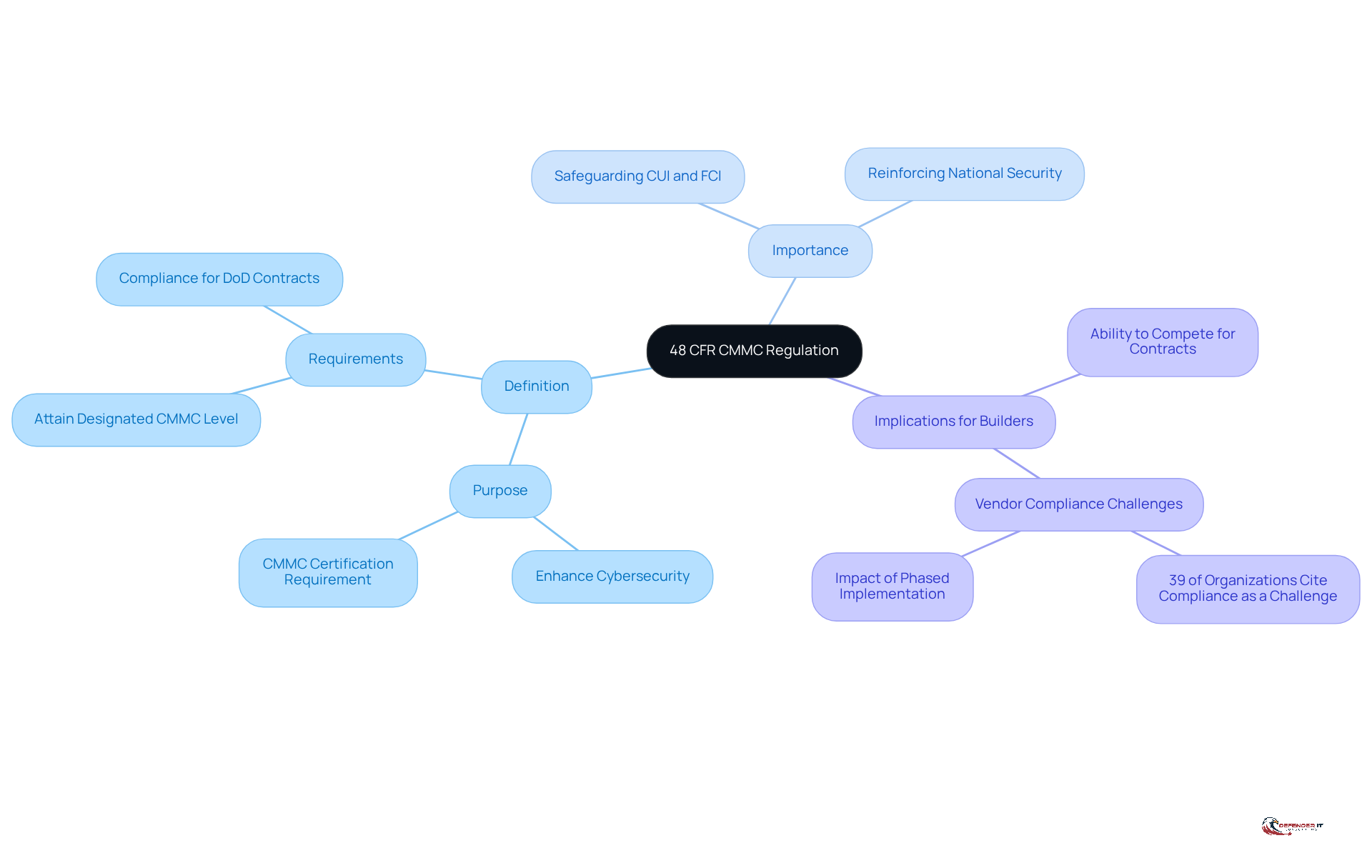
Clarify the 48 CFR CMMC Rule: Definition and Importance
The regulation known as serves as a critical framework established by the Department of Defense (DoD) to enhance the of vendors handling sensitive government data. This regulation requires all service providers to attain a designated level of to qualify for DoD contracts.
The significance of this regulation is profound; it is designed to (CUI) and Federal Contract Information (FCI) from , thereby reinforcing . Understanding this regulation is essential for builders, as it directly influences their ability to compete for and secure .
Outline Key Requirements and Objectives of the 48 CFR CMMC Rule
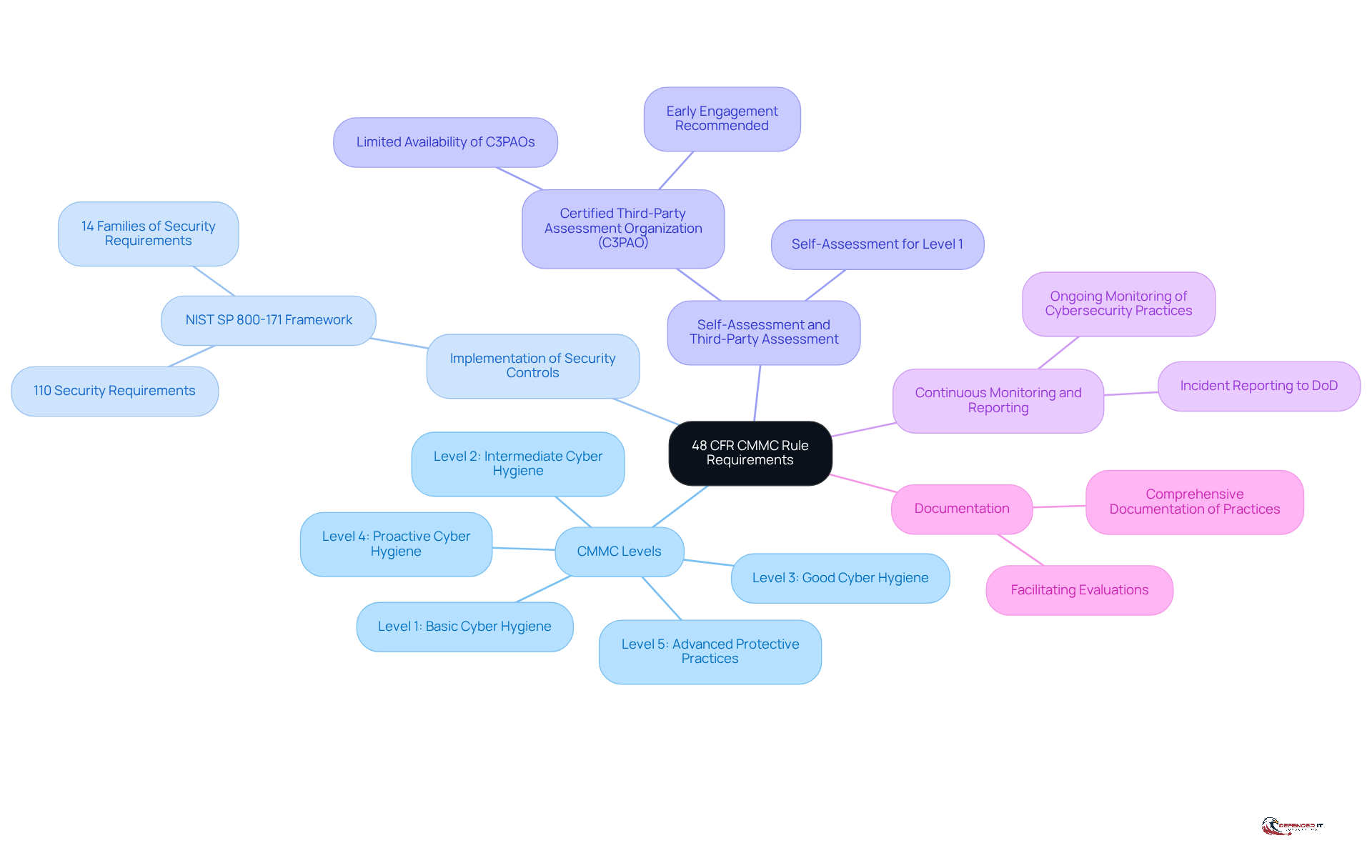
The 48 CFR CMMC rule establishes essential requirements for contractors to achieve compliance, focusing on enhancing cybersecurity across the defense supply chain.
- : The certification framework consists of five tiers, ranging from basic cyber hygiene (Level 1) to advanced protective practices (Level 5). Contractors must assess which level corresponds to their specific contracts, with Level 1 requiring a self-assessment for those handling only Federal Contract Information (FCI).
- Implementation of Security Controls: Adherence to the is crucial, encompassing 110 security requirements categorized into 14 families. This framework is designed to protect and ensure compliance with federal standards.
- : Depending on the designated CMMC level, contractors may need to perform self-assessments or engage a Certified Third-Party Assessment Organization (C3PAO) for formal evaluations. With fewer than 80 accredited C3PAOs available, early engagement is advisable to secure assessment services.
- : Contractors are mandated to continuously monitor their cybersecurity practices and promptly report any incidents or breaches to the Department of Defense (DoD). This ongoing vigilance is essential for upholding regulations and safeguarding sensitive information.
- Documentation: Comprehensive documentation of safety practices, policies, and procedures is essential for demonstrating compliance during evaluations. Proper records not only facilitate evaluations but also assist providers in maintaining a robust security posture.
These requirements aim to standardize cybersecurity practices throughout the defense supply chain, ensuring that all providers effectively safeguard sensitive information and adhere to federal regulations. Notably, beginning November 10, 2025, contractors must demonstrate adherence to the 48 CFR to qualify for contract awards, with more than 300,000 contractors anticipated to require certification. As Christina Reynolds, Assurance Managing Director, emphasizes, “Contractors must maintain certification for the duration of contract performance,” underscoring the ongoing nature of compliance.
Detail the Phased Implementation Timeline for CMMC Compliance
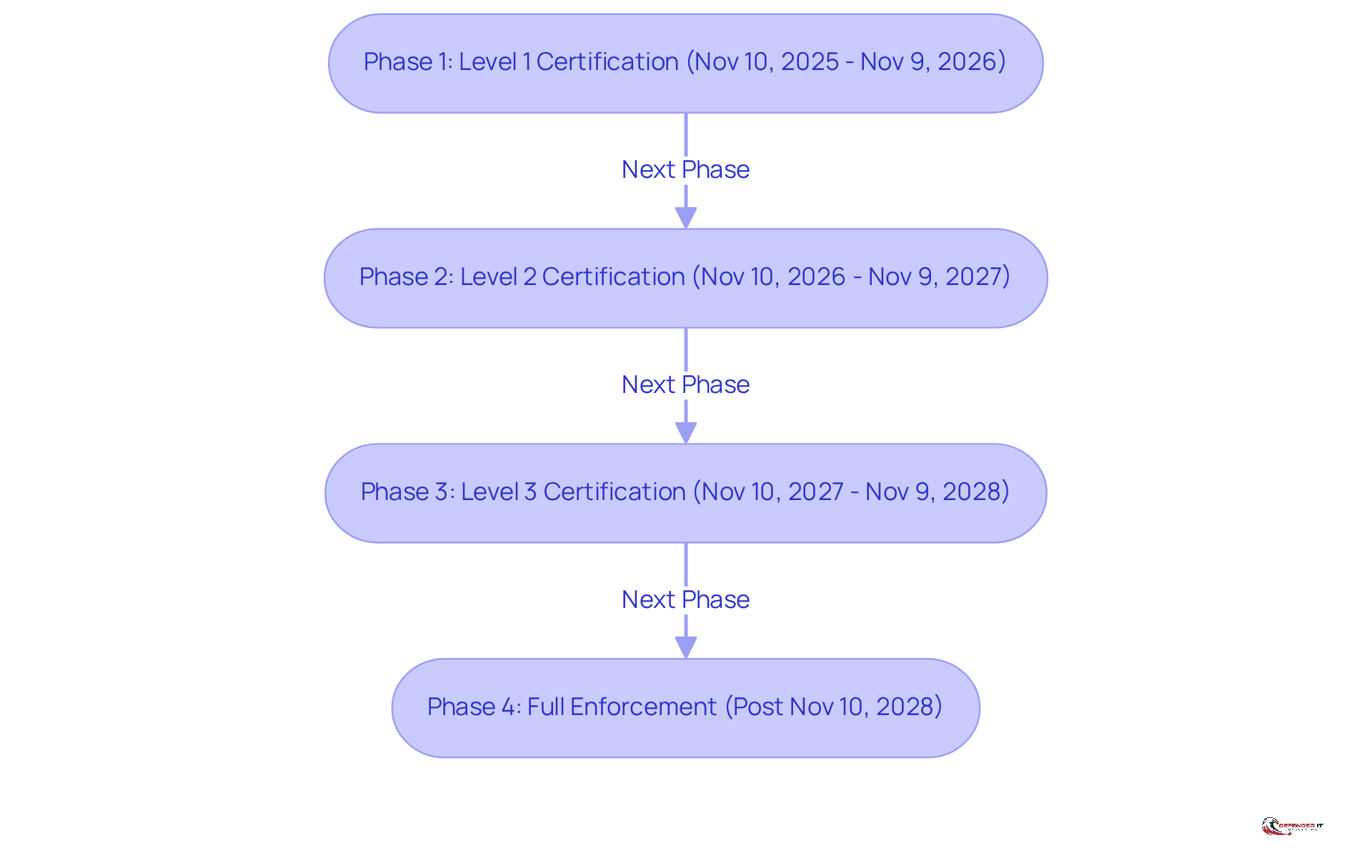
The implementation of the 48 CFR CMMC rule will occur in several phases, each with specific timelines and requirements:
- Phase 1 (November 10, 2025 – November 9, 2026): Service providers must attain a during this stage, focusing on fundamental cybersecurity hygiene practices as outlined in 48 CFR CMMC. This phase outlines self-evaluation criteria, enabling contractors to identify gaps and prepare for future compliance. The self-assessment is estimated to take 1-2 weeks, and organizations should ensure their SPRS scores are current during this period.
- Phase 2 (November 10, 2026 – November 9, 2027): Progression to Level 2 of the Cybersecurity Maturity Model Certification is required, necessitating adherence to . This phase emphasizes the protection of (CUI) and introduces C3PAO assessments for prioritized acquisitions, enhancing the rigor of compliance verification. The duration for Level 2 C3PAO assessments is expected to be 4-8 weeks, plus scheduling lead time.
- Phase 3 (November 10, 2027 – November 9, 2028): Contractors will need to attain Level 3 certification, which involves more rigorous safety practices and thorough documentation. This phase will also necessitate Level 2 C3PAO evaluations for a wider array of agreements, ensuring that vendors are well-prepared for the increased security requirements. Compliance typically takes 6-18 months, depending on the starting position.
- Phase 4 (Post-November 10, 2028): Complete enforcement of the requirements will be upheld, with service providers mandated to maintain adherence to the relevant certification level as outlined in their agreements. This phase marks the culmination of the , solidifying across the defense industrial base.
Understanding is essential for contractors to allocate resources efficiently and ensure they meet . The phased strategy allows for gradual adjustment, assisting organizations in navigating the complexities of regulations while minimizing disruptions to their operations. For instance, companies that began preparations early reported smoother transitions and better alignment with regulatory requirements, whereas those who delayed faced increased pressure and potential risks of non-compliance. As noted by Thomas Graham, many organizations are racing against the clock to avoid losing contract opportunities due to compliance requirements, underscoring the urgency of early preparation.
Provide Actionable Steps for Contractors to Achieve Compliance
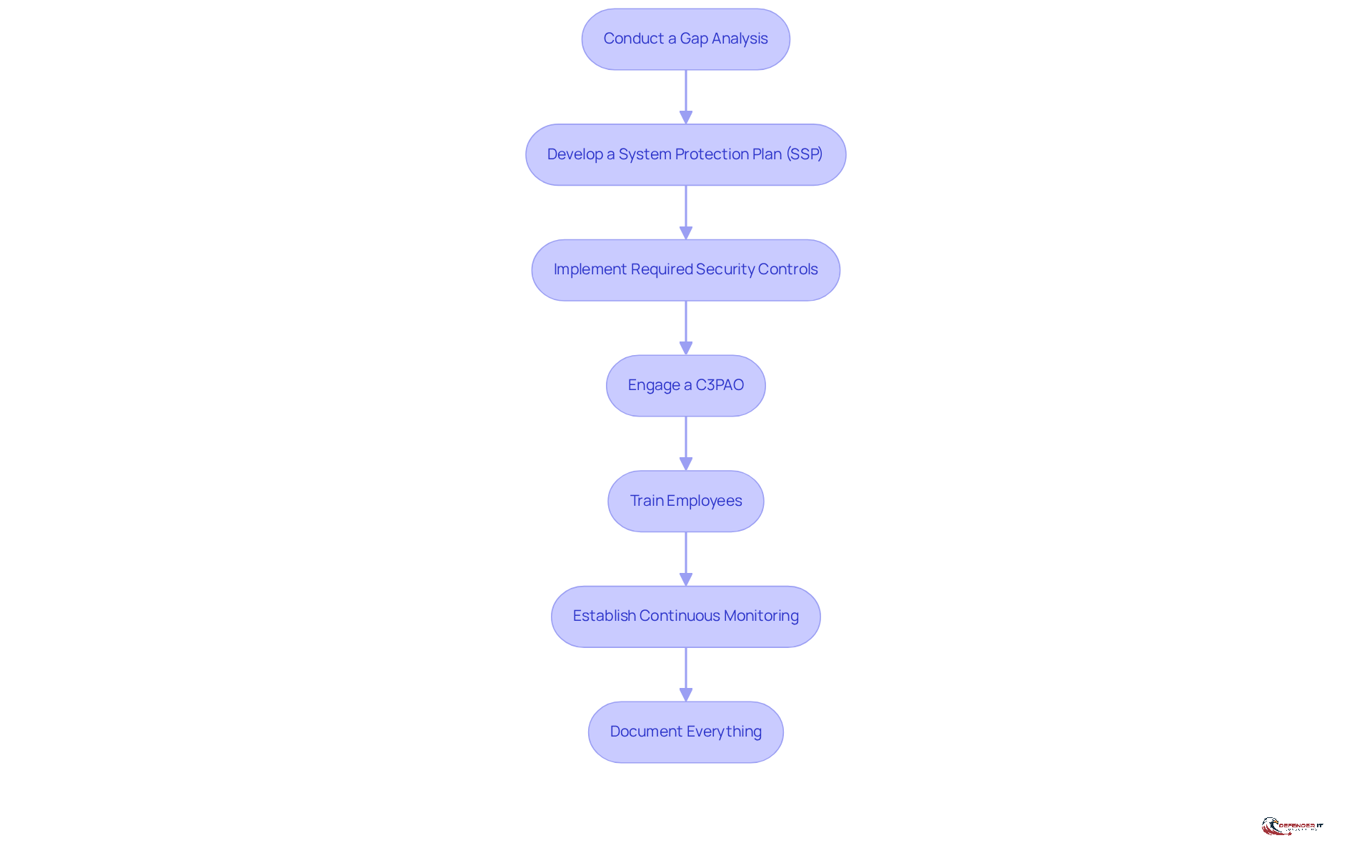
To achieve compliance with the 48 CFR CMMC rule, contractors should follow these actionable steps:
- Conduct a : Evaluate current against compliance standards to identify gaps that need addressing. Research indicates that . Notably, and fail Phase 1, underscoring the urgency of this step.
- Develop a : Create a comprehensive SSP that outlines how your organization will meet compliance requirements, including protective measures and policies. Approximately 42% of contractors have submitted System Security Plans, yet , highlighting the importance of this documentation.
- Implement Required Security Controls: Based on the , implement necessary security measures to achieve the required compliance level. Organizations must ensure their IT environment aligns with CMMC standards, which may involve transitioning to compliant service providers.
- Engage a C3PAO: If necessary, involve a (C3PAO) to conduct a formal evaluation of your adherence status. With only about and potential backlogs of six to twelve months for certification evaluations, timely engagement is crucial.
- Train Employees: Provide training for employees on and the significance of adherence to foster a culture of security within the organization. Regular training can significantly reduce the risk of incidents caused by human error, which accounts for nearly 88% of all .
- Establish Continuous Monitoring: Set up processes for continuous oversight of and incident reporting to ensure ongoing adherence. This proactive approach is essential, as 57% of contractors reported taking regulatory action after a cyber incident.
- Document Everything: Maintain detailed records of all regulatory efforts, evaluations, and security incidents to demonstrate adherence to relevant standards. Proof of adherence is essential, as organizations must show they are following their stated processes.
By following these steps, contractors can effectively prepare for compliance with the 48 CFR CMMC and enhance their cybersecurity posture.
Conclusion
The 48 CFR CMMC regulation represents a crucial framework established by the Department of Defense, designed to enhance the cybersecurity defenses of contractors handling sensitive government data. This regulation requires all service providers to attain a specific level of CMMC certification to qualify for DoD contracts, underscoring the necessity of protecting Controlled Unclassified Information (CUI) and Federal Contract Information (FCI) to bolster national security.
Key requirements and objectives of the 48 CFR CMMC rule are outlined, including:
- The tiered certification levels
- The implementation of security controls based on the NIST SP 800-171 framework
- The imperative for continuous monitoring and documentation
The phased implementation timeline delineates critical deadlines, urging contractors to prepare proactively to avoid compliance pitfalls. Actionable steps, such as:
- Conducting gap analyses
- Developing system protection plans
- Training employees
provide a clear roadmap for achieving compliance and enhancing cybersecurity posture.
Given the evolving regulatory landscape and the impending deadlines for compliance, it is vital for contractors to adopt proactive measures. The 48 CFR CMMC not only functions as a compliance requirement but also presents an opportunity to fortify overall cybersecurity practices. By adhering to these standards, contractors can secure their positions within the defense supply chain and contribute to a more secure national infrastructure. Taking decisive action now ensures readiness for the future, safeguarding sensitive information and fostering trust with the Department of Defense and other stakeholders.
Frequently Asked Questions
What is the 48 CFR CMMC regulation?
The 48 CFR CMMC regulation is a framework established by the Department of Defense (DoD) aimed at enhancing the cybersecurity posture of vendors who handle sensitive government data.
Why is the 48 CFR CMMC regulation important?
This regulation is important because it is designed to protect Controlled Unclassified Information (CUI) and Federal Contract Information (FCI) from cyber threats, thereby reinforcing national security.
Who is required to comply with the 48 CFR CMMC regulation?
All service providers seeking to qualify for DoD contracts must attain a designated level of CMMC certification.
How does the 48 CFR CMMC regulation affect builders?
Understanding the 48 CFR CMMC regulation is essential for builders as it directly impacts their ability to compete for and secure government contracts.
List of Sources
- Clarify the 48 CFR CMMC Rule: Definition and Importance
- CMMC Enforcement Explained: The 48 CFR Rule for DoD Contracts (https://schellman.com/blog/federal-compliance/48-cfr-rule-cmmc-requirements-explained)
- 48 CFR Published: CMMC Enforceable on Nov 10, 2025 (https://preveil.com/blog/cmmc-final-rule-published)
- Defense Contractors Face a New Reality: The Final 48 CFR Rule is Bringing CMMC into Federal Acquisition (https://bdo.com/insights/advisory/defense-contractors-new-reality-the-final-48-cfr-rule-is-bringing-cmmc-into-federal-acquisition)
- New Cybersecurity Standards Will Impact Defense Contractors in November: 5 Steps to Ensure CMMC Compliance (https://fisherphillips.com/en/insights/insights/new-cybersecurity-standards-will-impact-defense-contractors-in-november)
- CMMC 2.0 Governance Crisis: Data Shows 62% of Defense Contractors Lack Critical Controls for Certification Success (https://kiteworks.com/cmmc-compliance/over-half-dod-cmmc-suppliers-fail-governance)
- Outline Key Requirements and Objectives of the 48 CFR CMMC Rule
- SP 800-171 Rev. 2, Protecting Controlled Unclassified Information in Nonfederal Systems and Organizations | CSRC (https://csrc.nist.gov/pubs/sp/800/171/r2/upd1/final)
- CMMC Enforcement Explained: The 48 CFR Rule for DoD Contracts (https://schellman.com/blog/federal-compliance/48-cfr-rule-cmmc-requirements-explained)
- The 48 CFR CMMC Final Rule: What Contractors Need to Know Before November 10, 2025 – CMMC Compliance (https://cmmccompliance.us/the-48-cfr-cmmc-final-rule-what-contractors-need-to-know-before-november-10-2025)
- Pentagon finalizes CMMC rule, requiring continuous compliance across defense supply chain in three-year rollout – Industrial Cyber (https://industrialcyber.co/regulation-standards-and-compliance/pentagon-finalizes-cmmc-rule-requiring-continuous-compliance-across-defense-supply-chain-in-three-year-rollout)
- Defense Contractors Face a New Reality: The Final 48 CFR Rule is Bringing CMMC into Federal Acquisition (https://bdo.com/insights/advisory/defense-contractors-new-reality-the-final-48-cfr-rule-is-bringing-cmmc-into-federal-acquisition)
- Detail the Phased Implementation Timeline for CMMC Compliance
- CMMC Case Study – Manufacturing Firm – SysArc (https://sysarc.com/case-studies/cmmc-case-study-large-multinational-manufacturing-firm)
- Pentagon begins enforcing CMMC compliance, but readiness gaps remain (https://defensescoop.com/2025/11/10/cmmc-compliance-dod-enforcement-defense-industry-readiness-gaps)
- CMMC Implementation Timeline and Phased Rollout: When Requirements Take Effect [2026] (https://greypike.com/cmmc-knowledgebase/updates-regulatory-changes/cmmc-implementation-timeline-phased-rollout)
- Provide Actionable Steps for Contractors to Achieve Compliance
- CMMC compliance reckoning for defense contractors arrives | Federal News Network (https://federalnewsnetwork.com/commentary/2025/12/cmmc-compliance-reckoning-for-defense-contractors-arrives)
- Planning Your 2026 CMMC Compliance Roadmap (https://cybersheath.com/resources/blog/planning-your-2026-cmmc-compliance-roadmap)
- 205 Cybersecurity Stats and Facts for 2026 (https://vikingcloud.com/blog/cybersecurity-statistics)
- CyberSheath finds only 1% of defense contractors fully prepared for CMMC audits, warns of compliance gaps across DIB – Industrial Cyber (https://industrialcyber.co/reports/cybersheath-finds-only-1-of-defense-contractors-fully-prepared-for-cmmc-audits-warns-of-compliance-gaps-across-dib)
- The top 20 expert quotes from the Cyber Risk Virtual Summit (https://diligent.com/resources/blog/top-20-quotes-cyber-risk-virtual-summit)