General
Master CMMC Level 2 Self-Assessment in Four Simple Steps
Published April 10, 2026
Introduction
Mastering the CMMC Level 2 self-assessment is not merely a regulatory requirement; it represents a crucial step in protecting Controlled Unclassified Information (CUI) within organizations. Understanding the essential requirements and implementing a structured approach enables businesses to bolster their cybersecurity posture and achieve compliance with the 110 controls mandated by NIST SP 800-171. Despite this, many organizations encounter challenges with the complexities of the self-assessment process.
What strategies can effectively streamline this assessment and ensure readiness ahead of impending compliance deadlines?
Understand CMMC Level 2 Requirements
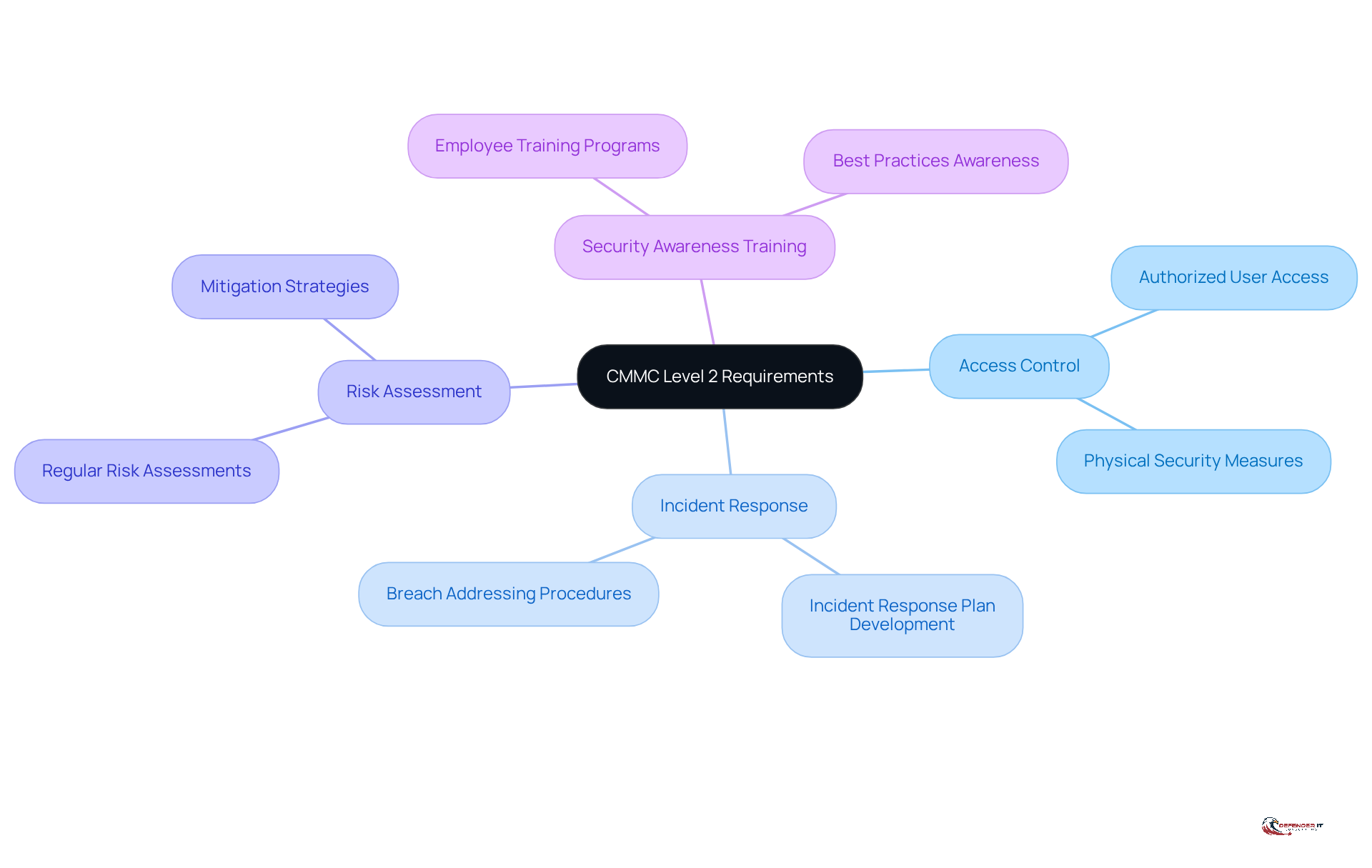
The CMMC Level 2 self-assessment focuses on the protection of Controlled Unclassified Information (CUI) and requires compliance with 110 controls derived from NIST SP 800-171. To effectively implement these standards, it is essential to understand the following key areas:
- Access Control: Ensure that only authorized users have access to sensitive information.
- [Incident Response](https://defenderit.consulting): Develop and implement an incident response plan to address potential breaches.
- [Risk Assessment](https://cmmccompliance.us/cmmc-level-2-in-2026-the-clock-is-ticking-and-the-line-is-already-long): Regularly conduct assessments to identify and mitigate risks to your information systems.
- Security Awareness Training: Provide employees with training on security best practices and awareness.
For a comprehensive list of controls, refer to the Assessment Guide available from the DoD CIO here.
Prepare for the Self-Assessment Process
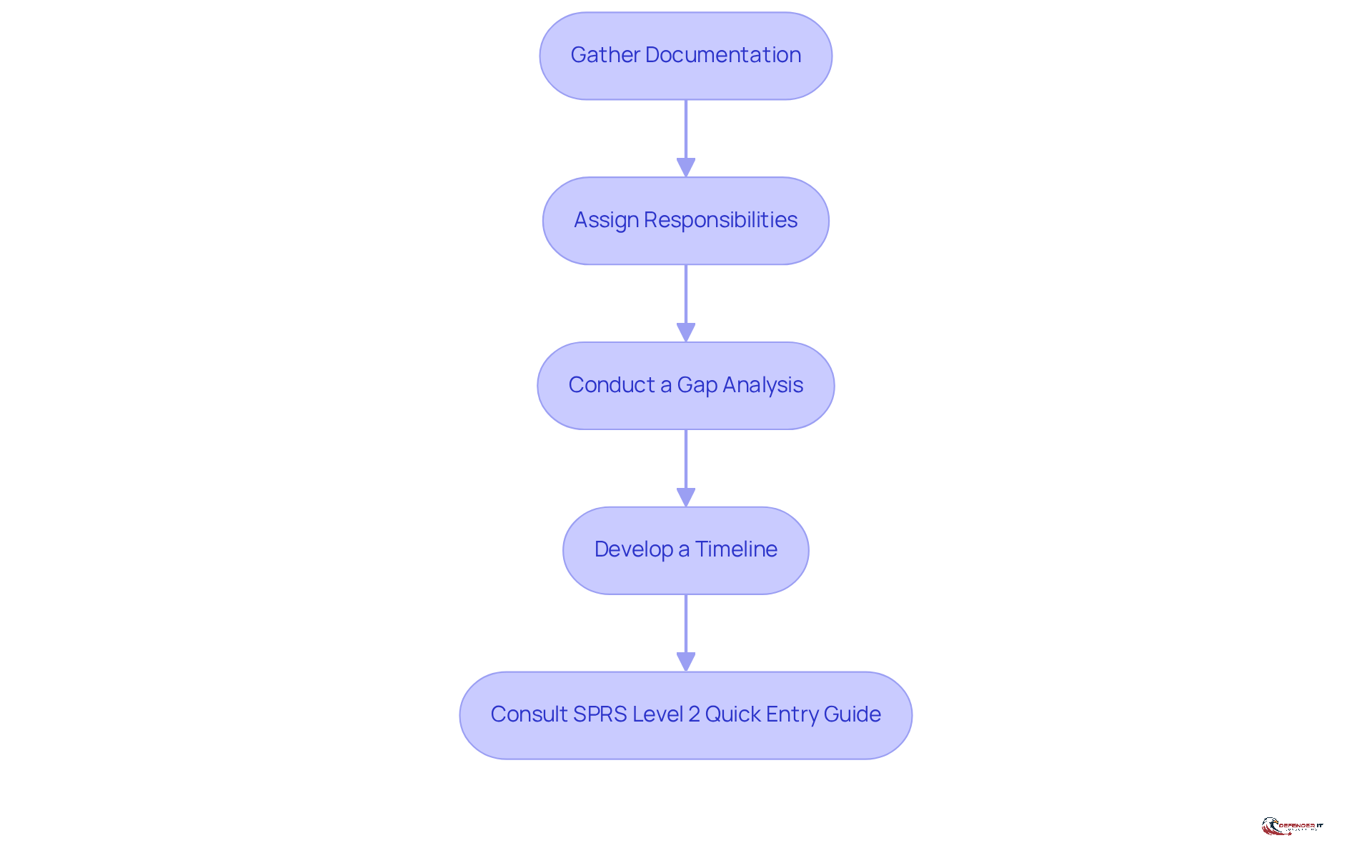
Preparation is crucial for conducting a successful CMMC Level 2 self-assessment. To ensure readiness, follow these steps:
- Gather Documentation: Compile all relevant policies, procedures, and evidence demonstrating adherence to the 110 controls. Essential documents include your System Security Plan (SSP) and any prior audit reports. Proper documentation is vital, as it supports your adherence efforts and facilitates a smoother assessment process. Notably, without contractual frameworks, 48% of organizations conducting supplier audits cannot guarantee adherence throughout their supply chains, underscoring the importance of thorough documentation.
- Assign Responsibilities: Designate a regulatory officer or a dedicated team to oversee the self-assessment. This ensures accountability and streamlines the process, allowing for focused efforts on tasks related to the CMMC Level 2 self-assessment.
- Conduct a Gap Analysis: Identify discrepancies between your current practices and CMMC requirements. Utilize a gap analysis template to systematically document your findings. Common gaps often include unimplemented security controls and inadequate documentation practices, which can hinder adherence. It is important to note that the average contractor SPRS score is -12, highlighting the necessity for thorough preparation.
- Develop a Timeline: Establish a timeline for completing the evaluation, ensuring sufficient time is allocated for each phase. This structured approach helps maintain momentum and ensures that all aspects of the assessment are thoroughly addressed. Organizations must resolve all ‘NOT MET’ requirements within 180 days of obtaining Conditional certification status to retain adherence.
For further assistance, consult the SPRS Level 2 Quick Entry Guide, which provides valuable insights into the evaluation process. Be aware that the Phase 2 deadline for compliance is November 10, 2026, making timely preparation essential.
Conduct the Self-Assessment
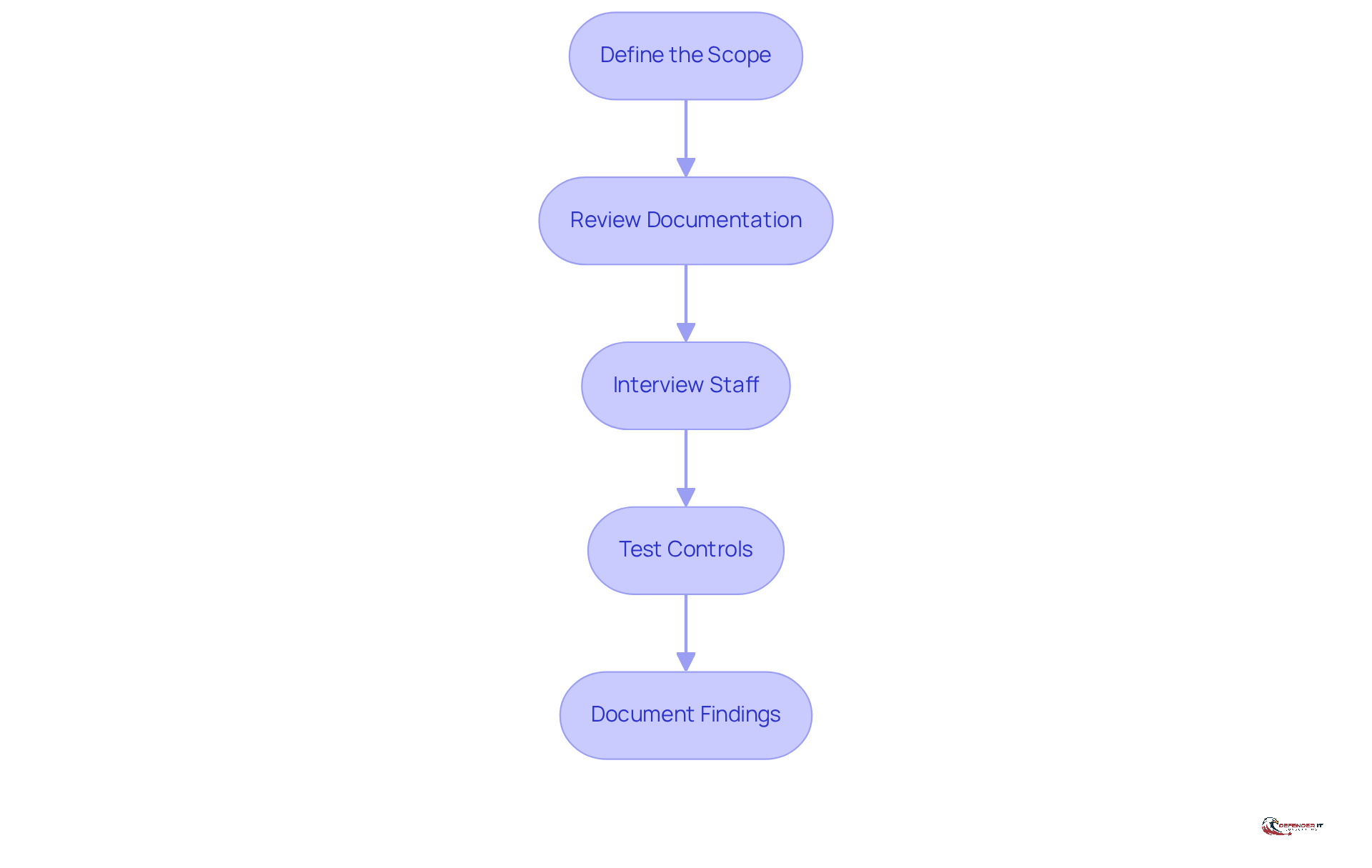
To conduct your CMMC Level 2 self-assessment effectively, follow these structured steps:
- Define the Scope: Clearly outline the boundaries of your assessment, specifying which systems and processes will be evaluated.
- Review Documentation: Examine all relevant documentation to ensure alignment with CMMC requirements.
- Interview Staff: Conduct interviews with key personnel to confirm that protective measures are understood and applied appropriately.
- Test Controls: Validate the effectiveness of security controls through rigorous testing, which may include penetration testing or vulnerability assessments.
- Document Findings: Record which requirements are met, not met, or not applicable, and capture these findings in a gap analysis template.
For a comprehensive checklist, refer to the guide on the CMMC Level 2 self-assessment available here.
Analyze Results and Develop an Action Plan
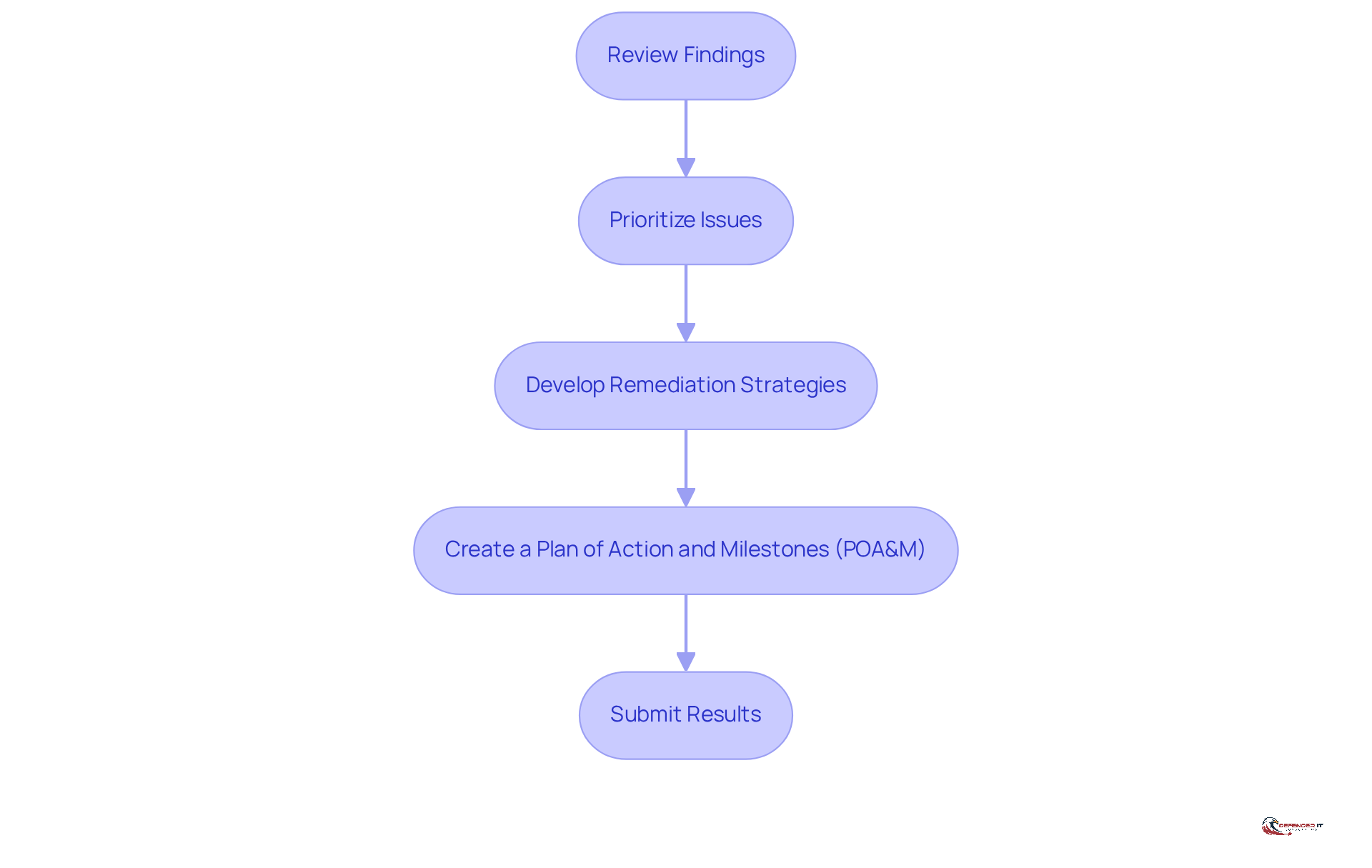
After completing the self-assessment, analyzing the results and creating a structured action plan is essential:
- Review Findings: Examine the self-assessment results thoroughly to pinpoint areas of non-compliance and identify potential vulnerabilities that could impact your organization.
- Prioritize Issues: Rank the identified issues based on their severity and potential impact, focusing on those that pose the greatest risk to your cybersecurity posture.
- Develop Remediation Strategies: Formulate specific strategies to address each identified gap. This may involve updating policies, enhancing training programs, or implementing advanced security technologies, such as multi-factor authentication (MFA) for all users accessing Controlled Unclassified Information (CUI) systems, to effectively mitigate risks.
- Create a Plan of Action and Milestones (POA&M): Document your remediation strategies in a POA&M, detailing timelines and assigning responsibilities for each action item to ensure accountability and progress tracking. It is crucial to record any unmet requirements in the POA&M during the evaluation process to uphold adherence tracking.
- Submit Results: Ensure that your self-assessment results are submitted to the Supplier Performance Risk System (SPRS) as required for conformity, maintaining transparency and adherence to regulatory expectations. Organizations must demonstrate genuine adherence to policies and procedures, rather than merely establishing them for regulatory purposes.
By following these steps, organizations can effectively address cybersecurity gaps and enhance their readiness for the CMMC Level 2 self-assessment, which typically involves a timeline of preparation (3-6 months), implementation (6-12 months), and assessment (3-6 months).
Conclusion
Mastering the CMMC Level 2 self-assessment is crucial for organizations that handle Controlled Unclassified Information (CUI). This structured approach ensures compliance with the 110 controls derived from NIST SP 800-171. Not only does this process safeguard sensitive data, but it also enhances the overall cybersecurity posture, making it a vital undertaking for any organization aiming to meet regulatory requirements.
The article delineates four essential steps:
- Understanding CMMC Level 2 requirements
- Preparing for the self-assessment
- Conducting the assessment
- Analyzing results to develop an action plan
Each step underscores the significance of thorough documentation, clear responsibilities, and a systematic evaluation of existing practices against compliance standards. By addressing access control, incident response, risk assessment, and security training, organizations can effectively mitigate vulnerabilities and strengthen their defenses.
Ultimately, the CMMC Level 2 self-assessment transcends being merely a regulatory checkbox; it serves as a proactive measure to protect sensitive information and ensure operational integrity. Organizations are urged to prioritize this process and leverage the insights gained to cultivate a culture of security awareness and continuous improvement. By taking these steps, organizations not only pave the way for compliance but also enhance their resilience against potential cybersecurity threats.
Frequently Asked Questions
What is the focus of the CMMC Level 2 self-assessment?
The CMMC Level 2 self-assessment focuses on the protection of Controlled Unclassified Information (CUI) and requires compliance with 110 controls derived from NIST SP 800-171.
What are some key areas to understand for CMMC Level 2 compliance?
Key areas include Access Control, Incident Response, Risk Assessment, and Security Awareness Training.
What does Access Control entail in the context of CMMC Level 2?
Access Control ensures that only authorized users have access to sensitive information.
Why is Incident Response important for CMMC Level 2 compliance?
Incident Response is important because it involves developing and implementing a plan to address potential breaches.
How often should Risk Assessments be conducted for CMMC Level 2?
Risk Assessments should be conducted regularly to identify and mitigate risks to information systems.
What is the purpose of Security Awareness Training in CMMC Level 2?
Security Awareness Training provides employees with knowledge on security best practices and awareness to protect sensitive information.
Where can I find a comprehensive list of controls for CMMC Level 2?
A comprehensive list of controls can be found in the Assessment Guide available from the DoD CIO.
List of Sources
- Understand CMMC Level 2 Requirements
- How High a Hurdle is CMMC Compliance for Today’s DoD Suppliers? (https://pivotpointsecurity.com/how-high-a-hurdle-is-cmmc-compliance-for-todays-dod-suppliers)
- CMMC Level 2 in 2026: The Clock Is Ticking and the Line Is Already Long – CMMC Compliance (https://cmmccompliance.us/cmmc-level-2-in-2026-the-clock-is-ticking-and-the-line-is-already-long)
- CMMC 2.0 in 2026: What Defense Contractors Must Do Now (https://trustconsultingservices.com/cmmc-2-0-in-2026-defense-compliance-guide)
- Navigating CMMC Changes in 2026: What You Need to Know (https://vc3.com/blog/navigating-cmmc-changes-in-2026)
- Demonstrate CMMC Level 2 Compliance: Don’t Risk Losing Federal Contracts – Cyclotron (https://cyclotron.com/post/cmmc-level-2-compliance-services)
- Prepare for the Self-Assessment Process
- SPRS Scoring & POA&M: Your CMMC Assessment Guide for DIB (https://elevateconsult.com/insights/sprs-scoring-poam-cmmc-level-2-assessment-guide-for-dib)
- CMMC Phase 2: What to Expect and How to Prepare [2026] (https://secureframe.com/blog/cmmc-phase-2-preparation)
- CMMC Basics: A Practical 2026 Roadmap for CMMC Compliance (https://securitymetrics.com/blog/cmmc-compliance-roadmap)
- CMMC 2.0 Governance Crisis: Data Shows 62% of Defense Contractors Lack Critical Controls for Certification Success (https://kiteworks.com/cmmc-compliance/over-half-dod-cmmc-suppliers-fail-governance)
- Planning Your 2026 CMMC Compliance Roadmap (https://cybersheath.com/resources/blog/planning-your-2026-cmmc-compliance-roadmap)
- Conduct the Self-Assessment
- CMMC Level 2 in 2026: The Clock Is Ticking and the Line Is Already Long – CMMC Compliance (https://cmmccompliance.us/cmmc-level-2-in-2026-the-clock-is-ticking-and-the-line-is-already-long)
- CMMC Basics: A Practical 2026 Roadmap for CMMC Compliance (https://securitymetrics.com/blog/cmmc-compliance-roadmap)
- CMMC Phase 2: What to Expect and How to Prepare [2026] (https://secureframe.com/blog/cmmc-phase-2-preparation)
- Your Step-by-Step CMMC Level 2 Checklist for 2026 (https://redriver.com/security/your-step-by-step-cmmc-level-2-checklist-for-2026)
- Navigating CMMC Changes in 2026: What You Need to Know (https://vc3.com/blog/navigating-cmmc-changes-in-2026)
- Analyze Results and Develop an Action Plan
- 2026 GAO Report Finds Critical Concerns with CMMC Ecosystem | Alluvionic (https://alluvionic.com/2026-gao-report-finds-critical-concerns-with-cmmc-ecosystem)
- Timeline and Cost Insights for CMMC Compliance (https://coalfirefederal.com/resource/timeline-and-cost-insights-for-cmmc-compliance)
- CMMC Phase 2: What to Expect and How to Prepare [2026] (https://secureframe.com/blog/cmmc-phase-2-preparation)
- How CMMC 2.0 Sets a New Standard for Cyber Readiness Across the Defense Industrial Base – SecurityScorecard (https://securityscorecard.com/blog/how-cmmc-2-0-sets-a-new-standard-for-cyber-readiness-across-the-defense-industrial-base)
- 10 Essential CMMC Controls List for Compliance Success, Cyber Solutions Inc (https://discovercybersolutions.com/blog-posts/10-essential-cmmc-controls-list-for-compliance-success)