Business
Best Practices for Cloud Integration Consulting Services in Manufacturing
Published June 2, 2026
Introduction
In the competitive realm of manufacturing, cloud integration is essential for survival and growth. As organizations strive to enhance efficiency, reduce costs, and leverage data analytics, understanding the best practices for cloud integration consulting services becomes paramount. Manufacturers often struggle with outdated systems that hinder their ability to adopt new technologies while ensuring compliance with stringent regulatory standards.
How can they effectively assess their needs, choose the right consulting partners, and prioritize ongoing support to fully realize the benefits of cloud integration? By embracing these strategies, manufacturers can position themselves for success in an increasingly digital marketplace.
Assess Organizational Needs for Cloud Integration
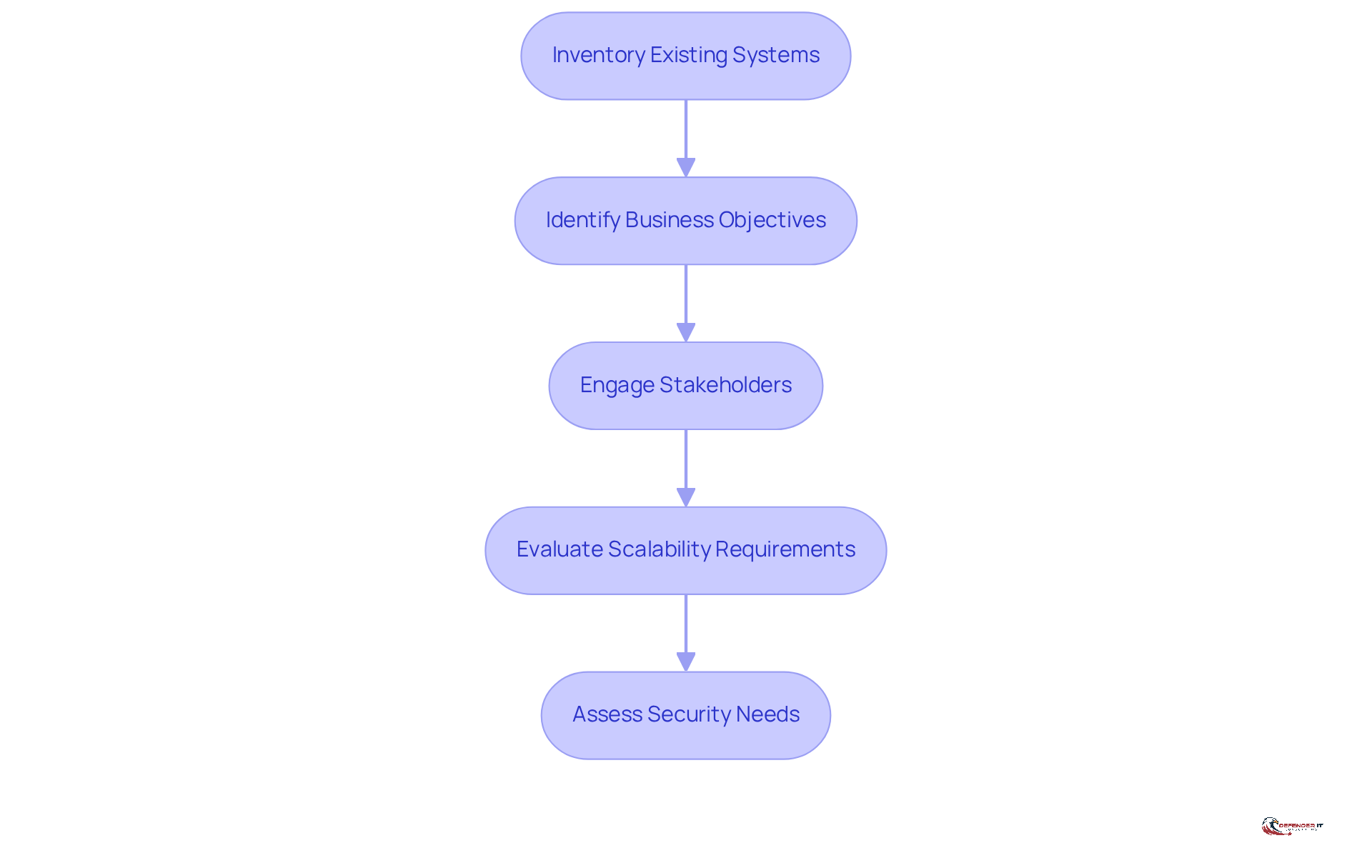
To effectively integrate online solutions in manufacturing, organizations must first navigate the complexities of their existing IT landscape. This process involves evaluating the current IT infrastructure, identifying gaps, and understanding operational workflows. Key steps include:
- Inventory Existing Systems: Catalog all current systems and applications to gain a clear understanding of existing resources and what needs to be integrated.
- Identify Business Objectives: Clearly define the goals for digital integration, such as improving efficiency, reducing costs, or enhancing data analytics capabilities.
- Engage Stakeholders: Involve key stakeholders from various departments to gather insights on their needs and expectations regarding digital integration.
- Evaluate Scalability Requirements: Consider future growth and how online solutions can accommodate increasing demands, as 97% of IT leaders plan to expand their systems, indicating a strong trend towards digital adoption in the manufacturing sector.
- Assess Security Needs: Identify specific security requirements, particularly in regulated industries, to ensure compliance and protect sensitive data.
In 2026, it is anticipated that 85% of businesses globally will adopt the cloud-first principle, indicating the increasing acknowledgment of computing services’ advantages, including enhanced operational efficiency and lower expenses. Without a tailored integration strategy, organizations risk falling behind in a rapidly evolving digital landscape.
Evaluate Expertise and Experience of Consulting Partners
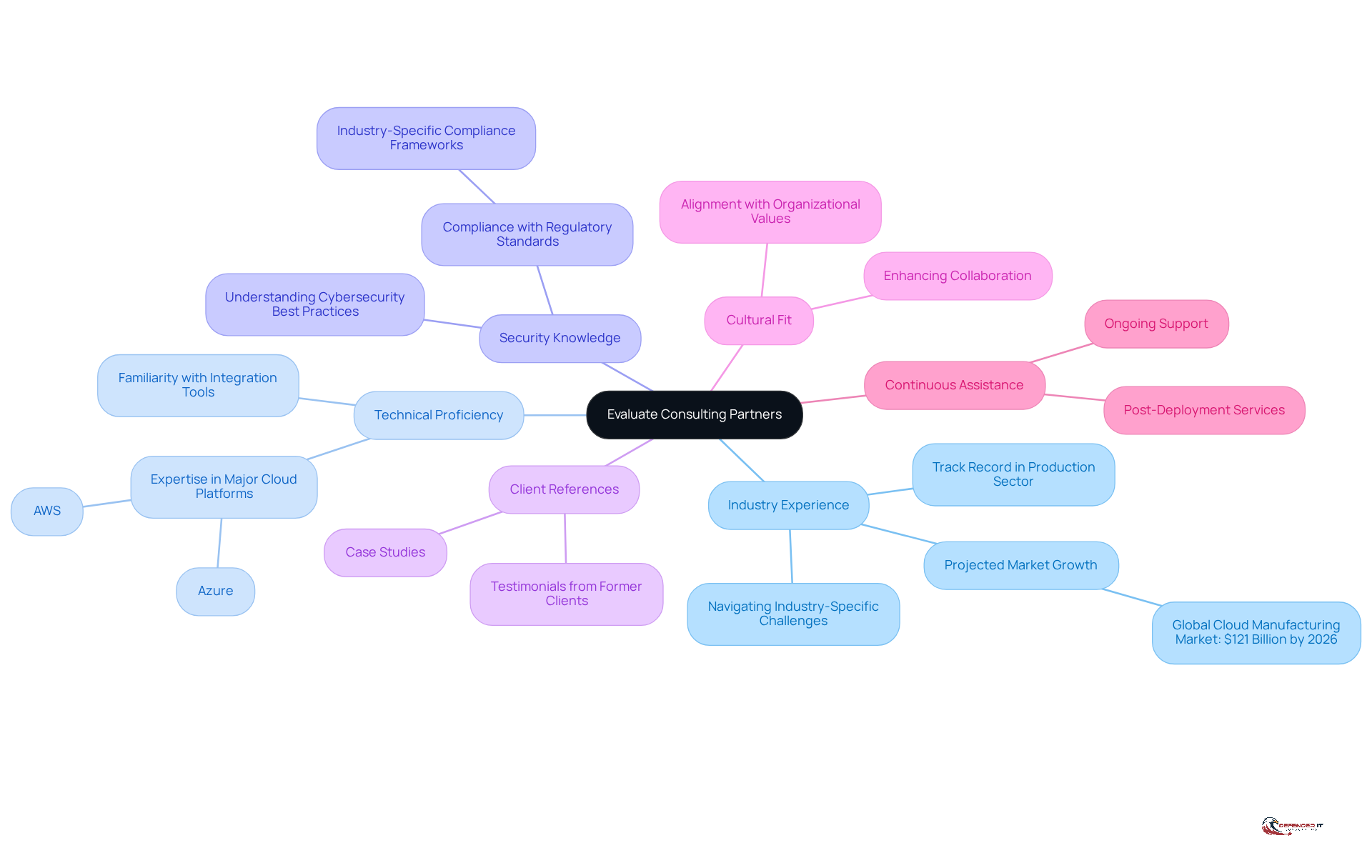
Selecting the right consulting partner for cloud integration consulting services is crucial for achieving successful outcomes. Organizations should evaluate potential partners based on several key criteria:
- Industry Experience: Prioritize consultants with a strong track record in the production sector, as they will be more adept at navigating industry-specific challenges and compliance requirements. With the worldwide digital production market anticipated to hit $121 billion by 2026, having a knowledgeable partner is essential for capitalizing on this expansion.
- Technical Proficiency: Assess their expertise in major cloud platforms such as AWS and Azure, as well as their familiarity with integration tools that are crucial for seamless cloud operations.
- Security Knowledge: Ensure the partner possesses a deep understanding of cybersecurity best practices and regulatory standards relevant to manufacturing, as these are critical for protecting sensitive data. This means understanding compliance frameworks that matter most in regulated industries.
- Client References: Request case studies or testimonials from former clients to assess the partner’s effectiveness and reliability in providing online solutions.
- Cultural Fit: Consider whether the consulting partner aligns with your entity’s values and work culture, as this alignment can significantly enhance collaboration and project success.
- Continuous Assistance: Seek partners that provide continuous assistance and post-deployment services, as these are vital for guaranteeing the long-term success of integration efforts.
By carefully assessing potential consulting partners for cloud integration consulting services, organizations can secure a capable team. This team will deliver tailored solutions that effectively address unique needs. With 87% of manufacturers already incorporating online solutions into their business strategies and the potential for a 20% increase in profits from effective partnerships, the right partnership not only enhances operational efficiency but also positions organizations for sustained growth in a competitive market.
Ensure Compliance with Regulatory Standards
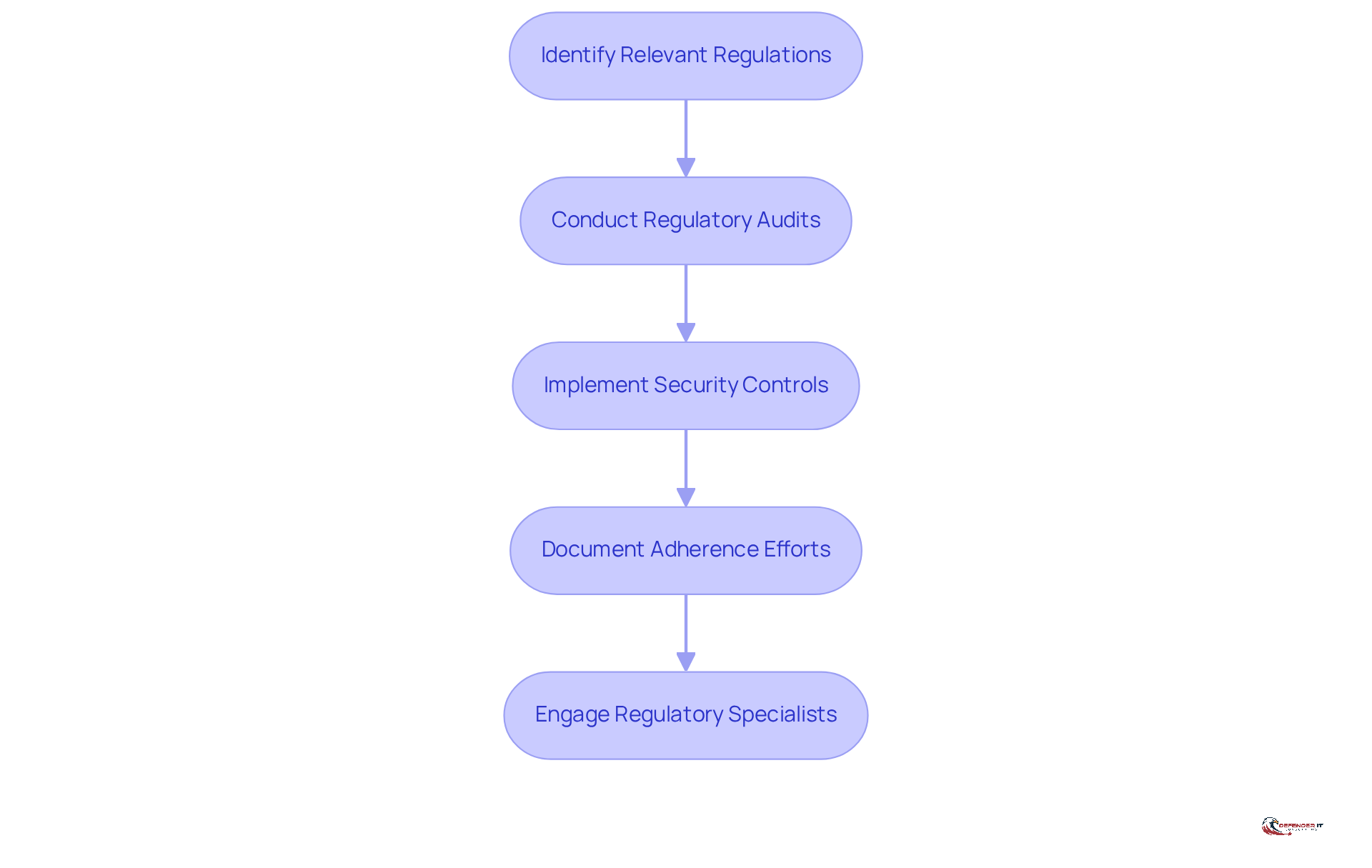
Successful cloud integration in manufacturing hinges on strict compliance with regulatory standards. Organizations should adopt the following best practices to ensure they meet all necessary requirements:
- Identify Relevant Regulations: Evaluate which regulations pertain to your entity, including GDPR, HIPAA, and industry-specific standards, to ensure thorough adherence.
- Conduct Regulatory Audits: Regularly carry out audits to assess current practices against regulatory requirements. Manufacturing firms that conduct regular audits are more adept at identifying compliance gaps and enhancing their adherence. With tighter timelines and shifting reporting requirements anticipated in 2026, these audits become even more critical.
- Implement Security Controls: Establish robust security measures, such as data encryption, access controls, and continuous monitoring, to safeguard sensitive information from potential breaches.
- Document Adherence Efforts: Maintain detailed documentation of regulatory processes and audit results to provide evidence of conformity to regulations, which is crucial for both internal assessments and external audits.
- Engage Regulatory Specialists: Collaborate with regulatory experts to navigate the complexities of legal environments, ensuring that all aspects of cloud integration are in accordance and effectively managed. Specialists emphasize that understanding the impact of risks on the organization is crucial for effective risk management.
By emphasizing regulatory adherence, businesses can significantly reduce the risks associated with data breaches and regulatory fines, thereby enhancing their reputation and operational integrity in the manufacturing sector. A case study of LoopThread illustrates the severe repercussions of ignoring regulations; the failure to uphold necessary audits resulted in a significant data breach, underscoring the importance of regular evaluations of adherence.
Prioritize Ongoing Support and Training
To fully harness the advantages of online integration, companies must prioritize ongoing support and education for their teams. Effective strategies include:
- Develop Comprehensive Training Programs: Establish training initiatives that encompass technology, security practices, and compliance requirements tailored to the manufacturing sector.
- Leverage E-Learning Platforms: Utilize online training resources to offer flexible learning opportunities, accommodating diverse employee schedules and learning preferences. Research indicates that e-learning can cut training time by 40-60% compared to traditional classroom methods, while also improving knowledge retention by 25-60%, thereby boosting efficiency and retention rates.
- Encourage Certification: Support employees in obtaining relevant certifications in pertinent technologies, which not only enhance their skills but also contribute to the organization’s overall expertise in these areas.
- Establish a Support Framework: Create a robust support system that enables employees to seek assistance and share knowledge about internet technologies, fostering a collaborative learning environment.
- Regularly Update Training Content: Continuously refresh training materials to incorporate the latest advancements in online technology and security practices. Significantly, 76% of employees will stay with a company if ongoing learning opportunities are available, emphasizing the importance of continuous learning in employee retention.
Investing in ongoing support and training equips teams to effectively leverage cloud integration consulting services. This investment not only enhances operational efficiency but also strengthens employee retention and engagement. Ultimately, a commitment to continuous learning and support can transform a company’s operational landscape and employee satisfaction.

Conclusion
In the rapidly changing landscape of manufacturing, the necessity of effective cloud integration cannot be overstated. Organizations aiming to enhance their operational efficiency and competitiveness must recognize that cloud integration is not merely an option but a fundamental requirement. By meticulously assessing organizational needs, selecting the right consulting partners, ensuring compliance with regulatory standards, and prioritizing ongoing support and training, businesses can successfully navigate the complexities of digital transformation.
A tailored integration strategy is essential for successful cloud integration in manufacturing. From evaluating existing IT infrastructures to engaging stakeholders and ensuring security compliance, each step plays a critical role in achieving seamless cloud integration. Moreover, the selection of experienced consulting partners and the establishment of comprehensive training programs are vital for fostering a culture of continuous learning and adaptation within manufacturing firms.
By embracing these best practices, organizations can achieve immediate success and set the stage for sustainable growth in a digital world. As the manufacturing sector continues to evolve, prioritizing cloud integration will be crucial for staying ahead of the curve and unlocking the full potential of technological advancements. Organizations that delay cloud integration may find themselves at a significant disadvantage in the competitive manufacturing arena.
Frequently Asked Questions
What is the first step in integrating online solutions in manufacturing?
The first step is to assess the existing IT landscape by evaluating the current IT infrastructure, identifying gaps, and understanding operational workflows.
How should organizations inventory their existing systems?
Organizations should catalog all current systems and applications to gain a clear understanding of existing resources and what needs to be integrated.
Why is it important to identify business objectives for digital integration?
Clearly defining the goals for digital integration, such as improving efficiency, reducing costs, or enhancing data analytics capabilities, helps guide the integration process effectively.
Who should be engaged during the integration process?
Key stakeholders from various departments should be involved to gather insights on their needs and expectations regarding digital integration.
What should organizations consider regarding scalability requirements?
Organizations should consider future growth and how online solutions can accommodate increasing demands, as 97% of IT leaders plan to expand their systems.
Why is it crucial to assess security needs during cloud integration?
Identifying specific security requirements is essential, particularly in regulated industries, to ensure compliance and protect sensitive data.
What is the anticipated trend for cloud adoption by 2026?
It is anticipated that 85% of businesses globally will adopt the cloud-first principle, reflecting the increasing acknowledgment of the advantages of computing services.
What risks do organizations face without a tailored integration strategy?
Without a tailored integration strategy, organizations risk falling behind in a rapidly evolving digital landscape.
List of Sources
- Assess Organizational Needs for Cloud Integration
- How Many Companies Use Cloud Computing? [Key Stats] (https://edgedelta.com/company/knowledge-center/how-many-companies-use-cloud-computing)
- Cloud Technology Trends For Modern Manufacturing (https://wm-synergy.com/top-cloud-technology-trends-in-modern-manufacturing)
- Managed IT Services, IT Consulting, Cybersecurity, and IT Solutions from Ntiva (https://ntiva.com/blog/cloud-computing-for-manufacturing-companies)
- Cloud Computing in Manufacturing: Benefits and Use Cases (https://comarch.com/trade-and-services/ict/news/cloud-computing-in-manufacturing-benefits-and-use-cases)
- Evaluate Expertise and Experience of Consulting Partners
- Cloud Computing in Manufacturing: Benefits and Use Cases (https://comarch.com/trade-and-services/ict/news/cloud-computing-in-manufacturing-benefits-and-use-cases)
- Top Benefits to Manufacturing in the Cloud | News & Insights | Gray (https://gray.com/insights/top-benefits-to-manufacturing-in-the-cloud)
- Choosing the Right Cloud Consulting Company: A Decision-Making Guide (https://sptechusa.com/blog/choosing-the-right-cloud-consulting-company-a-decision-making-guide)
- Choosing the Right Cloud Consulting Partner: A Detailed Guide for Cloud Success (https://lablabs.io/blog/choosing-the-right-cloud-consulting-partner-a-detailed-guide-for-cloud-success)
- Ensure Compliance with Regulatory Standards
- Cloud Compliance Audits: A Guide to Getting Audit-Ready (https://linfordco.com/blog/cloud-computing-audits)
- 2026 Rules Reshaping Manufacturing Supply Chains | Certa (https://certa.ai/resources/2026-regulatory-changes-reshaping-manufacturing-supply-chains)
- New regulatory requirements for cloud services (https://cms.law/en/bel/legal-updates/new-regulatory-requirements-for-cloud-services)
- Regulatory Changes to Expect in 2026 (https://blog.sourceintelligence.com/regulatory-changes-to-expect-2026)
- Regulatory Compliance in the Cloud (https://ahead.com/resources/regulatory-compliance-in-the-cloud)
- Prioritize Ongoing Support and Training
- eLearning Statistics And Facts For 2026 (https://elearningindustry.com/elearning-statistics-and-facts)
- The secret to adopting AI, cloud in agencies? Culture change, enhanced training | Federal News Network (https://federalnewsnetwork.com/commentary/2025/07/the-secret-to-adopting-ai-cloud-in-agencies-culture-change-enhanced-training)
- CloudThat | Cloud Consulting, Services, Training & Certifications (https://cloudthat.com/resources/blog/empowering-your-team-with-corporate-cloud-training-why-it-matters)
- Essential Employee Training Statistics for 2026 | Levelup LMS (https://leveluplms.com/key-employee-training-statistics-data-driven-trends-for-2026)
- eLearning Statistics for 2026: Corporate Trends and Insights to Know (https://ispring.com/knowledge-hub/elearning-statistics)