Business
4 Best Practices for Choosing Cloud Integration Consultants
Published June 1, 2026
Introduction
Aligning cloud services with existing systems presents significant challenges that can hinder operational efficiency. As organizations increasingly turn to cloud integration to streamline processes and ensure compliance, the role of specialized consultants becomes paramount. Organizations must carefully evaluate their options to select the most suitable cloud integration consultants, ensuring they can effectively navigate the complexities of the digital landscape.
Define Cloud Integration Consulting
Aligning cloud services with on-premises systems is a complex yet essential endeavor for enhancing operational capabilities. This process involves several key components:
- Assessment of Current Systems: A thorough evaluation of existing IT infrastructure identifies integration points and potential challenges, ensuring a clear understanding of the current landscape. Identifying integration points and potential challenges can be daunting for organizations, often leading to delays in cloud adoption.
- Strategy Development: Crafting a customized unification strategy that aligns with business objectives and compliance requirements is crucial. This strategic alignment assists organizations in navigating complex regulatory environments while optimizing their technology investments.
- Implementation: Deploying connection solutions links disparate systems, ensuring data consistency and accessibility. Successful implementations can lead to significant operational efficiency improvements, with case studies showing businesses reducing order fulfillment times by up to 30% and optimizing inventory management through effective online connectivity.
- Ongoing Support: Continuous monitoring and optimization of integrated systems are vital for adapting to evolving business needs. Without ongoing support, organizations risk falling behind in a rapidly changing market, making it essential to respond swiftly to market changes and maintain a competitive edge.
Engaging cloud integration consultants provides businesses with the expertise needed to enhance operational capabilities and effectively streamline processes. By leveraging the services of cloud integration consultants, businesses can not only improve efficiency but also drive innovation and growth in an increasingly digital landscape. Ultimately, the right cloud connection consulting can be the difference between stagnation and growth in a digital-first world.

Identify Benefits for Regulated Industries
Organizations in regulated industries often face significant challenges in maintaining compliance and security, making cloud integration consultants a vital strategy. Cloud integration consulting offers numerous benefits for these sectors, including:
- Enhanced Compliance: By integrating systems, organizations can ensure that data handling processes meet regulatory standards, reducing the risk of non-compliance.
- Improved Security Posture: Cloud integration allows for centralized security measures, making it easier to implement robust security protocols and monitor for threats.
- Operational Efficiency: Streamlined processes reduce manual intervention, minimizing errors and increasing productivity.
- Scalability: Integrated online solutions can easily expand to accommodate growing data needs and evolving regulatory requirements.
- Cost Reduction: By optimizing resource allocation and reducing redundancy, organizations can lower operational costs while maintaining compliance.
These benefits demonstrate that cloud integration consultants provide more than just a technical necessity; they offer a strategic advantage for companies operating in tightly regulated environments. Ultimately, embracing cloud integration consultants can redefine how organizations navigate regulatory landscapes and enhance their operational resilience.

Select the Right Consultant
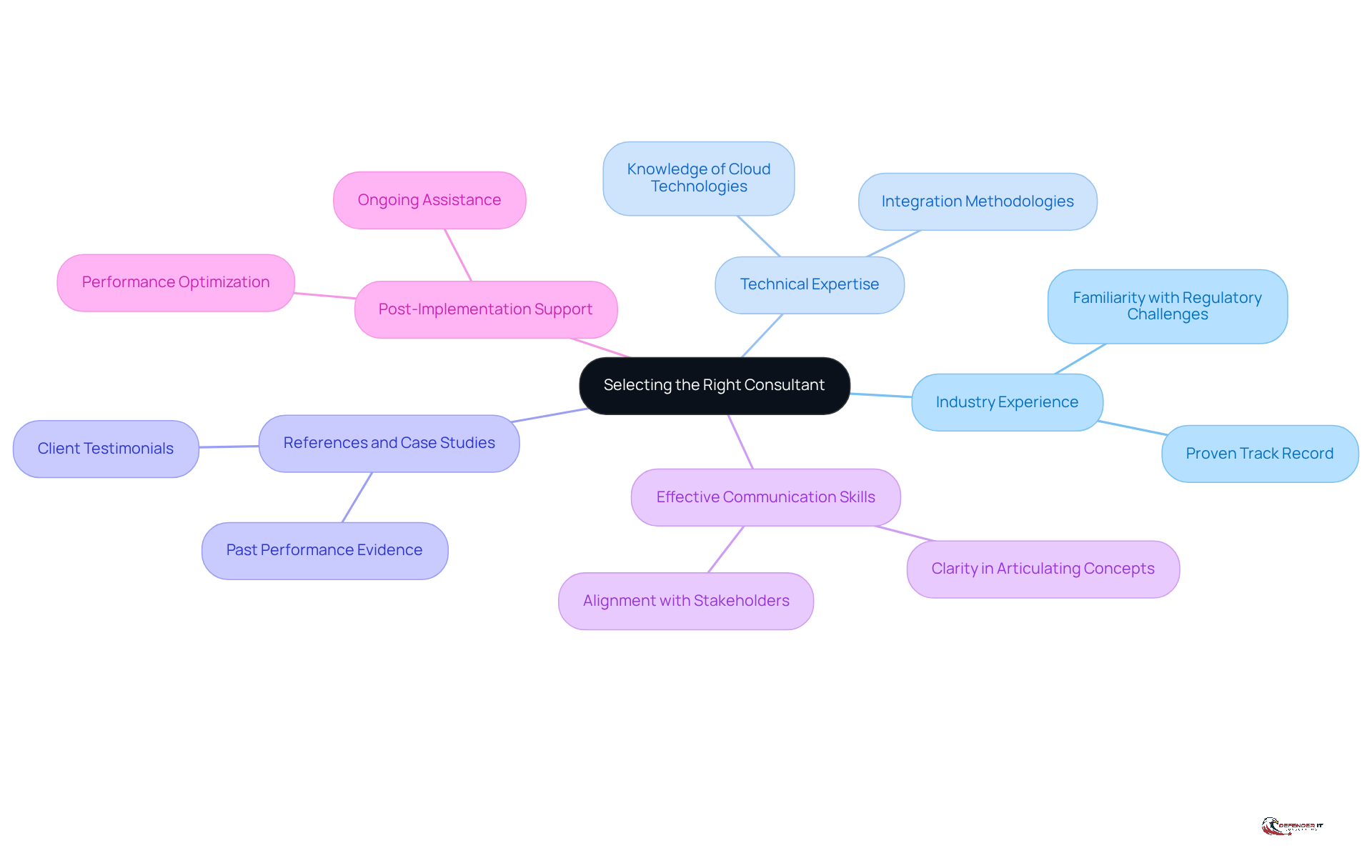
Choosing the right cloud integration consultants can be daunting, especially with the myriad of options available. To navigate this process effectively, consider the following key factors:
- Industry Experience: Look for consultants with a proven track record in your specific industry, particularly in navigating regulatory challenges. Their familiarity with industry nuances can significantly enhance the integration process when working with cloud integration consultants.
- Technical Expertise: Ensure the cloud integration consultants possess deep knowledge of cloud technologies and integration methodologies that are relevant to your business. The expertise of cloud integration consultants is crucial for tailoring solutions that meet your specific needs.
- References and Case Studies: Request case studies or references from previous clients of cloud integration consultants to assess their effectiveness and reliability. This evidence can provide insights into the past performance and client satisfaction of cloud integration consultants.
- Effective communication skills are vital for collaboration, especially when working with cloud integration consultants. Choose cloud integration consultants who can clearly articulate complex concepts, ensuring that all stakeholders are aligned throughout the integration process.
- Post-Implementation Support: Inquire about the level of ongoing assistance provided by cloud integration consultants after the system is complete. This support can significantly impact the long-term success and overall effectiveness of cloud integration consultants.
Neglecting these considerations could result in costly integration failures and compliance risks that may hinder your business’s growth.
Manage Consultant Engagement Effectively
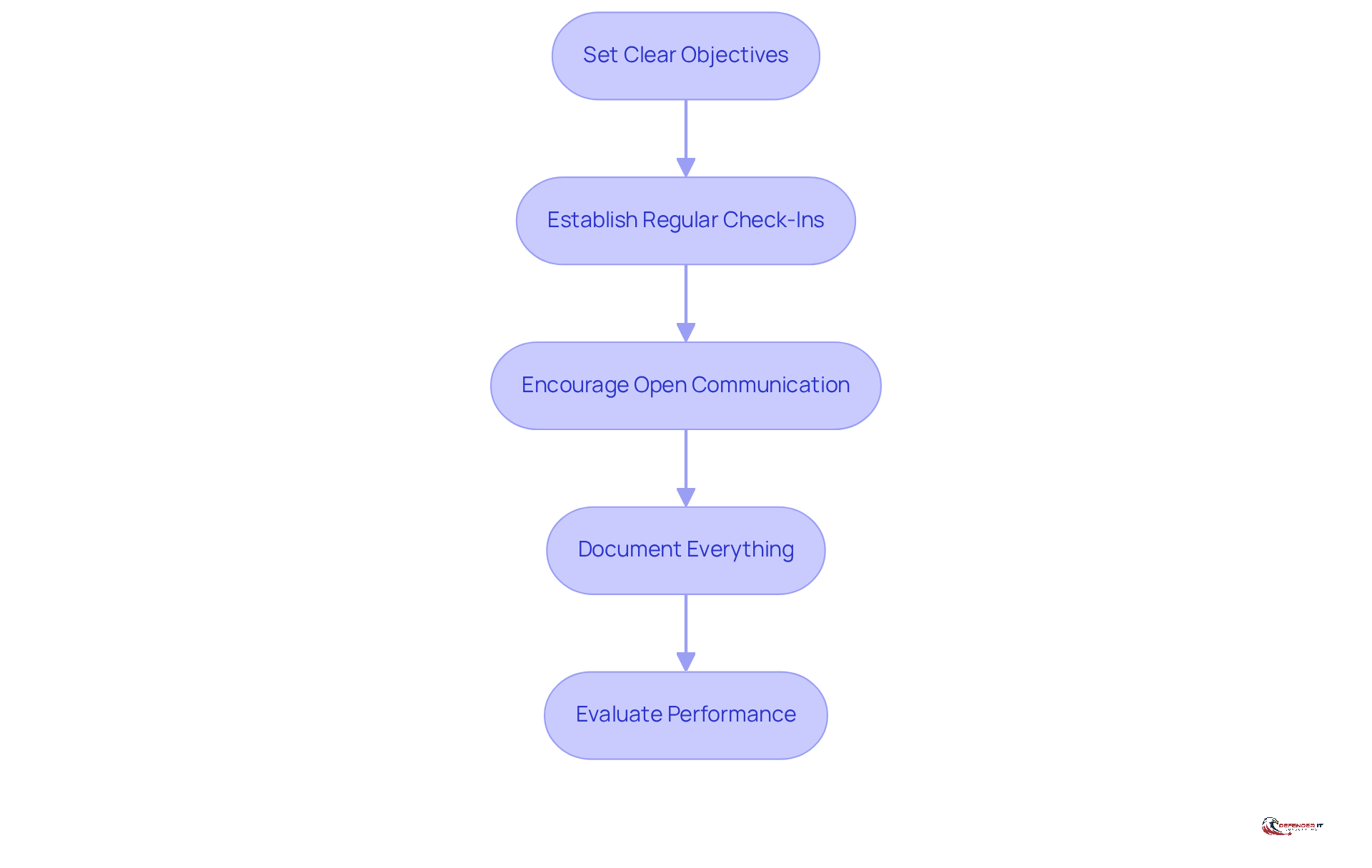
Organizations often face challenges in consultant engagements, particularly when objectives are not clearly defined. To manage consultant engagement effectively, organizations should adopt the following best practices:
- Set Clear Objectives: Setting clear objectives is crucial for aligning the organization with the consultant’s efforts. Research indicates that organizations with well-defined goals achieve significantly higher success rates in advisory engagements, ultimately improving project outcomes. Steven Shapiro emphasizes that comprehending client requirements is essential; advisors should not merely confirm preconceived ideas.
- Establish Regular Check-Ins: Frequent meetings are vital for discussing progress, addressing challenges, and adjusting strategies as necessary. Regular check-ins create a collaborative atmosphere, essential for navigating the complexities with the help of cloud integration consultants in projects.
- Encourage Open Communication: Fostering an environment where feedback is shared openly allows for continuous improvement and adaptation. Effective communication is a cornerstone of successful client engagements, clarifying expectations and resolving issues promptly. Trust is foundational in these relationships, built through integrity and ethical behavior.
- Document Everything: Maintaining detailed records of decisions, changes, and agreements throughout the engagement ensures accountability and clarity. This practice aids in tracking progress and serves as a reference for future collaborations.
- Evaluate Performance: Following the engagement, organizations should evaluate the advisor’s performance against the established objectives. This evaluation not only informs future collaborations but also enhances the overall effectiveness of consultant engagements. Internal alignment on success metrics before involving external advisors is essential to maximize the value derived from these partnerships.
Ultimately, the success of consultant engagements hinges on the ability to establish clear objectives and maintain open communication throughout the process.
Conclusion
For organizations striving to enhance operational efficiency and navigate digital transformation, engaging cloud integration consultants is essential. Aligning cloud services with existing systems allows businesses to streamline processes and drive innovation, positioning them for growth in a competitive market.
This article has outlined essential practices for selecting the right cloud integration consultants to ensure successful outcomes. Key considerations include:
- Assessing the consultants’ industry experience
- Evaluating technical expertise
- Reviewing communication skills
- Ensuring ongoing support post-implementation
Additionally, managing consultant engagement effectively through clear objectives, regular check-ins, and open communication is crucial.
In a landscape marked by rapid technological change, the strategic use of cloud integration consultants can be the key to unlocking sustained operational success.
Frequently Asked Questions
What is cloud integration consulting?
Cloud integration consulting involves aligning cloud services with on-premises systems to enhance operational capabilities. It includes assessing current systems, developing strategies, implementing solutions, and providing ongoing support.
Why is assessing current systems important in cloud integration?
Assessing current systems helps identify integration points and potential challenges, ensuring a clear understanding of the existing IT infrastructure. This evaluation is crucial for successful cloud adoption.
What does strategy development entail in the context of cloud integration?
Strategy development involves crafting a customized unification strategy that aligns with business objectives and compliance requirements. This strategic alignment helps organizations navigate regulatory environments while optimizing technology investments.
How does implementation work in cloud integration?
Implementation involves deploying connection solutions that link disparate systems, ensuring data consistency and accessibility. Successful implementations can lead to significant operational efficiency improvements, such as reducing order fulfillment times by up to 30%.
What is the role of ongoing support in cloud integration?
Ongoing support includes continuous monitoring and optimization of integrated systems to adapt to evolving business needs. It is essential for maintaining a competitive edge and responding swiftly to market changes.
How can engaging cloud integration consultants benefit businesses?
Engaging cloud integration consultants provides businesses with the expertise needed to enhance operational capabilities, streamline processes, improve efficiency, and drive innovation and growth in a digital landscape.
List of Sources
- Define Cloud Integration Consulting
- U.S. Firms Turn to Cloud Computing Consulting as Digital Transformation Accelerates (https://einpresswire.com/article/858098286/u-s-firms-turn-to-cloud-computing-consulting-as-digital-transformation-accelerates)
- Cloud Integration Solutions for Business Growth (https://dataforest.ai/blog/cloud-integration-as-a-service-the-ultimate-solution-for-streamlining-your-business-processes)
- The Latest Cloud Computing Statistics (updated October 2025) | AAG IT Support (https://aag-it.com/the-latest-cloud-computing-statistics)
- 100+ Cloud Computing Statistics for 2026 | Complete Report (https://softjourn.com/insights/cloud-computing-stats)
- Why Cloud Consultants Are Crucial for Business Success (https://iclickonline.co.nz/cloud-consulting-services-business-success)
- Cloud Integration Software Market Size, Outlook, Trends Report & Growth 2031 (https://mordorintelligence.com/industry-reports/cloud-integration-software-market)
- Cloud Integration Software Market | Industry Report, 2033 (https://grandviewresearch.com/industry-analysis/cloud-integration-software-market-report)
- Integration Solution Trends and Statistics for 2026 (https://oneio.cloud/blog/state-of-integration-solutions)
- Cloud Consulting: Types of Services and Benefits (https://doit.com/blog/cloud-consulting-types-of-services-and-benefits)
- Identify Benefits for Regulated Industries
- The Keyword (https://cloud.google.com/blog/products/identity-security/why-cloud-infrastructure-is-the-foundation-for-digital-health-in-2026)
- A pivotal 2026 for cloud strategy (https://cloudcomputing-news.net/news/cloud-strategy-uk-2026-market-changes-dynamics)
- Ultimate Guide to Healthcare Cloud Compliance Automation | Censinet, Inc. (https://censinet.com/perspectives/ultimate-guide-to-healthcare-cloud-compliance-automation)
- How Cloud Integration Is Accelerating Digital Transformation in US Health Systems | Vorro Blog (https://vorro.net/how-cloud-integration-is-accelerating-digital-transformation-in-us-health-systems)
- Why healthcare organizations are adopting private cloud in 2026. | Magna5 (https://magna5.com/why-healthcare-organizations-are-adopting-private-cloud-in-2026)
- Why Industry Cloud Is the Future of Business in 2026 (https://hexaware.com/blogs/why-industry-cloud-is-the-next-big-thing-in-2026)
- Benefits of a Cloud QMS for Regulated Industries (https://isotracker.com/blog/benefits-of-a-cloud-qms-for-regulated-industries)
- How healthcare cloud tools can help with HIPAA/HITECH compliance (https://healthcareitnews.com/news/how-healthcare-cloud-tools-can-help-hipaahitech-compliance)
- How Cloud Solutions Transform Healthcare Finance (https://jeffreyhammel.net/how-cloud-solutions-transform-healthcare-finance)
- Select the Right Consultant
- Cloud Consulting Services 2026: Complete Guide to Cloud Strategy & Transformation (https://011bq.com/blog/cloud-consulting-services-20265)
- CloudThat | Cloud Consulting, Services, Training & Certifications (https://cloudthat.com/resources/blog/choosing-the-right-cloud-service-provider-in-2026)
- Best Cloud Integration Companies in USA for 2026 (https://wildnetedge.com/blogs/best-cloud-integration-companies-in-usa)
- Topic: Consulting industry worldwide (https://statista.com/topics/8112/global-consulting-services-industry?srsltid=AfmBOooXE78vTZX\_cewxXRL1-tUnH72tunrcmclzdt6368W\_JW-nDcJJ)
- Topic: Consulting industry worldwide (https://statista.com/topics/8112/global-consulting-services-industry?srsltid=AfmBOoqFW5it\_-92a7UUx5hV2-4lftZYBjamC2nw18nTR-1gJO0gqRQq)
- 100+ Cloud Computing Statistics for 2026 | Complete Report (https://softjourn.com/insights/cloud-computing-stats)
- Top Cloud Transformation Consulting Companies for 2026 | MSH (https://talentmsh.com/insights/top-cloud-transformation-consulting-companies)
- Cloud integration for regulated industries: a practical guide (https://bluepes.com/blog/how-boomi-accelerates-cloud-transformation-in-regulated-industries)
- Choosing the Right Cloud Consulting Company: A Decision-Making Guide (https://sptechusa.com/blog/choosing-the-right-cloud-consulting-company-a-decision-making-guide)
- Top cloud consulting companies trusted worldwide – Blog – Future Processing (https://future-processing.com/blog/top-cloud-consulting-companies-worldwide)
- 54 Consulting Statistics For 2025 (Must-Know) | Consulting Success® (https://consultingsuccess.com/consulting-statistics)
- The Ultimate List of Consulting Statistics, Trends & Facts for 2026 | Runn (https://runn.io/blog/consulting-statistics)
- Topic: Consulting industry worldwide (https://statista.com/topics/8112/global-consulting-services-industry?srsltid=AfmBOoq0d-1uwqg6W9ifq3WqQtBAraHoqiRZko\_\_H\_pmVhbeKX8DMvIC)
- Manage Consultant Engagement Effectively
- Find Your Ideal Consultant (https://consultport.com/future-of-consulting/11-metrics-that-should-not-be-missing-in-your-consulting-firm-strategy)
- The Ultimate List of Consulting Statistics, Trends & Facts for 2026 | Runn (https://runn.io/blog/consulting-statistics)
- When to Bring in a Consultant, and How to Make it Pay Off (https://marketbrief.edweek.org/strategy-operations/when-to-bring-in-a-consultant-and-how-to-make-it-pay-off/2026/03)
- 12 Consulting Tips You Need to Know (https://netsuite.com/portal/resource/articles/business-strategy/consultant-tips.shtml)
- 54 Consulting Statistics For 2025 (Must-Know) | Consulting Success® (https://consultingsuccess.com/consulting-statistics)
- Project Management Statistics: 52 Statistics You Should Know (https://wimi-teamwork.com/en/blog/project-management/project-management-statistics)