General
4 Steps to Prepare for Your CMMC Level 2 Assessment
Published May 18, 2026
Introduction
Navigating the complexities of the Cybersecurity Maturity Model Certification (CMMC) Level 2 presents significant challenges for organizations aiming for compliance in a regulated digital landscape.
With 110 security controls to navigate, the stakes are high – failure to meet these requirements could jeopardize contracts and partnerships.
With the deadline approaching in November 2026, organizations must adopt proactive strategies to not only meet compliance but also to strengthen their competitive position in the market.
Understand CMMC Level 2 Requirements
Understanding the specific criteria of the certification framework is crucial for organizations aiming to achieve compliance. The second tier of the framework consists of 110 security controls based on NIST SP 800-171, structured into 14 domains that encompass various aspects of cybersecurity, including:
- Access Control: Ensuring only authorized users can access sensitive information.
- Incident Response: Establishing procedures for responding to cybersecurity incidents.
- Risk Assessment: Regularly evaluating risks to your information systems.
Familiarizing yourself with these requirements by examining the official Assessment Guide and other credible resources will guide your preparation efforts and help you identify areas that need improvement.
Key Actions:
- Review the CMMC Level 2 Assessment Guide.
- Identify the 14 domains and their associated controls.
- Evaluate your current adherence status against these requirements.
As of early 2026, around 1,000 organizations have completed the CMMC Level 2 assessment, while approximately 118,000 companies will require certification following the CMMC Level 2 assessment. This emphasizes the urgency for adherence and the need for organizations to begin their preparations now to avoid delays. Practical examples indicate that firms focusing on high-risk sectors and performing comprehensive gap evaluations are more effectively positioned to satisfy relevant standards and secure their agreements involving Controlled Unclassified Information (CUI). As Trust Consulting Services indicates, “Adherence to regulations is no longer something that defense contractors can handle in the background,” highlighting the essential nature of proactive adherence efforts. Organizations that delay their preparations risk falling behind in the competitive landscape of cybersecurity compliance.

Develop a Comprehensive Preparation Plan
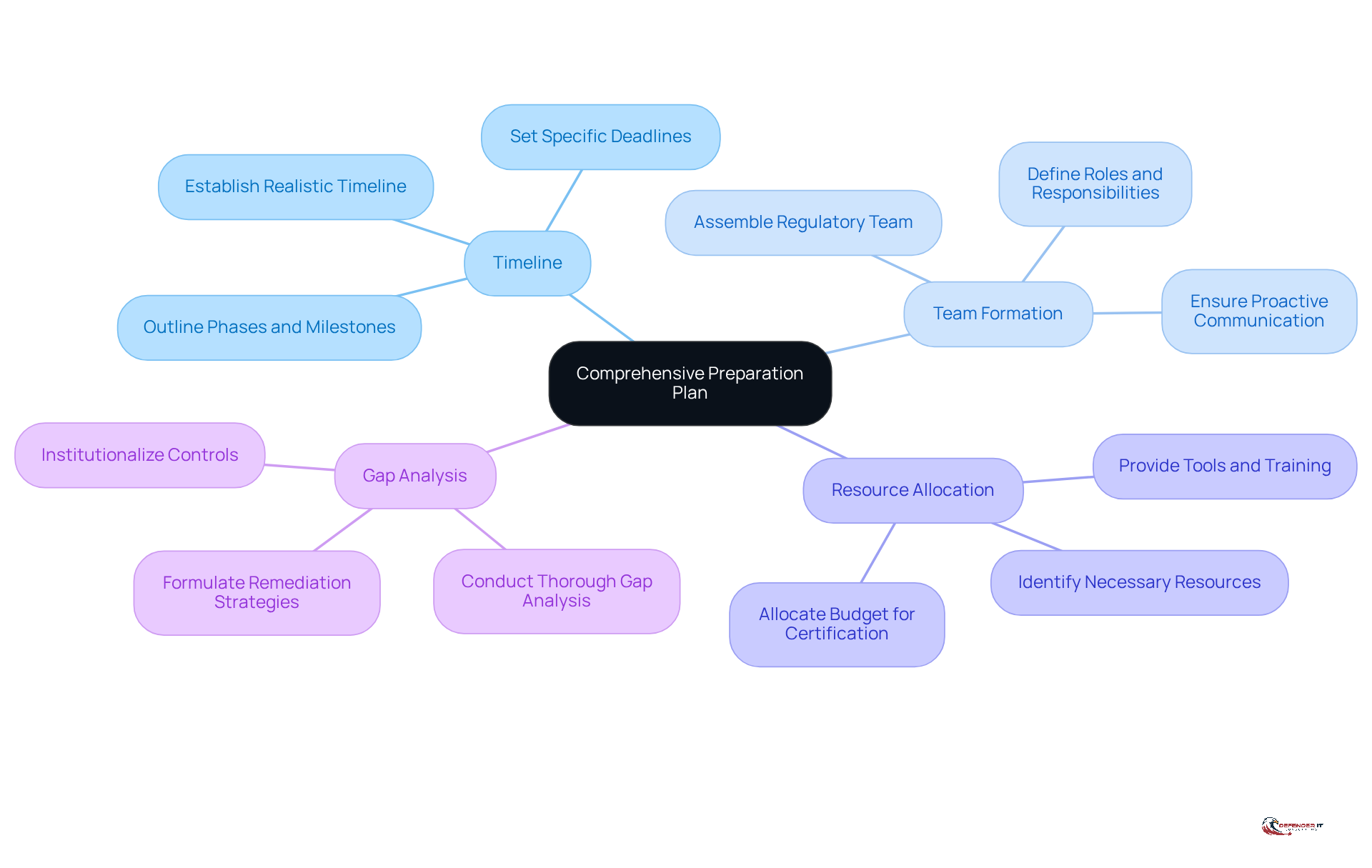
Achieving compliance requires a strategic approach to preparation for the CMMC Level 2 assessment, which presents significant challenges. To effectively prepare, it is crucial to develop a comprehensive preparation plan that encompasses the following components:
- Timeline: Establish a realistic timeline that outlines each phase of your preparation. Include specific milestones for completing tasks to ensure steady progress.
- Team Formation: Assemble a dedicated regulatory team responsible for overseeing the entire process. This team should consist of members from IT, compliance, and management to ensure a well-rounded approach. Proactive communication of progress among team members and stakeholders is essential to keep everyone informed.
- Resource Allocation: Identify and distribute the necessary resources, including tools, training, and budget, to meet the compliance requirements effectively. It’s important to note that certification costs can range from $40,000 to $80,000, making careful financial planning essential.
- Gap Analysis: Conduct a thorough gap analysis to pinpoint areas where current practices fall short of CMMC standards. This analysis will assist in formulating targeted remediation strategies for the CMMC Level 2 assessment. Remember that adherence is an ongoing process; institutionalizing controls and maintaining evidence of adherence is vital to avoid potential exclusion from the supply chain due to non-adherence.
Key Actions:
- Create a detailed project timeline with specific deadlines for each task.
- Create a regulatory team with clearly defined roles and responsibilities, ensuring proactive communication.
- Allocate the necessary resources and budget to support adherence efforts, considering the average costs of certification.
- Perform a gap analysis to identify deficiencies and areas for improvement, recognizing that ongoing practices are essential for sustained compliance.
Failure to maintain compliance not only jeopardizes certification but also risks exclusion from critical supply chains.
Conduct a CMMC Level 2 Self-Assessment
To ensure a successful CMMC Level 2 assessment, organizations must take proactive steps in their self-assessment process. Here are essential steps to follow:
- Define the Scope: Clearly identify which systems and processes will be included in your assessment. This ensures that all relevant areas handling Controlled Unclassified Information (CUI) are covered.
- Gather Evidence: Collect comprehensive documentation that shows adherence to each of the 110 controls outlined in NIST 800-171. This evidence includes policies, configurations, logs, and user roles. Each is vital for supporting your adherence claims.
- Evaluate Controls: Assess each control against the CMMC Level 2 requirements. During this evaluation, identify any gaps or areas that require improvement. Many organizations face challenges with common compliance gaps, including inadequate documentation and insufficient incident response protocols.
- Score Your Assessment: Assign scores based on your findings to evaluate your adherence level. This scoring will help you understand where you stand and what areas need immediate attention.
- Create a Plan of Action: For any identified gaps, develop a remediation plan that outlines specific steps to address these issues prior to the formal evaluation. Make sure to prioritize critical areas in your plan to stay on track for compliance.
Key Actions:
- Define the scope of your self-assessment.
- Gather necessary documentation and evidence.
- Evaluate each control and identify gaps.
- Score your assessment and create a remediation plan.
Important Considerations:
- Urgency of Compliance: With the mandatory CMMC Level 2 certification deadline approaching on November 10, 2026, it is crucial to start your self-assessment process as soon as possible to avoid delays.
- Legal Implications: Be aware that inaccurate compliance claims can lead to severe consequences, including legal liabilities and loss of contract eligibility. Not addressing these gaps can result in serious legal repercussions and jeopardize contract eligibility.
- Engagement with C3PAOs: Given the current backlog of C3PAOs, it is advisable to engage with an authorized assessor early in the process to secure your assessment slot and avoid potential delays.
- Statistics on Readiness: Note that 30-50% of companies seeking Stage 2 certification are not prepared, highlighting the importance of thorough preparation and early action.
- Expert Insights: As Casey Lang emphasizes, understanding and institutionalizing processes is critical for meeting readiness, and organizations must demonstrate adherence effectively to meet the upcoming requirements.

Finalize Documentation and Readiness Checks
Preparing for your CMMC Level 2 assessment requires meticulous attention to documentation and readiness checks to ensure compliance and avoid potential penalties. Key components of this process include:
- System Security Plan (SSP): Your SSP must be comprehensive and accurately reflect your organization’s security practices and controls. It serves as a foundational document that outlines how you implement the required NIST SP 800-171 controls, detailing system categorization and security measures across various domains.
- Standard Operating Procedures (SOPs): Documenting SOPs is essential for supporting your adherence efforts. These procedures should clearly outline how your organization manages security controls and responds to incidents, ensuring that all personnel understand their roles in upholding regulations.
- Plan of Action and Milestones (POA&M): Regularly update your POA&M to address any outstanding issues and establish a timeline for their resolution. This document is essential for monitoring adherence gaps and showcasing your dedication to ongoing enhancement in security practices.
- Conducting Readiness Checks: Conducting thorough readiness checks is essential to confirm compliance. This final evaluation should identify any remaining gaps and ensure that your organization is fully prepared for the CMMC Level 2 assessment.
Key Actions:
- Complete and review your System Security Plan to ensure it meets all requirements.
- Document all relevant Standard Operating Procedures to support compliance.
- Update your Plan of Action and Milestones to reflect current status and timelines.
- Conduct readiness checks to verify that all documentation and processes are compliant and ready for assessment.
Additional Considerations:
- Be aware that failing to meet CMMC requirements can lead to losing contract eligibility and incurring significant remediation costs.
- With the Phase 2 implementation deadline approaching on November 10, 2026, it is critical to start your readiness activities promptly.
- Conduct a gap analysis before remediation to prioritize adherence efforts effectively. This step is essential for ensuring that your organization addresses the most pressing compliance gaps before the assessment. Addressing compliance gaps now can safeguard your organization’s future and maintain contract eligibility in a competitive landscape.

Conclusion
Organizations face significant challenges in achieving CMMC Level 2 certification, making preparation a critical endeavor for maintaining compliance and securing contracts involving Controlled Unclassified Information (CUI). By understanding the specific requirements of the certification framework and developing a structured preparation plan, companies can navigate the complexities of compliance with greater confidence. By adopting a proactive approach, organizations can enhance their security posture and gain a competitive edge in the marketplace.
The article outlines four essential steps to achieve readiness:
- Understanding CMMC Level 2 requirements
- Developing a comprehensive preparation plan
- Conducting a self-assessment
- Finalizing documentation and readiness checks
Each step emphasizes the importance of thorough preparation, from familiarizing oneself with the 110 security controls to assembling a dedicated regulatory team and ensuring all documentation is up to date. Addressing these components effectively can significantly reduce the risk of non-compliance and the potential for costly remediation efforts.
With the CMMC Level 2 certification deadline looming, it’s crucial for organizations to take action now. Engaging in early preparation, conducting gap analyses, and maintaining ongoing adherence to security standards will not only safeguard compliance but also demonstrate a commitment to excellence in cybersecurity practices. By prioritizing these preparation steps, organizations can not only ensure compliance but also position themselves as leaders in cybersecurity excellence, ready to seize future opportunities in a regulated market.
Frequently Asked Questions
What is CMMC Level 2?
CMMC Level 2 is the second tier of the Cybersecurity Maturity Model Certification framework, consisting of 110 security controls based on NIST SP 800-171, structured into 14 domains related to cybersecurity.
What are the 14 domains of CMMC Level 2?
The 14 domains include Access Control, Incident Response, and Risk Assessment, among others, which cover various aspects of cybersecurity.
Why is it important to understand CMMC Level 2 requirements?
Understanding the requirements is crucial for organizations aiming to achieve compliance and secure agreements involving Controlled Unclassified Information (CUI).
What key actions should organizations take to prepare for CMMC Level 2?
Organizations should review the CMMC Level 2 Assessment Guide, identify the 14 domains and their associated controls, and evaluate their current adherence status against these requirements.
How many organizations have completed the CMMC Level 2 assessment as of early 2026?
Around 1,000 organizations have completed the CMMC Level 2 assessment.
How many companies will require certification following the CMMC Level 2 assessment?
Approximately 118,000 companies will require certification following the CMMC Level 2 assessment.
What risks do organizations face if they delay their preparations for CMMC Level 2 compliance?
Organizations that delay their preparations risk falling behind in the competitive landscape of cybersecurity compliance and may struggle to meet necessary standards.
What is the significance of proactive adherence to CMMC Level 2 requirements?
Proactive adherence is essential for defense contractors, as it allows them to manage compliance effectively rather than handling it in the background, thus improving their positioning in high-risk sectors.
List of Sources
- Understand CMMC Level 2 Requirements
- ktlsolutions.com (https://ktlsolutions.com/cmmc-level-2-certification-deadline-2026-2)
- Navigating CMMC Changes in 2026: What You Need to Know (https://vc3.com/blog/navigating-cmmc-changes-in-2026)
- federalnewsnetwork.com (https://federalnewsnetwork.com/commentary/2026/04/rev-3-is-coming-start-preparing-for-the-next-cmmc-requirement)
- CMMC 2.0 in 2026: What Defense Contractors Must Do Now (https://trustconsultingservices.com/cmmc-2-0-in-2026-defense-compliance-guide)
- cmmccompliance.us (https://cmmccompliance.us/cmmc-level-2-in-2026-the-clock-is-ticking-and-the-line-is-already-long)
- Develop a Comprehensive Preparation Plan
- Planning Your 2026 CMMC Compliance Roadmap (https://cybersheath.com/resources/blog/planning-your-2026-cmmc-compliance-roadmap)
- cybersheath.com (https://cybersheath.com/resources/blog/cmmc-readiness-practical-steps)
- riskaware.io (https://riskaware.io/cmmc-compliance-guide)
- CMMC Phase 2: What to Expect and How to Prepare [2026] (https://secureframe.com/blog/cmmc-phase-2-preparation)
- Conduct a CMMC Level 2 Self-Assessment
- accorian.com (https://accorian.com/cmmc-2-0-in-2026-whats-new-and-what-organizations-must-know)
- ktlsolutions.com (https://ktlsolutions.com/cmmc-level-2-certification-deadline-2026-2)
- Planning Your 2026 CMMC Compliance Roadmap (https://cybersheath.com/resources/blog/planning-your-2026-cmmc-compliance-roadmap)
- cmmccompliance.us (https://cmmccompliance.us/cmmc-level-2-in-2026-the-clock-is-ticking-and-the-line-is-already-long)
- securitymetrics.com (https://securitymetrics.com/blog/cmmc-compliance-roadmap)
- Finalize Documentation and Readiness Checks
- radicl.com (https://radicl.com/resources/cmmc-compliance-deadline)
- elevateconsult.com (https://elevateconsult.com/insights/cmmc-2-0-certification-for-dod-contractors-what-you-need-to-know-before-2026-deadlines)
- riskaware.io (https://riskaware.io/cmmc-compliance-guide)
- CMMC Phase 2: What to Expect and How to Prepare [2026] (https://secureframe.com/blog/cmmc-phase-2-preparation)
- linkedin.com (https://linkedin.com/posts/tjh0321\_the-november-2026-cmmc-level-2-deadline-is-ugcPost-7460026993905160193-ibw2)