Business
5 Best Practices for Web Application Vulnerability Scanners in Manufacturing
Published May 4, 2026
Introduction
Manufacturers are increasingly challenged by sophisticated cyber threats that jeopardize their web applications and sensitive data. Let’s delve into five essential best practices for implementing web application vulnerability scanners, highlighting how these tools can empower manufacturers to proactively identify and address security flaws. This necessitates a robust approach to vulnerability scanning that aligns with industry standards.
Understand Web Application Vulnerability Scanners
In an era where cyber threats are increasingly sophisticated, web application vulnerability scanners have become indispensable tools for identifying vulnerabilities. These automated tools detect security flaws within web applications by simulating attacks to reveal weaknesses such as:
- SQL injection
- Cross-site scripting (XSS)
- Insecure configurations
In the production sector, where critical processes are managed by web applications, the understanding and implementation of web application vulnerability scanners is essential. They empower organizations to identify and rectify vulnerabilities before they are exploited by malicious actors. For instance, a production firm that frequently utilizes a security scanner can efficiently detect and tackle flaws in its supply chain management system, thus avoiding possible interruptions and protecting sensitive information.
The growing intricacy of software environments and the surge in cyber risks necessitate a robust approach to security management, ensuring that manufacturing firms remain resilient against emerging threats. As per a 2020 report by the World Economic Forum, this low detection rate indicates a significant vulnerability in web application security, emphasizing the urgent requirement for efficient inspection solutions.
Moreover, Mr. Aravind A. stresses that ‘risk assessment services are no longer simply a technical task; they have evolved into a strategic necessity.’ The manufacturing industry has experienced a notable surge in the exploitation of weaknesses, with a 167% increase in 2025, highlighting the necessity for companies to implement strong weakness detection practices. Without these proactive measures, organizations risk significant operational disruptions and data breaches.

Identify Regulatory Requirements for Vulnerability Scanning
Manufacturers face significant challenges in navigating the intricate landscape of regulatory compliance, necessitating routine risk assessments. Key regulations include:
- ISO 27001, which outlines information security management systems.
- The NIST Cybersecurity Framework, which provides guidelines for managing cybersecurity risks.
- Industry-specific regulations, such as the FDA’s guidelines for medical device manufacturers, which require compliance with cybersecurity standards.
To ensure compliance with these requirements, manufacturers must conduct a thorough evaluation of relevant regulations. For instance, a medical device producer must guarantee that its threat assessment procedures comply with FDA regulations to prevent penalties and maintain patient safety.
Moreover, the Cyber Incident Reporting for Critical Infrastructure Act (CIRCIA) mandates that manufacturers report qualifying incidents within specified timeframes, further complicating compliance efforts. It is also crucial for entities to document sensitive data locations and implement network segmentation as part of their cybersecurity practices. These measures can significantly enhance their overall security posture in a highly regulated environment. Failure to adhere to these regulations not only risks penalties but also endangers patient safety and organizational integrity.

Select Appropriate Vulnerability Scanning Tools
Selecting the right security assessment tools is critical for manufacturing firms to ensure compliance and effective risk management. Nessus, Qualys, and Acunetix provide unique features tailored to specific security needs. Nessus is renowned for its comprehensive assessment capabilities, making it a strong choice for thorough risk management. In contrast, Acunetix specializes in web application security, utilizing web application vulnerability scanners to offer targeted scanning for vulnerabilities such as XSS and SQL injection.
As Jeffrey Burt points out, “By 2026, the best tools will: Prioritize real exposure, not raw risk counts,” emphasizing the need for tools that focus on actionable insights rather than just risk metrics. Manufacturing firms should also consider the integration capabilities of these tools with their existing security frameworks. For example, a company might choose a scanner that seamlessly integrates with its incident response system, facilitating quicker resolution of identified issues. Furthermore, leading security assessment tools frequently update their databases, sometimes daily or even multiple times a day, ensuring that organizations are protected against the latest threats.
Entities must consider the potential impact on system performance when selecting vulnerability scanning tools, especially in resource-constrained environments. Running pilot tests on chosen tools can yield important insights into their effectiveness and compatibility with the organization’s operational processes before full deployment. This strategic approach ensures that the selected tools align with the entity’s security objectives and regulatory compliance needs. Ultimately, a strategic approach to tool selection can significantly bolster an entity’s security posture and operational resilience.

Integrate Scanners into Security Frameworks
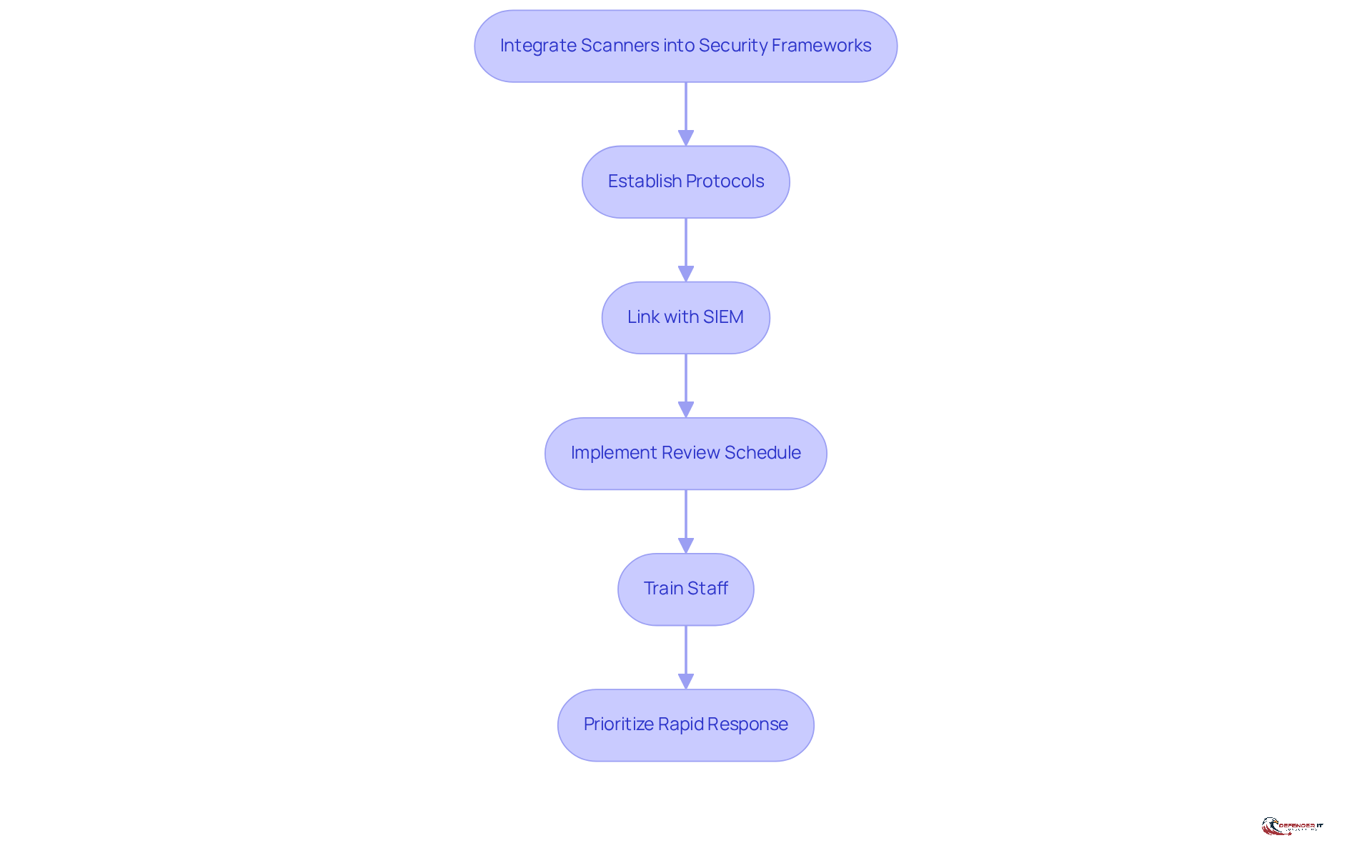
To enhance cybersecurity, organizations must effectively integrate security scanners into their protection frameworks. This integration entails establishing clear protocols for managing scanning outcomes, particularly emphasizing weaknesses identified through thorough evaluations conducted by web application vulnerability scanners. For instance, a production firm could bolster its security posture by linking its flaw scanner with a Security Information and Event Management (SIEM) system, which allows for the correlation of scan results with real-time threat intelligence. This approach allows for timely detection of critical vulnerabilities and aligns with the need for continuous monitoring, as 60% of breaches exploit known weaknesses with available patches, highlighting the urgency for swift remediation in manufacturing environments.
Furthermore, organizations should implement a consistent review schedule that aligns with their incident response strategies, ensuring that vulnerabilities are addressed promptly. It’s essential to train staff to effectively interpret and respond to scanning results. Given that the average time to resolve critical issues exceeds 60 days, organizations must prioritize rapid response strategies to mitigate risks effectively. As cybersecurity specialist Eoin Keary notes, ‘Not all weaknesses are equal threats,’ underscoring the importance of risk-based prioritization. By adopting these best practices, production companies can significantly enhance their cybersecurity resilience. This integration not only fortifies defenses but also positions organizations to respond swiftly to emerging threats.
Establish Continuous Monitoring and Updates
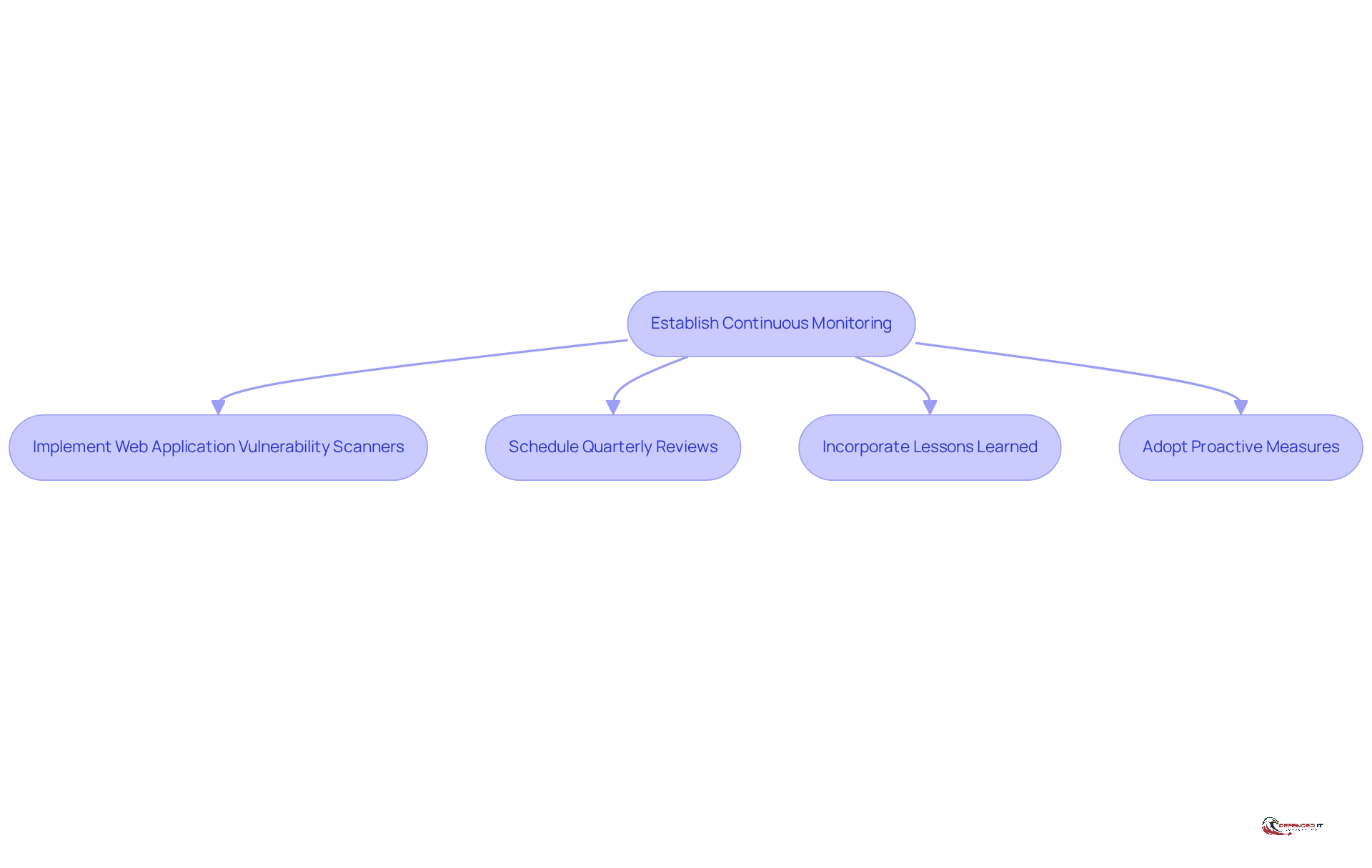
In an era where cyber threats are increasingly sophisticated, ongoing observation is crucial for identifying vulnerabilities in the production industry. Organizations should implement web application vulnerability scanners as automated assessment solutions that provide real-time notifications for newly identified weaknesses, allowing quick reactions to possible threats. For instance, manufacturing companies that adopt these solutions can greatly lessen their risk exposure. Over 80% of successful cyberattacks take advantage of weaknesses revealed more than a year prior.
It’s vital to regularly update web application vulnerability scanners and assessment methodologies to stay ahead of evolving cyber threats. Many organizations schedule quarterly reviews of their vulnerability management processes to incorporate lessons learned from recent incidents, ensuring that their strategies for web application vulnerability scanners remain effective. This statistic underscores the critical need for rapid remediation strategies, as only 22% of OT incidents are remediated within 48 hours.
By adopting proactive measures, manufacturers can significantly reduce their vulnerability to cyber threats. Fostering a culture of continuous improvement and vigilance enhances cybersecurity resilience and better protects operations against the increasing frequency of cyberattacks, which accounted for 17% of all cyberattacks in 2025, according to IBM’s X-Force Threat Intelligence Index. As cyberattacks continue to rise, the ability to swiftly adapt and respond will determine the resilience of manufacturing operations.
Conclusion
Implementing web application vulnerability scanners is not merely a technical task; it is a strategic imperative for manufacturing firms aiming to fortify their cybersecurity defenses. In an era where cyber threats are increasingly sophisticated, implementing robust security measures is essential. By understanding the capabilities of these scanners, manufacturers can proactively identify vulnerabilities, ensuring that their operations remain secure and resilient against potential attacks.
The article highlights several best practices essential for effective vulnerability management, including:
- Understanding regulatory requirements
- Selecting appropriate scanning tools
- Integrating scanners into existing security frameworks
- Establishing continuous monitoring protocols
Each of these components plays a vital role in creating a comprehensive security strategy that not only addresses current vulnerabilities but also anticipates future threats. The emphasis on compliance with industry regulations further underscores the importance of maintaining a proactive stance in cybersecurity efforts.
The adoption of these best practices is crucial for safeguarding operations. As the manufacturing sector faces an increasing number of cyber threats, organizations must prioritize their cybersecurity strategies to protect critical processes and sensitive information. By fostering a culture of continuous improvement and vigilance, manufacturers can enhance their resilience, ensuring they are well-equipped to navigate the complex landscape of cybersecurity and regulatory compliance. Organizations that delay action may find themselves vulnerable to attacks that could jeopardize their very existence.
Frequently Asked Questions
What are web application vulnerability scanners?
Web application vulnerability scanners are automated tools that identify security flaws within web applications by simulating attacks to reveal weaknesses such as SQL injection, cross-site scripting (XSS), and insecure configurations.
Why are web application vulnerability scanners important for organizations?
They help organizations identify and rectify vulnerabilities before they can be exploited by malicious actors, thereby protecting sensitive information and ensuring the integrity of critical processes managed by web applications.
What is the significance of using vulnerability scanners in the production sector?
In the production sector, using vulnerability scanners allows firms to efficiently detect and address flaws in systems like supply chain management, preventing operational disruptions and safeguarding sensitive data.
What recent trends highlight the need for web application vulnerability scanning?
There has been a noted 167% increase in the exploitation of weaknesses in the manufacturing industry by 2025, emphasizing the necessity for companies to adopt strong vulnerability detection practices to avoid significant operational disruptions and data breaches.
What regulatory requirements should manufacturers consider for vulnerability scanning?
Manufacturers must navigate various regulatory requirements, including ISO 27001 for information security management, the NIST Cybersecurity Framework for managing cybersecurity risks, and industry-specific regulations like the FDA’s guidelines for medical devices.
How can manufacturers ensure compliance with cybersecurity regulations?
They should conduct thorough evaluations of relevant regulations, implement risk assessments in line with guidelines, document sensitive data locations, and ensure network segmentation as part of their cybersecurity practices.
What are the consequences of failing to adhere to regulatory requirements?
Non-compliance can result in penalties, jeopardize patient safety, and threaten the integrity of the organization, especially in highly regulated environments.
List of Sources
- Understand Web Application Vulnerability Scanners
- 28 application security statistics that matter | RL Blog (https://reversinglabs.com/blog/28-application-security-stats-that-matter)
- getastra.com (https://getastra.com/blog/security-audit/cyber-security-vulnerability-statistics)
- tech.einnews.com (https://tech.einnews.com/pr\_news/867849129/u-s-companies-turn-to-vulnerability-scanning-services-scanning-as-cyber-threats-escalate)
- edgescan.com (https://edgescan.com/stats-report)
- indusface.com (https://indusface.com/blog/key-vulnerability-statistics)
- Identify Regulatory Requirements for Vulnerability Scanning
- Cyber security compliance statistics for 2026 | CyberArrow (https://cyberarrow.io/blog/cyber-security-compliance-statistics)
- decyphertech.com (https://decyphertech.com/the-new-rules-of-manufacturing-cybersecurity-what-to-know-in-2026)
- 130+ Compliance Statistics & Trends to Know for 2026 (https://secureframe.com/blog/compliance-statistics)
- Select Appropriate Vulnerability Scanning Tools
- securityboulevard.com (https://securityboulevard.com/2025/12/best-vulnerability-scanning-tool-for-2026-top-10-list)
- ninjaone.com (https://ninjaone.com/blog/vulnerability-scanning-tools)
- invicti.com (https://invicti.com/blog/web-security/10-best-vulnerability-scanning-tools)
- sentinelone.com (https://sentinelone.com/cybersecurity-101/cybersecurity/8-vulnerability-management-tools)
- Integrate Scanners into Security Frameworks
- indusface.com (https://indusface.com/blog/key-vulnerability-statistics)
- edgescan.com (https://edgescan.com/stats-report)
- valonaintelligence.com (https://valonaintelligence.com/resources/blog/7-cybersecurity-statistics-for-heavy-manufacturing-companies)
- 20 Quotes Proving The Need for Security Integrations (https://synqly.com/moving-from-ok-to-best-in-class-20-quotes-from-experts-proving-the-need-for-security-integrations)
- acecloudhosting.com (https://acecloudhosting.com/blog/cybersecurity-quotes)
- Establish Continuous Monitoring and Updates
- indusface.com (https://indusface.com/blog/key-vulnerability-statistics)
- huntress.com (https://huntress.com/blog/manufacturing-cybersecurity-trends)
- blog.cybelesoft.com (https://blog.cybelesoft.com/manufacturing-cybersecurity-zero-trust-2026)
- kazmarek.com (https://kazmarek.com/2026/03/25/why-every-manufacturing-business-needs-continuous-cybersecurity-monitoring)
- totalassure.com (https://totalassure.com/blog/manufacturing-cyber-attack-statistics-2026-data-driven-insights-on-industrial-security-threats)