Business
Compare Managed Security Companies: Features, Pros, and Suitability
Published January 17, 2026
Introduction
As cyber threats grow more sophisticated, organizations increasingly rely on Managed Security Services (MSS) to strengthen their defenses. These outsourced solutions provide not only continuous monitoring and incident response but also specialized expertise that many companies may lack internally.
With a multitude of providers competing for attention, organizations face the challenge of discerning which managed security company best aligns with their unique needs and compliance requirements.
This article explores the features, advantages, and drawbacks of leading MSS providers, equipping decision-makers with the insights necessary to make informed choices in an ever-evolving cybersecurity landscape.
Define Managed Security Services and Their Importance
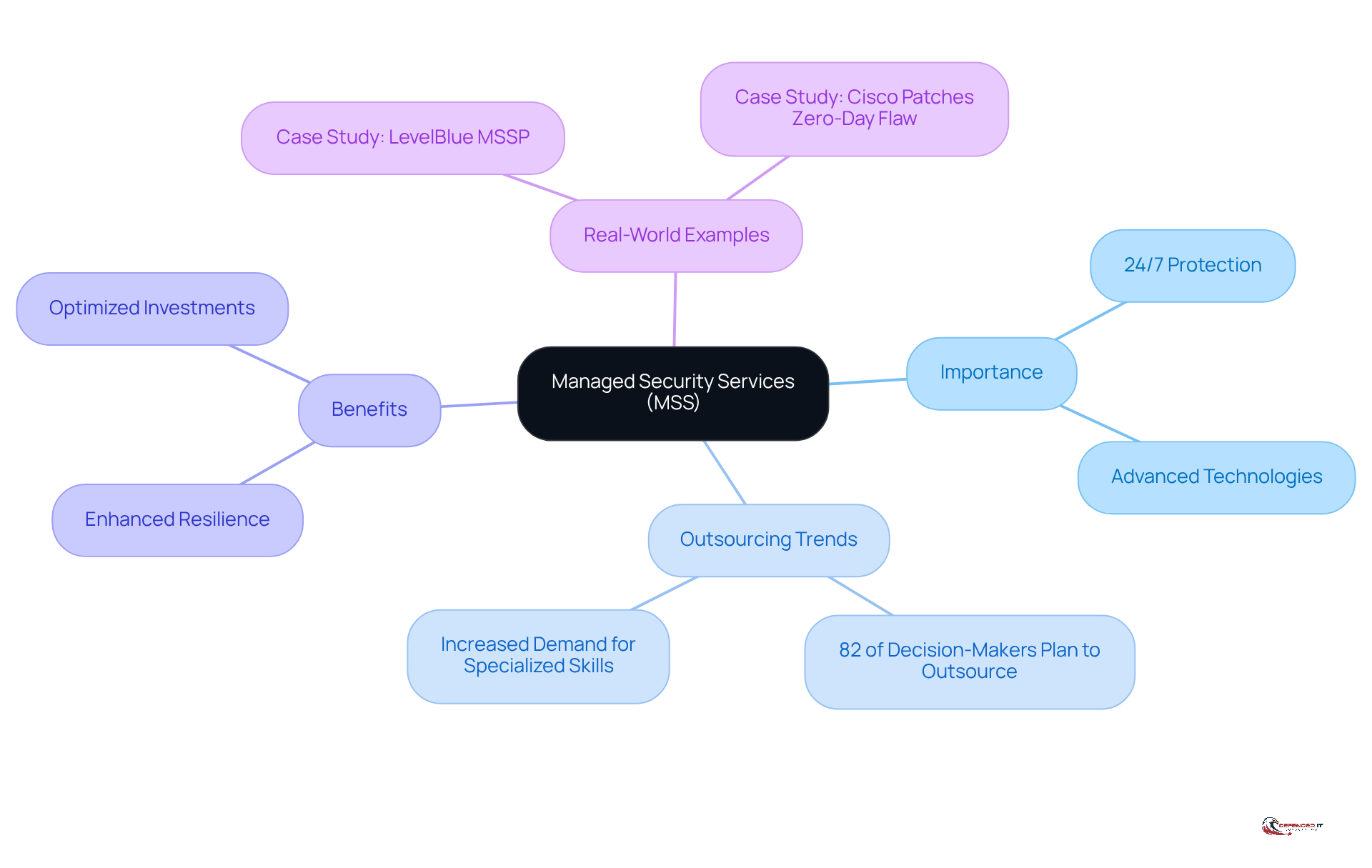
Managed Security Services (MSS) involve the provision of specialized services, encompassing continuous monitoring, risk detection, incident response, and compliance management. The significance of MSS is underscored by their capacity to deliver round-the-clock protection, leveraging advanced technologies and expertise that organizations may not possess internally. As threats increase in complexity, the necessity for robust security escalates, positioning MSS as an integral element of modern business strategy.
Organizations are increasingly acknowledging the benefits of outsourcing security functions. A recent study indicates that 82% of decision-makers in security plan to outsource protective functions to managed security providers within the next year, driven by the need for specialized skills and improved quality of protection. This trend is particularly pertinent as Chief Information Security Officers (CISOs) contend with significant challenges stemming from expanded attack surfaces, rendering outsourced technologies for Managed Detection and Response (MDR) increasingly attractive.
Real-world examples further demonstrate the efficacy of MSS. The practice of outsourcing not only enhances resilience but also optimizes client investments, illustrating the concrete benefits of MSS. As organizations navigate the complexities of the evolving threat landscape, forming strategic alliances with MSS providers becomes vital for maintaining a competitive edge. As Madelein van der Hout, a senior analyst at Forrester, observes, “One key advantage of outsourcing is the ability to dynamically adjust the talent and skillsets required throughout different phases of a project – something that’s more difficult and expensive to achieve in-house.” This adaptability is crucial for organizations, who face unique regulatory challenges and operational risks.
Compare Key Features and Offerings of Leading Providers
deliver a variety of features designed to address the diverse needs of clients. Notable examples include:
- IBM Security: Renowned for its extensive and innovative solutions, IBM enhances security posture through advanced analytics and machine learning tools.
- Secureworks: Offers a robust security operations center (SOC) that operates 24/7, focusing on threat detection.
- AT&T Cybersecurity: Provides integrated protection solutions that merge network defense with risk intelligence, ensuring a holistic approach to cybersecurity.
- CrowdStrike: Specializes in endpoint protection and threat intelligence, utilizing AI to detect and respond to threats in real-time.
Each provider presents unique advantages, underscoring the importance for organizations to assess their specific protection requirements when selecting a managed security service as their safeguarding solution.

Evaluate Pros and Cons of Each Managed Security Company
When evaluating managed security companies, organizations must weigh both the advantages and disadvantages of each option:
- IBM Security offers extensive resources, strong analytics capabilities, and a global presence. However, its higher costs may pose a barrier for smaller organizations.
- Secureworks is noted for its robust security services, supported by a dedicated Security Operations Center (SOC). On the downside, it presents limited customization options for smaller clients.
- AT&T Cybersecurity provides integrated solutions that enhance security posture. Nevertheless, the complexity of its service offerings may overwhelm some users.
- CrowdStrike is recognized for its leading-edge technology and real-time threat detection capabilities. However, its pricing may be prohibitive for some organizations.
Understanding these advantages and disadvantages enables organizations to choose a provider that best meets their needs.

Assess Industry-Specific Suitability and Compliance Considerations
Different industries have distinct cybersecurity needs and requirements. Understanding these specific considerations is crucial for organizations when selecting services that align with their goals and security needs.
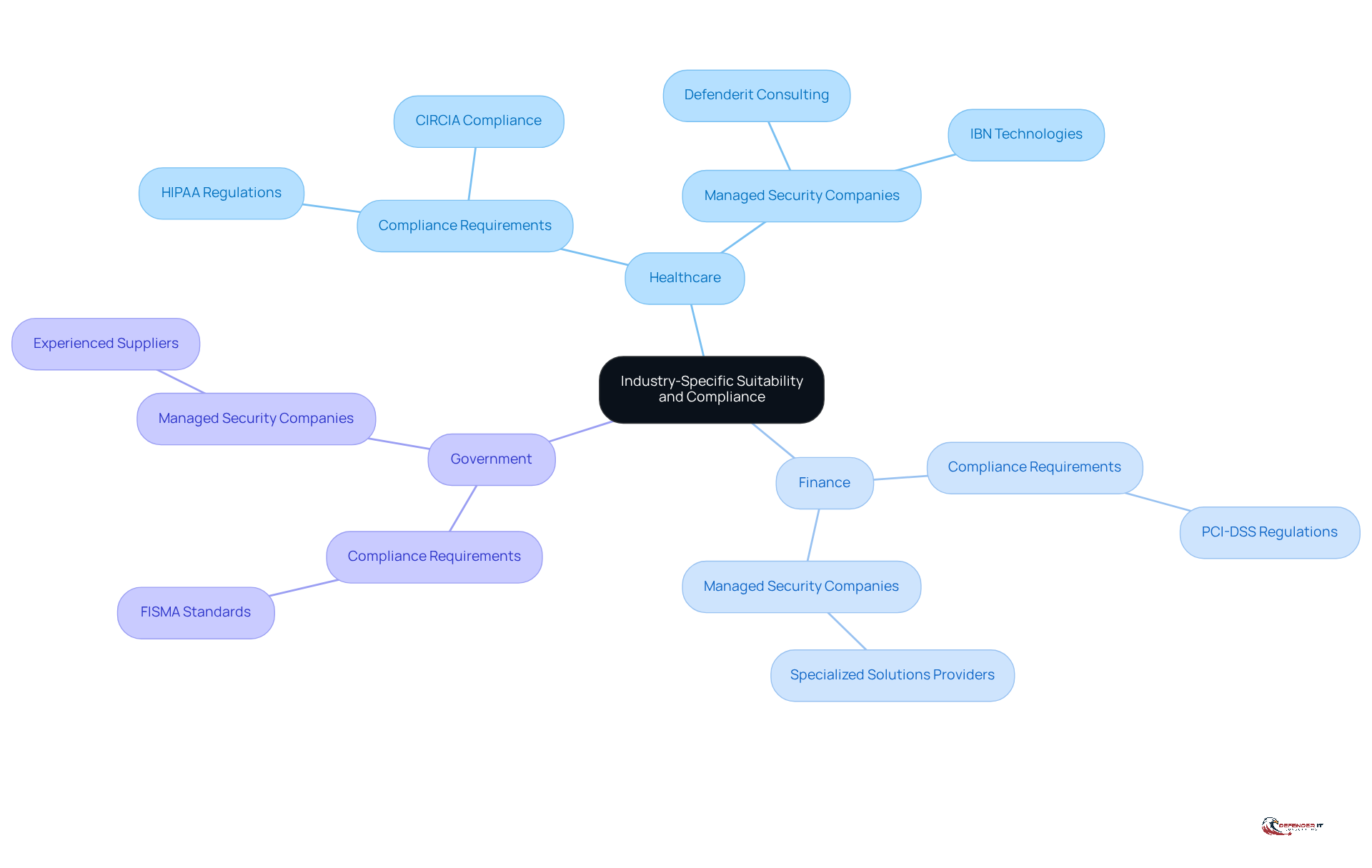
- Healthcare: Providers in this sector must comply with regulations, which necessitate robust solutions. Companies such as offer tailored solutions that ensure compliance while safeguarding sensitive patient data.
- Finance: Organizations within the finance sector face stringent regulations, such as PCI-DSS. Providers offer specialized solutions that assist financial institutions in efficiently managing these complex requirements.
- Government: Compliance with standards like FISMA must demonstrate their capability to meet these standards, making suppliers particularly appealing due to their experience with government contracts.
Conclusion
Managed Security Services (MSS) have become essential in the cybersecurity landscape, equipping organizations with the expertise and technology needed to address evolving threats. By outsourcing these critical functions, businesses can enhance their security posture and access specialized skills that may be lacking internally. Thus, MSS emerges as a vital strategy for modern enterprise resilience.
This article has explored the key features and offerings of leading managed security companies, highlighting the strengths of providers such as IBM Security, Secureworks, AT&T Cybersecurity, and CrowdStrike. Each company offers unique advantages tailored to various organizational needs, while also presenting potential drawbacks that decision-makers must consider. Furthermore, the importance of aligning security solutions with industry-specific compliance requirements has been emphasized, underscoring the necessity for tailored approaches in sectors such as healthcare, finance, and government.
In an increasingly complex threat environment, the decision to engage with managed security service providers warrants careful consideration. Organizations should assess their specific needs and compliance obligations, ensuring they select a provider capable of delivering effective and adaptable security solutions. By doing so, businesses can protect their assets and position themselves for long-term success in a landscape where cyber threats are a constant reality.
Frequently Asked Questions
What are Managed Security Services (MSS)?
Managed Security Services (MSS) involve outsourcing cybersecurity functions to specialized providers, which include continuous monitoring, risk detection, incident response, and compliance management.
Why are Managed Security Services important?
MSS are important because they provide round-the-clock protection using advanced technologies and expertise that organizations may lack internally. As cyber threats become more complex, MSS play a crucial role in modern business strategies.
What trend is emerging among organizations regarding cybersecurity?
A recent study indicates that 82% of decision-makers in security plan to outsource protective functions to managed service firms within the next year, driven by the need for specialized skills and enhanced protection quality.
What challenges do Chief Information Security Officers (CISOs) face that make MSS attractive?
CISOs often experience significant alert fatigue due to expanded attack surfaces, making outsourced technologies for managed detection and response (MDR) increasingly appealing.
How do real-world examples illustrate the effectiveness of MSS?
Real-world examples show that outsourcing cybersecurity functions enhances resilience and optimizes client investments, highlighting the tangible benefits of MSS as organizations face evolving cyber threats.
What advantage does outsourcing cybersecurity provide according to analysts?
Analysts note that outsourcing allows organizations to dynamically adjust the talent and skillsets needed throughout different project phases, which is more challenging and costly to achieve in-house.
Why is forming strategic alliances with MSS providers vital for organizations?
Forming strategic alliances with MSS providers is crucial for maintaining a strong defense posture as organizations navigate the complexities of the evolving threat landscape.
List of Sources
- Define Managed Security Services and Their Importance
- statista.com (https://statista.com/statistics/1230718/managed-security-services-market-it?srsltid=AfmBOoozVk7p3kyXhOJHseKcmSvUfqSHoYY7ZOVXsiV1unv5ZJTMbwKR)
- csoonline.com (https://csoonline.com/article/3593324/security-outsourcing-on-the-rise-as-cisos-seek-cyber-relief.html)
- msspalert.com (https://msspalert.com/news/managed-security-is-getting-harder-to-deliver-in-2026-what-the-next-wave-looks-like-for-mssps)
- levelblue.com (https://levelblue.com/blogs/levelblue-blog/secure-whats-next-how-a-world-class-mssp-builds-trust-and-scale-for-2026)
- digitaldefynd.com (https://digitaldefynd.com/IQ/inspirational-cybersecurity-quotes)
- Compare Key Features and Offerings of Leading Providers
- cybermagazine.com (https://cybermagazine.com/top10/top-10-endpoint-security-companies-2026)
- n-able.com (https://n-able.com/blog/top-10-cybersecurity-statistics-every-msp-and-it-professional-should-know-in-2025)
- jumpcloud.com (https://jumpcloud.com/blog/msp-statistics-trends)
- Top cybersecurity companies to watch in 2026 (https://nomios.com/news-blog/top-cybersecurity-companies-2026)
- MSP Statistics In The USA: 2025 / Infrascale (https://infrascale.com/msp-statistics-usa)
- Evaluate Pros and Cons of Each Managed Security Company
- peerspot.com (https://peerspot.com/products/ibm-managed-security-services-pros-and-cons)
- peerspot.com (https://peerspot.com/products/secureworks-taegis-xdr-pros-and-cons)
- networkworld.com (https://networkworld.com/article/957376/ibm-leans-into-ai-for-managed-security-services.html)
- darkreading.com (https://darkreading.com/endpoint-security/secureworks-elevates-state-of-cybersecurity-for-mid-market-customers-with-managed-detection-and-response-offering)
- Assess Industry-Specific Suitability and Compliance Considerations
- einpresswire.com (https://einpresswire.com/article/873449209/hipaa-compliance-services-surge-as-u-s-healthcare-faces-rising-cyber-threats)
- How Healthcare Organizations Can Navigate Security Changes Linked to HIPAA Updates (https://healthtechmagazine.net/article/2026/01/how-healthcare-organizations-can-navigate-security-changes-linked-hipaa-updates)
- mdrxlaw.com (https://mdrxlaw.com/news-and-alerts/cybersecurity-enforcement-and-hipaa-what-healthcare-practices-need-to-know)
- elisity.com (https://elisity.com/blog/circia-healthcare-compliance-guide-new-regulations-critical-controls-for-2026)
- New HIPAA Regulations in 2026 (https://hipaajournal.com/new-hipaa-regulations)