Business
Understanding the Network Security Operations Center: Key Insights
Published January 20, 2026
Introduction
In today’s landscape, where cyber threats are increasingly sophisticated and pervasive, the role of a Network Security Operations Center (NSOC) is critical. These centralized hubs continuously monitor, detect, and respond to security risks, providing organizations with a robust framework to safeguard their digital assets. As cybersecurity evolves, the pressing question arises: how can organizations effectively leverage NSOCs not only to defend against attacks but also to enhance their overall security posture?
Define Network Security Operations Center (NSOC)
A is a centralized facility dedicated to the continuous monitoring, detection, and response to security risks within an organization’s network. By integrating skilled personnel, established processes, and advanced technologies, the delivers real-time situational awareness and . This operational hub acts as the nerve center for , ensuring that potential risks are swiftly identified and addressed.
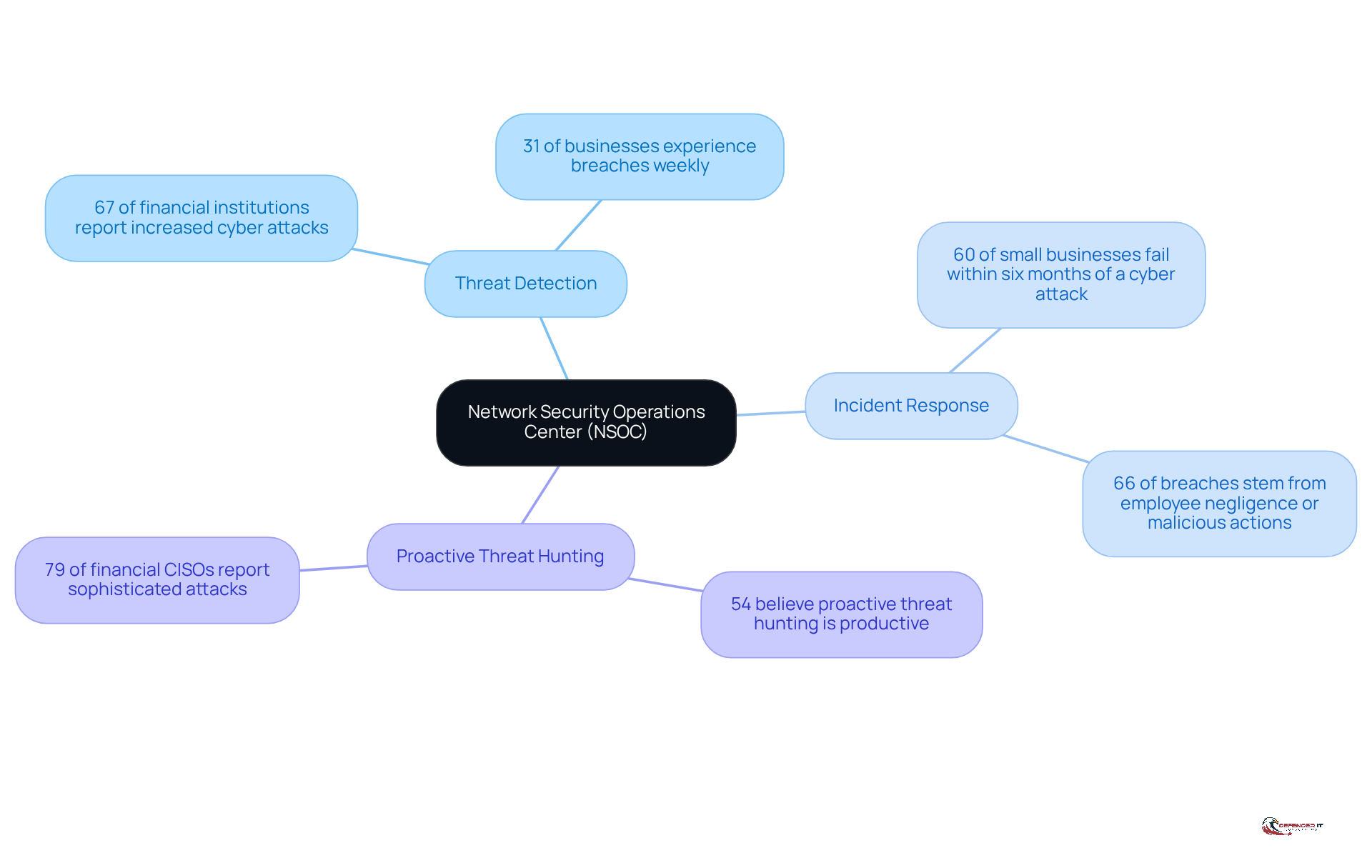
In 2026, a significant number of entities recognized the importance of . Notably, 67% of financial institutions reported an increase in over the previous year, prompting many to establish to enhance their . The key functions of a encompass , incident response, and proactive threat hunting, all of which play a critical role in safeguarding an organization’s digital assets against increasingly sophisticated .
The significance of network security operation centers is underscored by the fact that 66% of security breaches stem from employee carelessness or malicious actions. Alarmingly, 60% of small businesses fail within six months of a cyber attack, highlighting the urgent need for robust strategies. As cybersecurity continues to evolve, the remains a crucial component in defending against , reinforcing the idea that effective . As noted, “Cybercrime is the largest danger to every business on the planet,” emphasizing the essential role of national security operation centers in addressing these challenges.
Contextualize the Importance of NSOCs in Cybersecurity
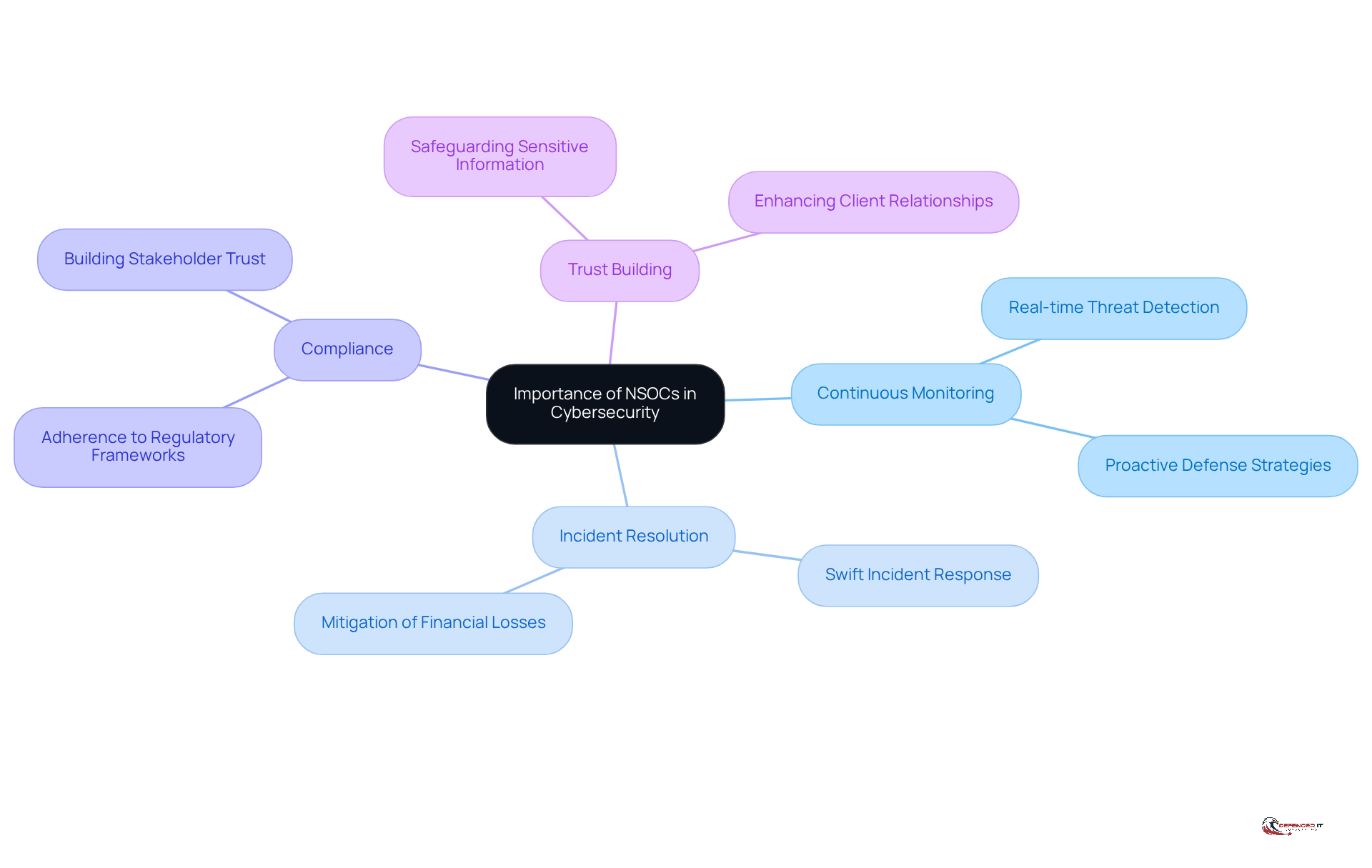
In today’s landscape of increasingly sophisticated and pervasive cyber threats, the significance of is paramount. NSOCs empower organizations to monitor their networks continuously, enabling the . This proactive strategy is crucial for mitigating the effects of , which can result in substantial financial losses and damage to reputation.
Moreover, as regulatory frameworks surrounding become more stringent, NSOCs play a vital role in helping organizations achieve compliance. They demonstrate a commitment to , thereby reinforcing trust with stakeholders and clients. In summary, the establishment of robust is essential for organizations aiming to navigate the complexities of modern cybersecurity challenges.
Explore Key Characteristics and Functions of NSOCs
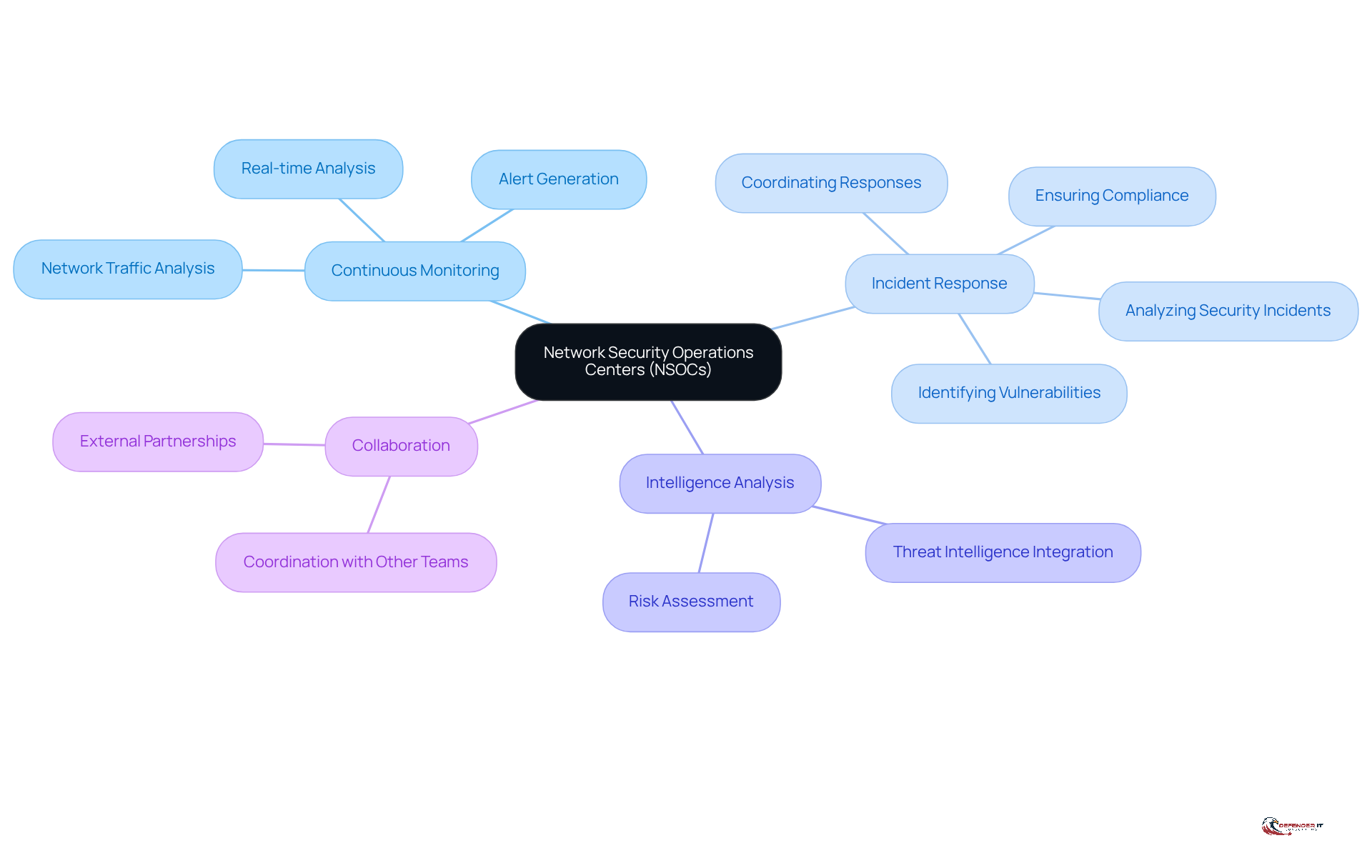
s play a crucial role in the , characterized by their continuous monitoring, , intelligence analysis, and collaboration with other security teams. Operating around the clock, these centers employ a diverse group of cybersecurity experts who leverage advanced technologies, including Security Information and Event Management (SIEM) systems, intrusion detection systems, and intelligence platforms.
The primary functions of the include:
- Analyzing security incidents
- Ensuring compliance with regulatory standards
For example, an NSOC may detect unusual network traffic patterns that suggest a potential breach, triggering the initiation of an protocol to effectively manage the risk. In 2023, the average number of cyberattacks per entity annually increased from three to four, marking a 25% rise and underscoring the critical need for security operation centers to effectively address and respond to these incidents.
Moreover, the is essential in risk intelligence, enabling organizations to stay ahead of evolving . By into their operations, these centers can proactively identify and mitigate risks, thereby enhancing their overall effectiveness in threat detection and response. This proactive stance is particularly vital, given that 54% of organizations faced a in 2023, with 15% of these breaches involving a third party, highlighting the necessity for robust .
In terms of , s handle a substantial volume of incidents each year, with many organizations reporting thousands of alerts monthly. This high volume necessitates efficient triage procedures to distinguish between genuine threats and false positives, allowing security teams to focus on critical events. Furthermore, 37% of breaches in 2023 resulted in data theft, emphasizing the importance of the in managing these risks effectively. As continue to evolve, the functions of the will remain vital in protecting digital assets and ensuring organizational resilience, especially as the global average cost of a data breach rose by 15.3%, from $3.86 million to $4.45 million between 2020 and 2023.
Identify Different Types of Network Security Operations Centers
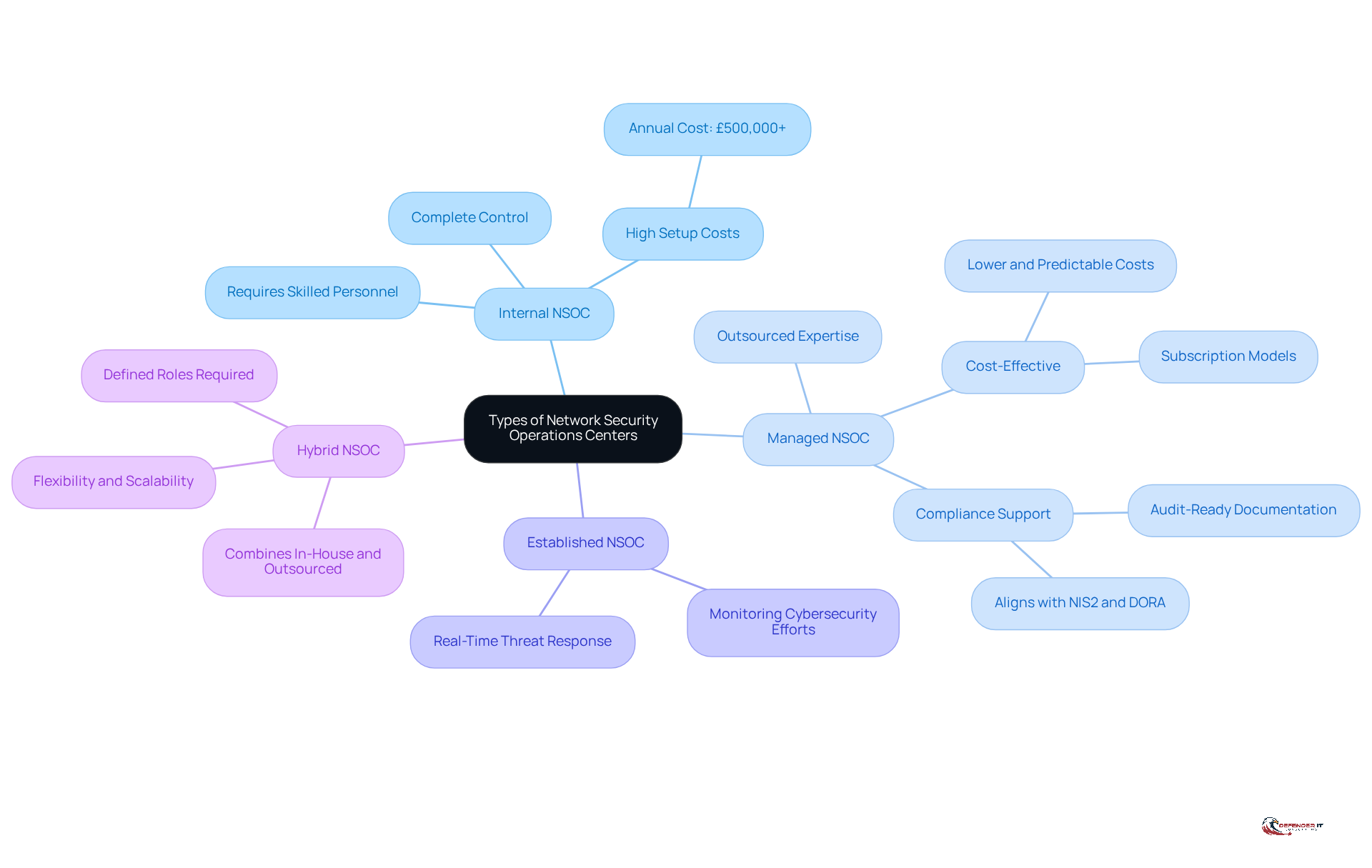
There are four primary types of Network Centers (NSOCs), each designed to address :
- The network center model is managed entirely by a company’s internal team, providing complete control over .
- The handles by outsourcing them to a third-party provider. This allows organizations to benefit from external expertise while simultaneously reducing operational costs.
- The organization has established a network center to monitor and enhance its .
- The combines both in-house and managed services, providing organizations with flexibility and scalability in their .
The operations of the network center are crucial for maintaining cybersecurity. The network center operates remotely, utilizing to without the need for a physical location.
Each type presents distinct advantages, such as cost-effectiveness, access to specialized skills, and enhanced control over security processes. This enables organizations to that best aligns with their strategic objectives.
Conclusion
A network security operations center (NSOC) is essential in defending against the constantly evolving landscape of cyber threats. By centralizing monitoring, detection, and incident response, NSOCs enable organizations to quickly address vulnerabilities and strengthen their overall cybersecurity posture. This strategic hub not only facilitates immediate threat management but also plays a crucial role in compliance and building trust with stakeholders.
Key insights throughout this article have underscored the multifaceted functions of NSOCs, including:
- Threat detection
- Incident management
- Risk intelligence
The data highlights the urgent need for robust security measures, with alarming statistics indicating a rise in cyberattacks and the significant consequences of breaches. Various NSOC models provide organizations with the flexibility to select a setup that aligns with their specific needs, whether through in-house management or outsourcing to specialized providers.
As cybercrime remains one of the largest threats to businesses worldwide, establishing an effective network security operations center is not merely advisable; it is imperative. Organizations must prioritize the development or enhancement of their NSOC capabilities to protect their digital assets and ensure resilience against potential attacks. By adopting this proactive approach to cybersecurity, organizations will ultimately strengthen their defenses and cultivate a secure environment conducive to innovation and growth.
Frequently Asked Questions
What is a Network Security Operations Center (NSOC)?
A Network Security Operations Center (NSOC) is a centralized facility focused on the continuous monitoring, detection, and response to security risks within an organization’s network. It combines skilled personnel, established processes, and advanced technologies to provide real-time situational awareness and incident response capabilities.
Why are NSOCs important for organizations?
NSOCs are crucial because they help organizations swiftly identify and address potential security risks. As cyber threats become increasingly sophisticated, having a dedicated center for threat detection, incident response, and proactive threat hunting is essential for safeguarding digital assets.
What are the key functions of a Network Security Operations Center?
The key functions of an NSOC include threat detection, incident response, and proactive threat hunting. These functions are vital for protecting an organization from cyber threats.
What statistics highlight the need for NSOCs?
In 2026, 67% of financial institutions reported an increase in cyber attacks, prompting many to establish NSOCs. Additionally, 66% of security breaches are attributed to employee carelessness or malicious actions, and 60% of small businesses fail within six months of a cyber attack, underscoring the urgent need for robust security monitoring and response strategies.
How does the evolving nature of cybersecurity affect the role of NSOCs?
As cybersecurity evolves, NSOCs remain a critical component in defending against cyber attacks. They emphasize that effective cybersecurity is not just a technical challenge but a strategic imperative for organizations.
What is the broader implication of cybercrime for businesses?
Cybercrime is considered the largest danger to businesses globally, highlighting the essential role of NSOCs in addressing security challenges and protecting organizations from potential threats.
List of Sources
- Define Network Security Operations Center (NSOC)
- SOC Landscapes: Insights from SANS’ 2023 SOC Report (https://trendmicro.com/en\_us/research/24/b/sans-2023-soc-report.html)
- Cybersecurity Quotes That Define the Future of Digital Protection (https://medium.com/@cyberpromagazine/cybersecurity-quotes-that-define-the-future-of-digital-protection-64897c07bfc6)
- 2024 Cybersecurity Statistics: The Ultimate List Of Stats, Data & Trends | PurpleSec (https://purplesec.us/resources/cybersecurity-statistics)
- Cyber Security Stats 2024: A Look Inside a Typical SOC (https://linkedin.com/pulse/cyber-security-stats-2024-look-inside-typical-soc-senseon-tech-2t8me)
- Contextualize the Importance of NSOCs in Cybersecurity
- Key Cyber Security Statistics for 2026 (https://sentinelone.com/cybersecurity-101/cybersecurity/cyber-security-statistics)
- What Every Company Needs To Know About Cybersecurity In 2026 (https://forbes.com/sites/chuckbrooks/2025/12/31/what-every-company-needs-to-know-about-cybersecurity-in-2026)
- 205 Cybersecurity Stats and Facts for 2026 (https://vikingcloud.com/blog/cybersecurity-statistics)
- Top Cybersecurity Statistics for 2026 | Cobalt (https://cobalt.io/blog/top-cybersecurity-statistics-for-2026)
- Five things to watch in cybersecurity for 2026 | Federal News Network (https://federalnewsnetwork.com/cybersecurity/2026/01/five-things-to-watch-in-cybersecurity-for-2026)
- Explore Key Characteristics and Functions of NSOCs
- Security operations by the numbers: 30 cybersecurity stats that matter | ReversingLabs | ReversingLabs (https://reversinglabs.com/blog/secops-by-the-numbers-stats-that-matter)
- Key Cyber Security Statistics for 2026 (https://sentinelone.com/cybersecurity-101/cybersecurity/cyber-security-statistics)
- Understanding the Role, Benefits, and Function of a SOC (https://netscout.com/what-is/soc)
- 10 Essential Capabilities Of A Modern Security Operations Center (https://forbes.com/sites/splunk/2022/04/19/10-essential-capabilities-of-a-modern-security-operations-center)
- 2026 Unit 42 Global Incident Response Report (https://paloaltonetworks.com/resources/research/unit-42-incident-response-report)
- Identify Different Types of Network Security Operations Centers
- In-House Vs Managed SOC: Which Is Best? | DigitalXRAID (https://digitalxraid.com/blog/in-house-vs-managed-soc)