Cyber Insurance
Best Practices for Endpoint Security Services in Regulated Industries
Published April 29, 2026
Introduction
Organizations are increasingly challenged by sophisticated cyber threats that jeopardize their sensitive data and compliance efforts. Effective endpoint security is essential for compliance, yet organizations often find themselves overwhelmed by the technical demands and regulatory requirements. As organizations face these mounting pressures, they must find ways to navigate the complexities of endpoint security to protect their assets and uphold their reputations. This article delves into best practices for implementing robust endpoint security services, offering insights that can help organizations thrive in a compliance-driven landscape.
Define Endpoint Security and Its Importance in Regulated Industries
Endpoint protection is crucial for safeguarding end-user devices against escalating cyber threats, particularly in regulated industries where compliance is mandatory. In these sectors, adherence to standards such as HIPAA, PCI-DSS, and GDPR is not merely advisable; it is a legal obligation. These guidelines require entities to adopt strong protective measures to safeguard sensitive information. Consequently, device protection is vital for both technical and legal adherence.
Effective endpoint security services, such as Stratodesk NoTouch software, play a critical role in preventing unauthorized access and data breaches. This is particularly important in sectors like healthcare, where the consequences of non-compliance can include hefty fines and reputational damage. For instance, healthcare entities must establish stringent processes to protect electronic patient health information (EPHI) as mandated by HIPAA, while also ensuring compliance with PCI-DSS requirements for handling payment information.
Moreover, companies must educate staff on managing confidential payment details to prevent errors that could lead to compliance issues. As cyber risks continue to evolve, the significance of upholding a robust protection stance cannot be overstated. Ultimately, utilizing endpoint security services is not just a technical necessity but a strategic imperative for organizations aiming to thrive in a compliance-driven landscape.

Explore Types of Endpoint Security Solutions Suitable for Compliance
In an era where cyber threats are increasingly sophisticated, organizations in regulated industries face significant risks without robust endpoint security services.
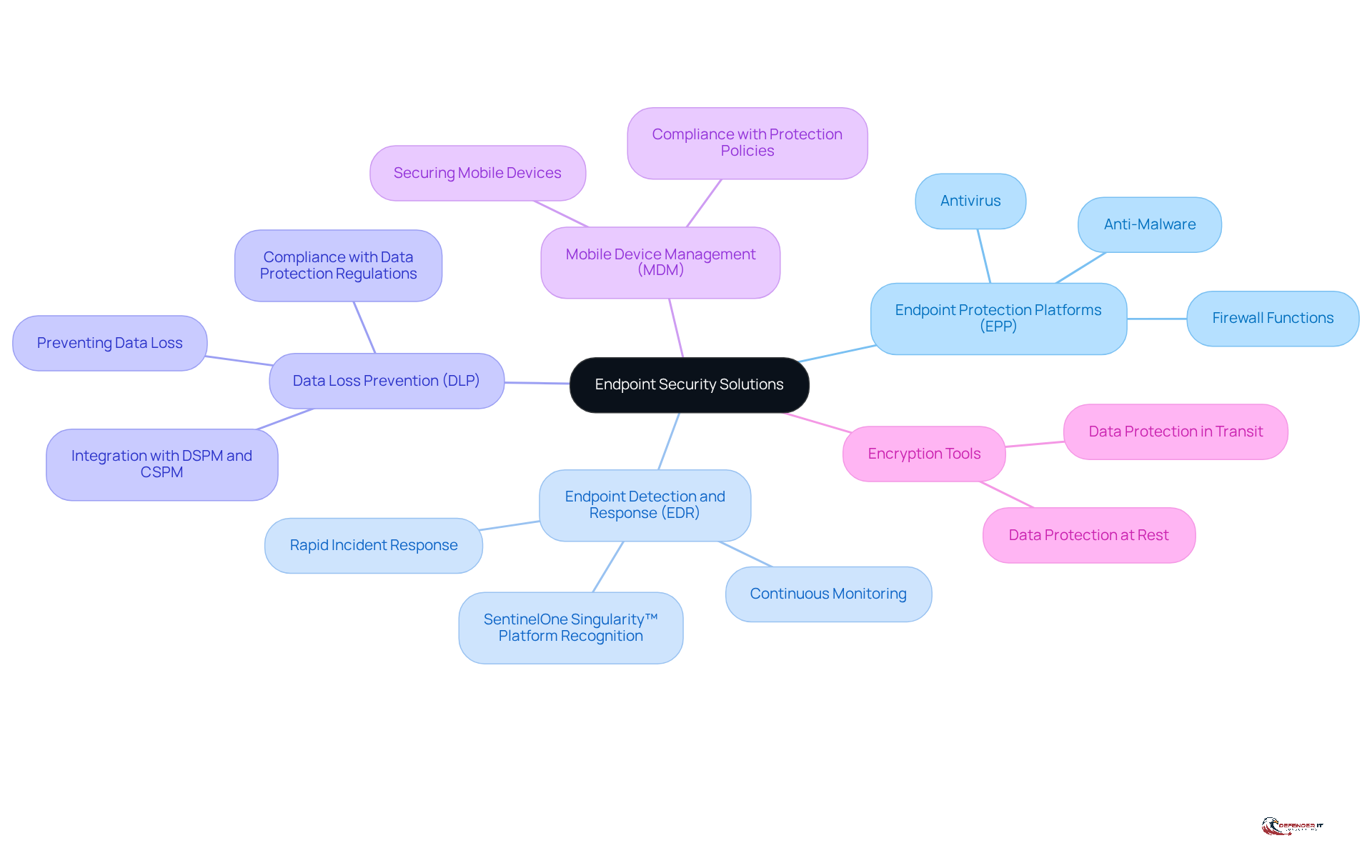
- Endpoint Protection Platforms (EPP): EPPs play a crucial role in ensuring that all devices maintain a fundamental level of security. They provide a strong collection of protective features, including antivirus, anti-malware, and firewall functions, designed to shield endpoints from various dangers.
- Endpoint Detection and Response (EDR): EDR solutions are vital for spotting and swiftly addressing advanced threats as they occur. They enable continuous monitoring of endpoint activities and allow for rapid incident response, minimizing potential damage from breaches. Notably, the SentinelOne Singularity™ Platform was recognized as the Best Endpoint Security Services solution at the 2026 SC Awards, underscoring the effectiveness of modern EDR solutions.
- Data Loss Prevention (DLP): DLP solutions are essential for preventing sensitive data from being lost, misused, or accessed by unauthorized users. This capability is crucial for adhering to data protection regulations, ensuring that organizations can safeguard their most valuable information assets. For comprehensive protection, it’s essential to integrate DLP with Data Security Posture Management (DSPM) and Cloud Security Posture Management (CSPM).
- Mobile Device Management (MDM): MDM solutions secure, monitor, and manage mobile devices within the organization. They ensure that these devices comply with established protection policies, which is particularly important in environments where employees use personal devices for work.
- Encryption Tools: These tools are vital for protecting data both at rest and in transit. By encrypting sensitive data, organizations can maintain confidentiality even if a device is compromised, thereby enhancing overall data protection.
Implementing these solutions strengthens a company’s defenses and ensures compliance with industry regulations, safeguarding both operations and reputation. Key metrics for assessing the effectiveness of these solutions include detection and response time (MTTD/MTTR), the number of blocked incidents, and patch compliance rates, which are essential for understanding the impact of these protective measures.
Implement Best Practices for Selecting and Deploying Endpoint Security Solutions
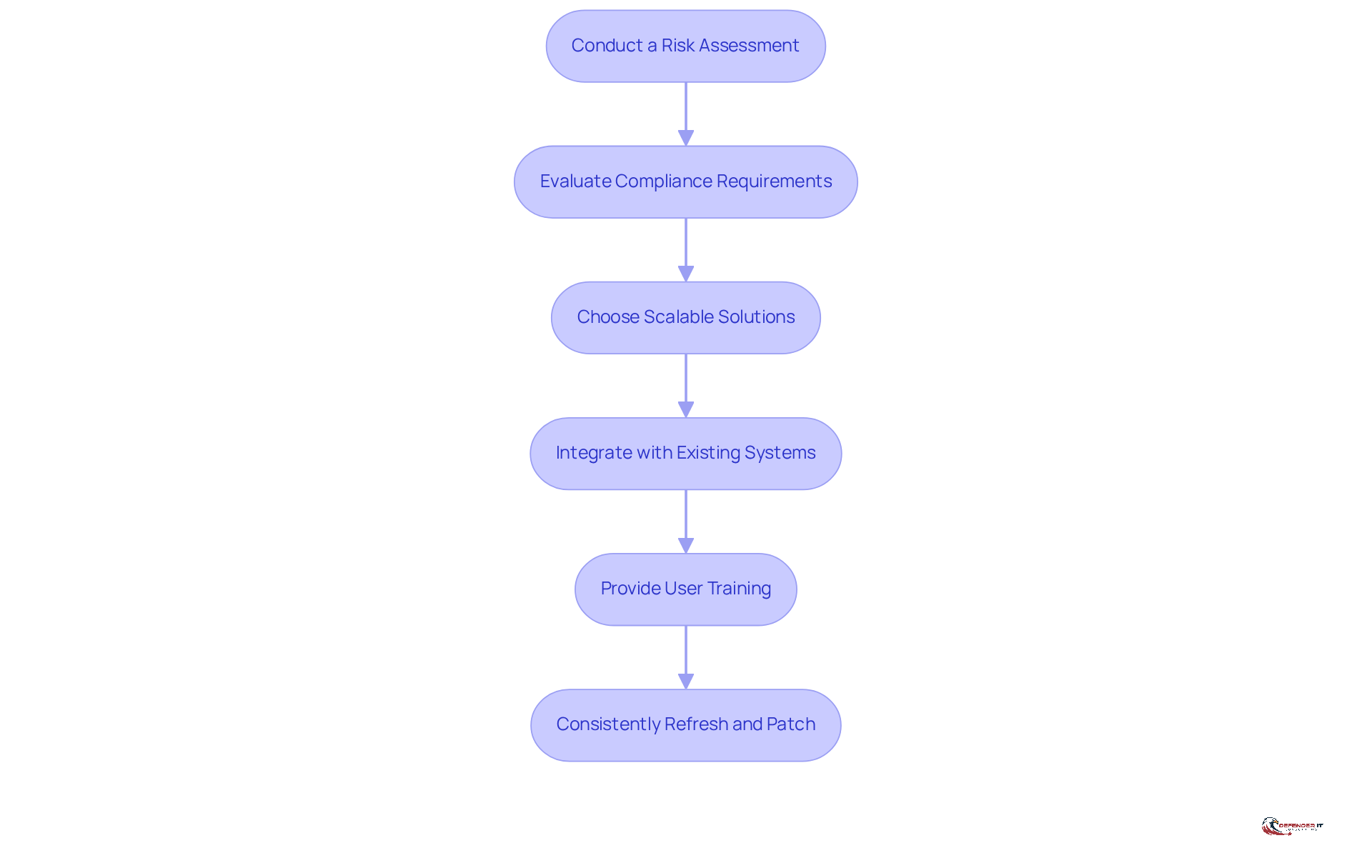
Organizations face increasing threats to their endpoints, necessitating a strategic approach to security solutions. To effectively select and deploy endpoint security solutions, organizations should adhere to the following best practices:
- Conduct a Risk Assessment: Identifying specific risks and vulnerabilities associated with endpoints is crucial. A thorough risk evaluation offers insight into possible dangers, allowing entities to prioritize protective measures efficiently. Regular evaluations are essential for endpoint security services as cyber threats evolve, enabling businesses to adapt and effectively tackle vulnerabilities. Significantly, the Ponemon Institute indicates that 68% of entities in the United States have faced at least one cyberattack on their devices, highlighting the essential requirement for strong measures to protect endpoints.
- Evaluate Compliance Requirements: Understanding the regulatory landscape is vital. Organizations must ensure that their chosen protection solutions align with industry-specific compliance standards, such as ISO 27001 or GDPR. This alignment not only reduces risks but also improves the entity’s overall safety stance.
- Choose Scalable Solutions: Selecting device protection options that can expand with the organization is essential. As access points increase, organizations must ensure their solutions can scale. For instance, companies with fewer than 50 employees average around 22 access points, while those with over 1,000 average nearly 2,000. Solutions must accommodate future needs and adjust to changes in the danger landscape.
- Integrate with Existing Systems: New solutions should seamlessly integrate with existing IT infrastructure to avoid compatibility issues. This integration improves overall safety and ensures that all components function together efficiently to guard against threats.
- Provide User Training: Teaching staff about the significance of device protection and efficient tool utilization is essential. Human mistakes, such as misconfiguration or unmanaged alerts, are a significant factor in many breaches. Regular training sessions can help mitigate these risks.
- Consistently Refresh and Patch: Maintaining all device protection solutions updated is essential for defense against the latest threats. Antivirus programs must be installed on all corporate devices and regularly updated to the latest protection standards to maintain network integrity. The DaVita ransomware incident, which revealed 2.7 million patient records, serves as a stark reminder of the repercussions of insufficient device protection.
Failure to implement these practices can lead to severe breaches, as evidenced by the DaVita incident. Neglecting these best practices could expose organizations to significant vulnerabilities and potential breaches.
Maintain and Optimize Endpoint Security for Long-Term Compliance and Effectiveness
To maintain and optimize endpoint security services effectively, organizations must adopt a proactive approach to compliance and risk management. Here are several strategies to consider:
- Ongoing Surveillance: Establish ongoing surveillance of access points to identify vulnerabilities and risks in real-time, enabling prompt remediation. Organizations that conduct regular risk assessments are significantly less likely to experience data breaches, according to the National Institute of Standards and Technology (NIST).
- Regular audits and assessments should be conducted to evaluate the effectiveness of endpoint security services and ensure compliance with regulatory standards. The frequency of these audits is essential in 2026, as traditional compliance audits often leave gaps for risks and compliance violations. Experts note that neglecting regular audits can expose organizations to significant risks.
- Adjust to New Risks: Stay updated on the latest cybersecurity challenges and trends. Organizations must respond dynamically to evolving threats, especially those that use AI and social engineering tactics.
- Participate in Incident Response Planning: Create and frequently revise an incident response plan to guarantee a swift and efficient reaction to incidents. Being prepared helps minimize the impact of breaches and keeps operations running smoothly.
- Promote a Safety Culture: Encourage an environment of safety within the establishment, where employees are aware of their roles in maintaining safety and compliance. A robust protective culture can greatly improve the efficacy of safety measures and minimize human mistakes.
Ultimately, a commitment to these strategies can safeguard organizations against the ever-evolving landscape of cyber threats.

Conclusion
In regulated industries, the stakes of endpoint security are higher than ever, where compliance is not just a goal but a necessity. Robust endpoint protection is essential, as it safeguards sensitive information while ensuring compliance with critical frameworks like HIPAA, PCI-DSS, and GDPR. In this context, employing effective endpoint security services is not merely a technical necessity; it is a strategic imperative that can significantly influence an organization’s operational integrity and reputation.
Throughout the article, key practices for enhancing endpoint security were discussed, including the selection of appropriate solutions such as:
- Endpoint Protection Platforms (EPP)
- Endpoint Detection and Response (EDR)
- Data Loss Prevention (DLP)
The importance of conducting thorough risk assessments, understanding compliance requirements, and providing user training was emphasized as crucial steps toward building a resilient security posture. Furthermore, maintaining and optimizing these solutions through regular audits and ongoing surveillance was highlighted as vital for long-term compliance and effectiveness.
With the evolution of cyber threats, organizations need to stay alert and proactive in their endpoint security strategies. By fostering a culture of safety and ensuring that all employees are engaged in the protection of sensitive data, organizations can significantly reduce the risk of breaches and enhance their overall compliance stance. Ultimately, the commitment to robust endpoint security is not just about compliance; it is about building a resilient future in a landscape fraught with risk.
Frequently Asked Questions
What is endpoint security?
Endpoint security refers to the protection of end-user devices against cyber threats, ensuring that these devices are secure from unauthorized access and data breaches.
Why is endpoint security important in regulated industries?
In regulated industries, endpoint security is crucial for compliance with legal standards such as HIPAA, PCI-DSS, and GDPR. These regulations require organizations to implement strong protective measures to safeguard sensitive information, making device protection vital for both technical and legal adherence.
What are the consequences of non-compliance in regulated industries?
Non-compliance can lead to significant consequences, including hefty fines and reputational damage, particularly in sectors like healthcare where the protection of electronic patient health information (EPHI) is mandated by regulations like HIPAA.
How can organizations ensure compliance with payment information regulations?
Organizations must establish stringent processes to protect payment information and educate staff on managing confidential payment details to prevent errors that could lead to compliance issues.
What role do endpoint security services play in compliance?
Endpoint security services, such as Stratodesk NoTouch software, are critical in preventing unauthorized access and data breaches, thereby helping organizations maintain compliance with various regulatory requirements.
How do evolving cyber risks affect the importance of endpoint security?
As cyber risks continue to evolve, maintaining a robust endpoint security stance becomes increasingly important for organizations to protect sensitive information and comply with regulatory standards.
Is endpoint security only a technical necessity?
No, utilizing endpoint security services is not just a technical necessity; it is also a strategic imperative for organizations aiming to thrive in a compliance-driven landscape.
List of Sources
- Define Endpoint Security and Its Importance in Regulated Industries
- stratodesk.com (https://stratodesk.com/meeting-hipaa-pci-and-gdpr-compliance-standards-for-endpoints)
- thinscale.com (https://thinscale.com/compliance-meeting-pci-dss-hipaa-gdpr-standards-on-your-endpoints)
- statista.com (https://statista.com/topics/7048/endpoint-security?srsltid=AfmBOorrBgzxo2yK\_N40iRIu6IHxTntaC2DjTkurrY3GQ5qCRTZmd-9G)
- fortra.com (https://fortra.com/blog/data-classification-enabling-compliance-gdpr-hipaa-pci-dss-sox-more)
- linkedin.com (https://linkedin.com/pulse/navigating-compliance-gdpr-hipaa-pci-dss-future-regulations-nfyke)
- Explore Types of Endpoint Security Solutions Suitable for Compliance
- concentric.ai (https://concentric.ai/data-loss-prevention-dlp-software-tools-top-vendors-compared-in-2026)
- prnewswire.com (https://prnewswire.com/news-releases/top-endpoint-protection-solutions-recognized-in-info-tech-research-groups-2026-emotional-footprint-report-302727373.html)
- businesswire.com (https://businesswire.com/news/home/20260401596657/en/SentinelOne-Wins-Best-Endpoint-Security-Solution-at-2026-SC-Awards)
- radicl.com (https://radicl.com/radicl-blog/best-mdr-providers)
- paloaltonetworks.com (https://paloaltonetworks.com/cyberpedia/what-is-endpoint-security)
- Implement Best Practices for Selecting and Deploying Endpoint Security Solutions
- Cybersecurity Risk Assessment: Why It Matters And How To Do It Right | BlackFog (https://blackfog.com/cybersecurity-risk-assessment-why-it-matters)
- sentinelone.com (https://sentinelone.com/cybersecurity-101/endpoint-security/endpoint-security-policy)
- watchguard.com (https://watchguard.com/wgrd-news/blog/boost-your-business-cybersecurity-risk-assessments)
- cyberarrow.io (https://cyberarrow.io/blog/endpoint-protection-best-practices)
- teramind.co (https://teramind.co/blog/endpoint-security-strategy)
- Maintain and Optimize Endpoint Security for Long-Term Compliance and Effectiveness
- thehackernews.com (https://thehackernews.com/2025/03/why-continuous-compliance-monitoring-is.html)
- Cybersecurity Trends to Consider in 2026 (https://blog.enterprisemanagement.com/cybersecurity-trends-to-consider-in-2026)
- federalnewsnetwork.com (https://federalnewsnetwork.com/commentary/2026/01/three-reasons-that-should-drive-your-endpoint-management-strategy-in-2026)
- governmenttechnologyinsider.com (https://governmenttechnologyinsider.com/endpoint-security-what-federal-it-teams-learned-in-2025-and-what-they-should-expect-in-2026)
- isaca.org (https://isaca.org/resources/news-and-trends/isaca-now-blog/2024/the-never-ending-quest-why-continuous-monitoring-is-crucial-for-cybersecurity)