General
Achieve CMMC Level 2 Compliance: A Step-by-Step Guide
Published May 18, 2026
Introduction
Compliance with the Cybersecurity Maturity Model Certification (CMMC) Level 2 is essential for organizations in the defense industrial base, as it directly impacts their ability to protect sensitive data and uphold client trust. This guide outlines a straightforward, step-by-step method for navigating the complex CMMC Level 2 requirements, focusing on the implementation of 110 key security controls.
As the certification deadline approaches, organizations struggle to align their existing practices with the CMMC Level 2 requirements, risking non-compliance. Without a proactive approach to identifying and addressing compliance gaps, organizations risk jeopardizing their reputation and operational integrity.
Understand CMMC and Its Importance for Compliance
The Cybersecurity Maturity Model Certification serves as a critical framework for enhancing the cybersecurity posture of organizations within the defense industrial base (DIB). This framework is designed to ensure that contractors adequately protect sensitive data, particularly Controlled Unclassified Information (CUI). Following the cybersecurity framework goes beyond just meeting regulations; it’s essential for maintaining client trust and safeguarding sensitive information from cyber threats.
Understanding the framework requires recognizing its tiered structure, which includes various levels of adherence, each defined by specific criteria. For organizations striving for CMMC Level 2 compliance, it is essential to implement 110 protective measures derived from NIST SP 800-171. This level emphasizes intermediate cyber hygiene practices, making CMMC Level 2 compliance crucial for organizations that handle CUI. Organizations often struggle to achieve CMMC Level 2 compliance, which can hinder their ability to secure DoD contracts. By achieving the necessary standards, companies can bolster their protective stance, reduce risks, and enhance their eligibility for DoD contracts. Ultimately, non-compliance not only jeopardizes sensitive information but also threatens the organization’s standing in a competitive market.

Identify CMMC Level 2 Compliance Requirements
Organizations must navigate a complex landscape of cybersecurity requirements to achieve CMMC Level 2 compliance, a critical and time-sensitive task. To comply, organizations must implement and demonstrate adherence to 110 security controls across 14 control families. These controls cover various aspects of cybersecurity, including:
- Access Control: Implement measures to limit access to sensitive information based on user roles.
- Awareness and Training: Ensure that all employees receive training on cybersecurity policies and practices.
- Audit and Accountability: Maintain logs of user activities and ensure accountability for actions taken within the system.
- Configuration Management: Establish baseline configurations for systems and regularly review them for compliance.
- Incident Response: Create and execute an incident response plan to handle potential breaches.
- Maintenance: Perform regular maintenance on systems to ensure they remain secure and up-to-date.
- Media Protection: Safeguard sensitive information stored on physical and digital media.
- Physical Protection: Implement physical security measures to protect facilities and sensitive information.
- Risk Assessment: Conduct regular risk assessments to identify and mitigate potential vulnerabilities.
- System and Communications Protection: Ensure secure communication channels and protect systems from unauthorized access.
- System and Information Integrity: Monitor systems for vulnerabilities and ensure timely updates.
- Identification and Authentication: Implement strong authentication measures for users accessing sensitive information.
- Planning: Create a comprehensive security strategy that aligns with organizational goals.
- Program Management: Establish a cybersecurity program that integrates with overall business operations.
Along with implementing these controls, organizations must acknowledge that CMMC Level 2 compliance is not a one-time effort. Ongoing adherence requirements include annual affirmations and triennial reassessments to maintain certification. Non-compliance could result in significant financial and operational setbacks, jeopardizing future contracts.
The urgency of attaining CMMC Level 2 compliance is emphasized by the approaching November 10, 2026 deadline for certification, which will be essential for organizations aiming to obtain DoD contracts. As Jon Forisha observed, ‘The certification becomes necessary as it is part of DoD contracts, with implementation now underway in 2026.’ Organizations must act quickly to stay competitive, as those who delay risk losing eligibility for new contracts and renewals.
By comprehending and applying these requirements, organizations can align their practices with industry standards, paving the way for successful adherence and improved security resilience. Understanding and implementing these requirements is not just about compliance; it is a strategic imperative that can determine an organization’s future in the defense contracting arena.

Conduct Security Assessments to Identify Gaps
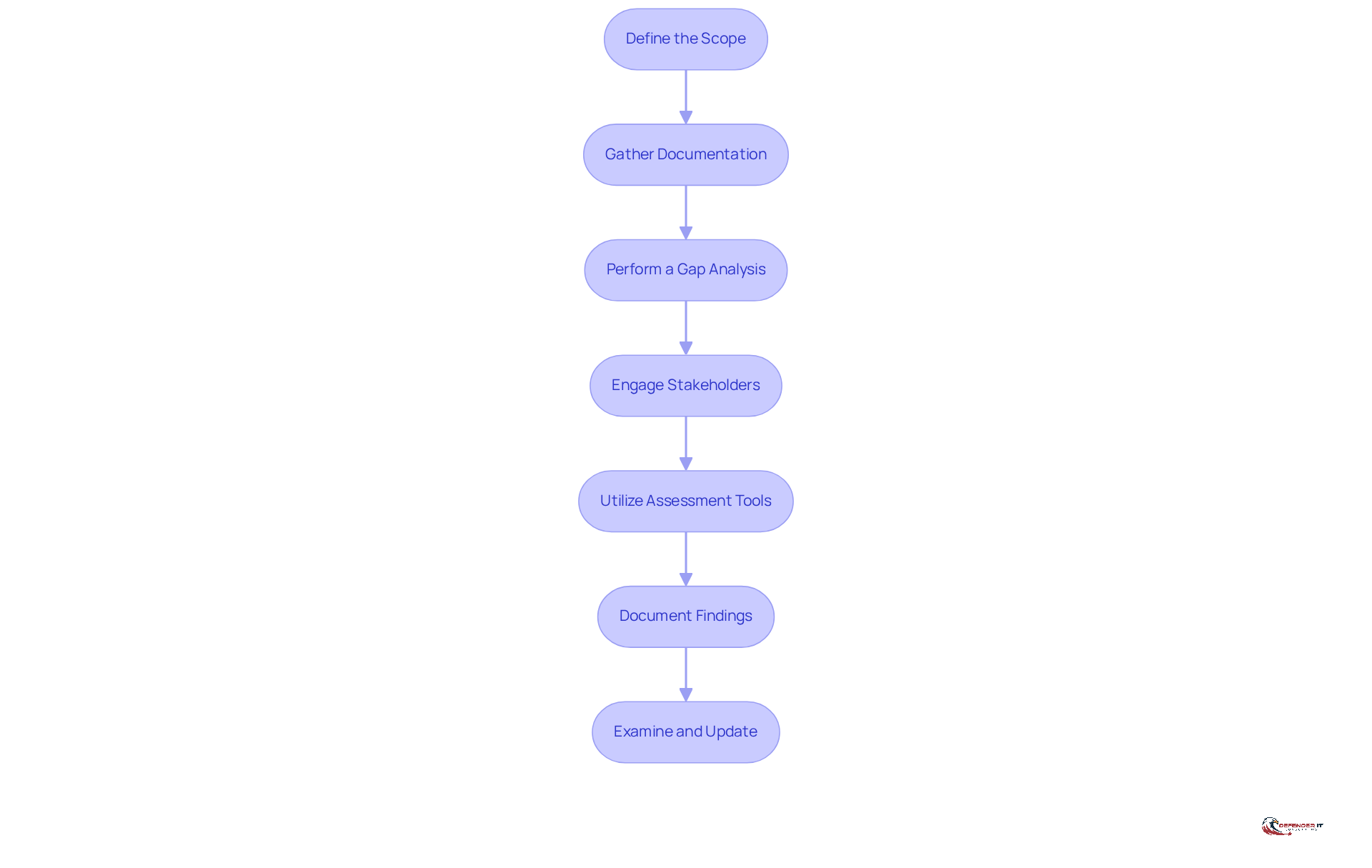
Achieving CMMC Level 2 compliance requires a thorough risk evaluation, a critical step that many organizations overlook. This process involves evaluating your current cybersecurity practices against the CMMC Level 2 compliance requirements to identify gaps and areas for improvement. Here’s how to conduct an effective security assessment:
- Define the Scope: Determine which systems, processes, and data will be included in the assessment. Focus on areas that handle Controlled Unclassified Information (CUI) and other sensitive information.
- Gather Documentation: Collect existing policies, procedures, and security controls that are currently in place. Think of this documentation as your starting point for comparison.
- Perform a Gap Analysis: Achieving CMMC Level 2 compliance is essential for the organization’s security framework. Compare your current practices against the requirements for CMMC Level 2 compliance. Identify which controls are already implemented and which are lacking. A thorough gap analysis can prevent costly issues on the path to certification, as consultant-led assessments typically range from $15,000 to $50,000.
- Engage Stakeholders: Involve key personnel from IT, compliance, and management to gain insights into existing practices and potential vulnerabilities. Their input is crucial for a comprehensive understanding of the organization’s security posture.
- Utilize Assessment Tools: Leverage tools and frameworks designed for CMMC assessments to streamline the evaluation process. These tools can help automate parts of the assessment and provide structured reporting.
- Document Findings: Record all findings from the assessment, including identified gaps, risks, and recommendations for remediation. This documentation will be crucial for developing a remediation plan and should include entries in a Plan of Action and Milestones (POA&M) for each gap identified.
- Examine and Update: After finishing the assessment, discuss the findings with stakeholders and update your security strategy as necessary to address identified gaps. Continuous enhancement is essential, as adherence is a continual process rather than a one-off effort.
By performing comprehensive evaluations of safety measures, organizations can obtain a clear insight into their adherence status and take proactive actions to improve their cybersecurity stance. Without a proactive approach to risk evaluation, organizations risk falling short of compliance and facing potential setbacks in their cybersecurity efforts, ultimately preparing for the forthcoming certification Level 2 prerequisites, including the necessity to achieve a minimum of 88 points for certification and the POA-assessed Level 2 status requirement starting November 10, 2026.
Implement Security Controls and Best Practices
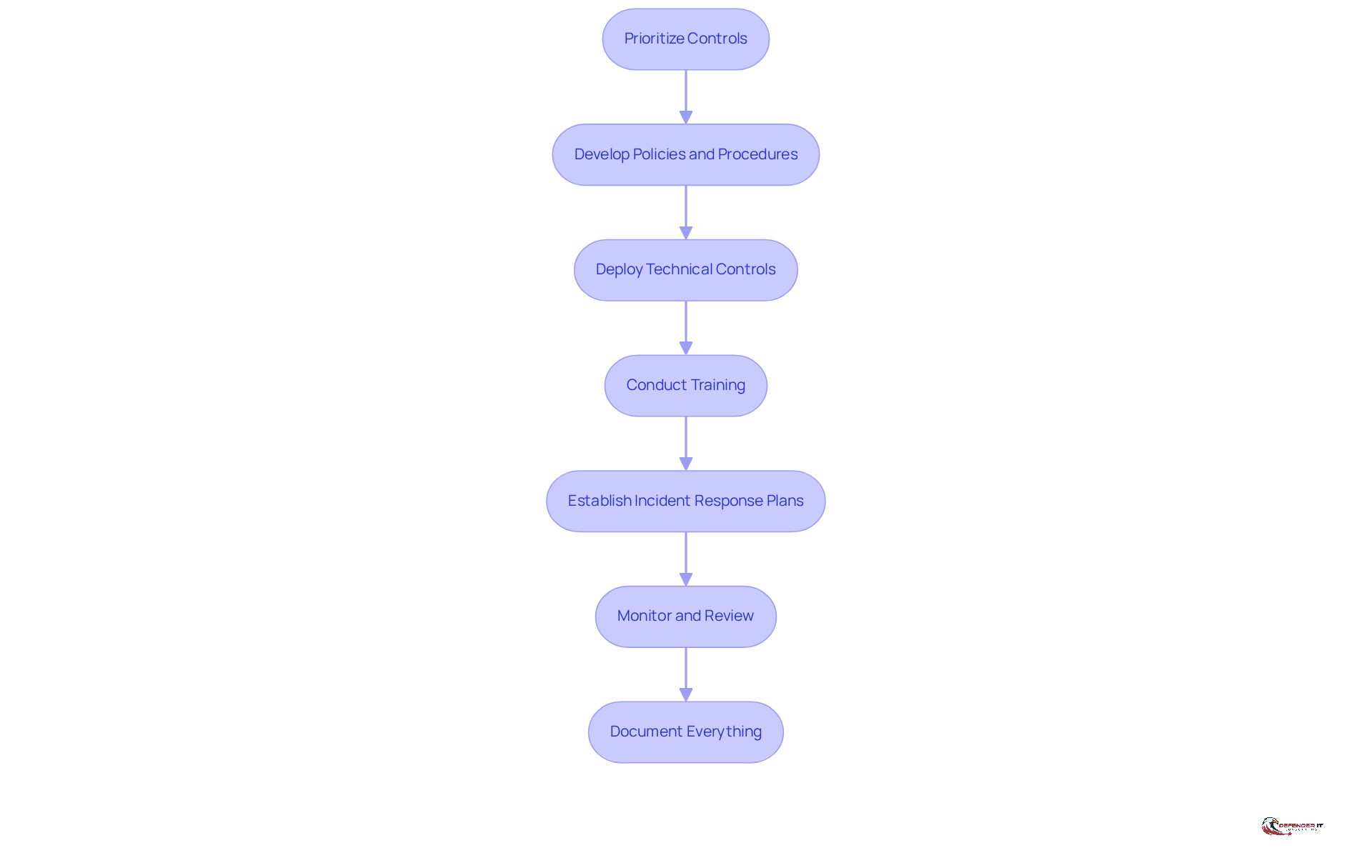
Achieving CMMC Level 2 compliance requires a systematic approach to implementing security measures that address identified gaps. Here’s how to effectively implement these controls:
- Prioritize Controls: Based on the gap analysis, prioritize which controls need immediate attention. Focus on those that pose the highest risk to sensitive information.
- Develop Policies and Procedures: Create or update policies and procedures that align with CMMC requirements. Ensure that these documents are clear, accessible, and communicated to all employees.
- Deploy Technical Controls: Implement technical measures such as firewalls, intrusion detection systems, and encryption to protect sensitive data. Ensure that these controls are configured correctly and regularly updated.
- Conduct Training: Provide training for employees on new policies and procedures, emphasizing the significance of cybersecurity and their role in ensuring adherence.
- Establish Incident Response Plans: Create and execute incident response plans that detail how to react to breaches. Ensure that all employees are familiar with these plans and conduct regular drills.
- Monitor and Review: Continuously monitor the effectiveness of implemented controls. Consistently assess and revise protective measures to adjust to changing threats and guarantee continual compliance.
- Document Everything: Maintain thorough documentation of all implemented controls, training sessions, and incident response activities. This documentation will be essential for future assessments and audits.
Organizations should note that Level 2 certifications are valid for three years, requiring annual confirmations in the second and third years. Compliance with CMMC Level 2 compliance necessitates the implementation of all 110 controls from NIST SP 800-171, which is crucial for achieving the required security posture. With Phase 2 of the cybersecurity framework rollout starting on November 10, 2026, organizations should act quickly to fulfill these regulatory requirements. Ultimately, a proactive approach to security not only ensures compliance but also fortifies the organization against evolving threats.
Establish Continuous Monitoring and Training Programs
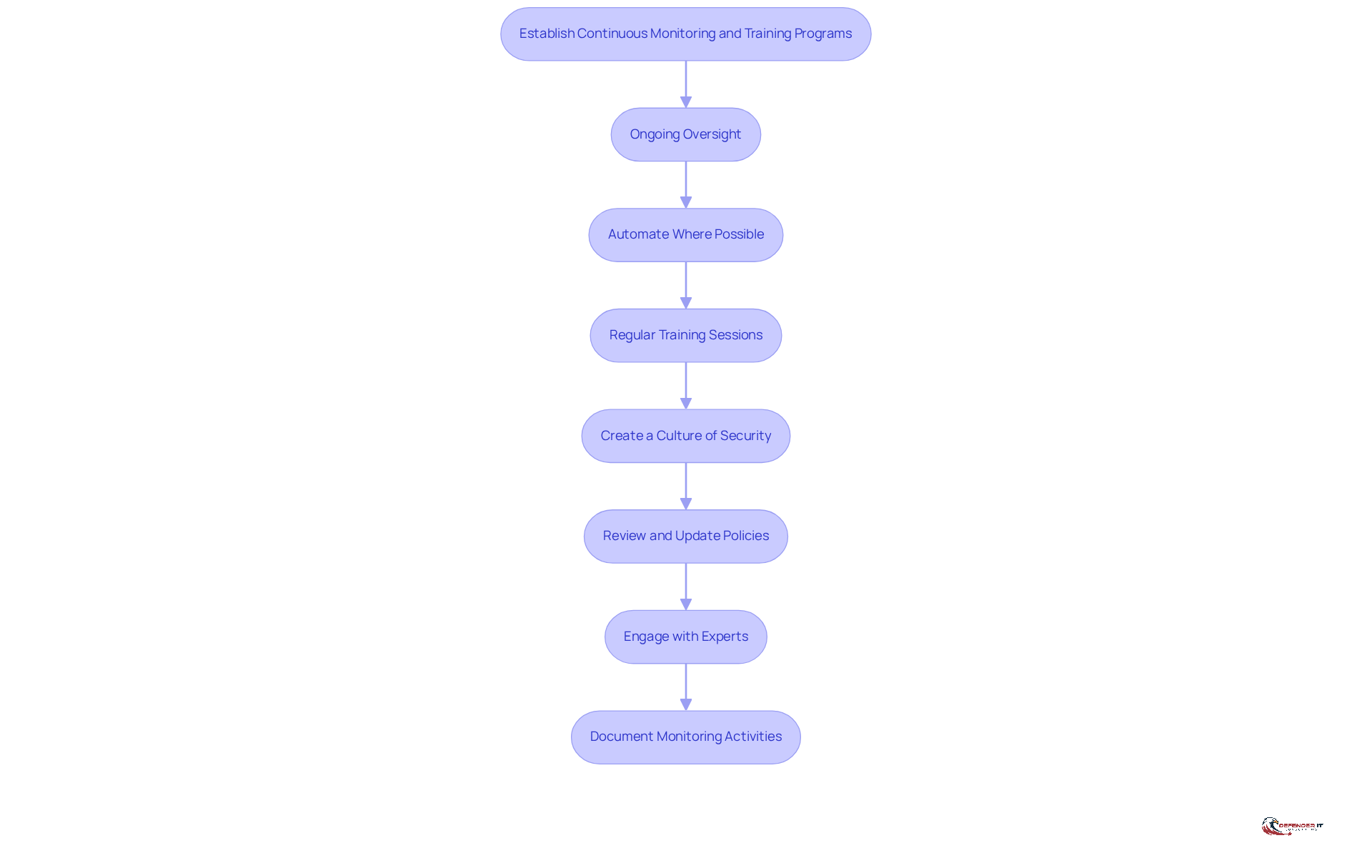
Achieving CMMC Level 2 compliance requires a sustained commitment to cybersecurity practices, rather than just a one-time effort. Implementing ongoing supervision and training initiatives is vital for ensuring adherence and adjusting to emerging threats. Here’s how to implement these programs:
- Ongoing Oversight: Establish an ongoing oversight plan that encompasses routine evaluations of protective measures, vulnerability scanning, and threat intelligence analysis. This proactive approach helps identify and address potential risks before they escalate. The Department of Defense emphasizes that compliance is mandatory and can be audited at any time, underscoring the need for vigilance.
- Automate Where Possible: Utilize automation tools to streamline monitoring processes. Automated systems can provide real-time alerts for suspicious activities and ensure that security measures are consistently applied.
- Regular Training Sessions: Conduct regular training sessions for employees to keep them informed about the latest cybersecurity threats and best practices. Tailor training programs to different roles within the organization to ensure relevance. The low preparedness among contractors highlights a significant gap in compliance readiness, making ongoing training crucial.
- Create a Culture of Security: Foster a culture of security within the organization by encouraging employees to report suspicious activities and participate in security initiatives. Acknowledge and incentivize proactive actions in preserving digital security.
- Review and Update Policies: Regularly review and update security policies and procedures to reflect changes in technology, regulations, and organizational needs. Ensure that all employees are aware of these updates.
- Engage with Experts: Engaging with specialists can provide valuable insights and suggestions to enhance your monitoring and training programs. Their expertise can help organizations stay ahead of emerging threats.
- Document Monitoring Activities: Maintain detailed records of monitoring activities, training sessions, and incident responses. This documentation will be crucial for demonstrating adherence during audits and assessments. The cost of achieving CMMC Level 2 compliance for small-to-medium businesses typically ranges from $75,000 to $150,000, highlighting the financial commitment required for effective cybersecurity practices.
By establishing robust continuous monitoring and training programs, organizations can achieve CMMC Level 2 compliance and effectively protect sensitive information against evolving cyber threats.
Conclusion
Achieving CMMC Level 2 compliance is a crucial undertaking for organizations operating within the defense industrial base. Organizations within this sector face significant challenges in achieving compliance. By adhering to the requirements of this cybersecurity framework, businesses not only fulfill regulatory obligations but also enhance their ability to protect sensitive data and maintain trust with clients. Achieving compliance requires a systematic approach that includes:
- Understanding the framework
- Identifying compliance requirements
- Conducting security assessments
- Implementing necessary controls
- Establishing continuous monitoring
Throughout the article, key points were explored, including:
- The importance of the 110 security controls derived from NIST SP 800-171
- The necessity of ongoing assessments
- The urgency of meeting the November 10, 2026 deadline for certification
Organizations must prioritize their cybersecurity efforts, engage stakeholders in the compliance process, and foster a culture of security awareness among employees. Each step taken towards compliance not only mitigates risks but also positions organizations favorably within a competitive market.
Achieving CMMC Level 2 compliance is not just about certification; it is about securing a competitive edge in defense contracting. By committing to robust cybersecurity practices and continuous improvement, organizations can not only meet regulatory demands but also build resilience against evolving cyber threats. The proactive steps taken today will determine an organization’s ability to thrive in a competitive defense contracting landscape.
Frequently Asked Questions
What is the Cybersecurity Maturity Model Certification (CMMC)?
The Cybersecurity Maturity Model Certification (CMMC) is a framework designed to enhance the cybersecurity posture of organizations within the defense industrial base (DIB) by ensuring they adequately protect sensitive data, particularly Controlled Unclassified Information (CUI).
Why is CMMC compliance important for organizations?
CMMC compliance is crucial for maintaining client trust, safeguarding sensitive information from cyber threats, and enhancing eligibility for Department of Defense (DoD) contracts. Non-compliance can jeopardize sensitive information and threaten an organization’s competitive standing.
What is required for CMMC Level 2 compliance?
Organizations must implement and demonstrate adherence to 110 security controls across 14 control families, including Access Control, Awareness and Training, Incident Response, and Risk Assessment, among others.
How often must organizations maintain CMMC Level 2 compliance?
Organizations must engage in ongoing adherence efforts, which include annual affirmations and triennial reassessments to maintain certification.
What is the deadline for achieving CMMC Level 2 compliance?
The deadline for certification for organizations aiming to obtain DoD contracts is November 10, 2026. Organizations must act quickly to stay competitive and avoid losing eligibility for new contracts and renewals.
What are the consequences of non-compliance with CMMC Level 2?
Non-compliance could result in significant financial and operational setbacks, jeopardizing future contracts and the organization’s ability to compete in the defense contracting arena.
How can organizations align their practices with CMMC requirements?
By comprehending and applying the CMMC Level 2 compliance requirements, organizations can improve their security resilience and align their cybersecurity practices with industry standards.
List of Sources
- Understand CMMC and Its Importance for Compliance
- CMMC Changes Cybersecurity Requirements for Defense Contractors – AGC News (https://news.agc.org/advocacy/cmmc-changes-cybersecurity-requirements-for-defense-contractors)
- Planning Your 2026 CMMC Compliance Roadmap (https://cybersheath.com/resources/blog/planning-your-2026-cmmc-compliance-roadmap)
- The Definitive Guide to CMMC in 2026 (https://strikegraph.com/blog/cmmc-overview)
- CMMC Flow Down Requirements 2026: What Major Defense Primes Are Requiring From Subcontractors (https://stratokey.com/blog/primes-flow-down-cmmc-compliance-requirements)
- CMMC 2.0 in 2026: What Defense Contractors Must Do Now (https://trustconsultingservices.com/cmmc-2-0-in-2026-defense-compliance-guide)
- Identify CMMC Level 2 Compliance Requirements
- CMMC Compliance Deadline 2026: Key Dates That Affect Your DoD Contract (https://radicl.com/resources/cmmc-compliance-deadline)
- CMMC Level 2 Certification: Why November 10, 2026 Matters (https://ktlsolutions.com/cmmc-level-2-certification-deadline-2026-2)
- CMMC Compliance in 2026: The Stakes Are High, But Success is Within Reach. (https://linkedin.com/pulse/cmmc-compliance-2026-stakes-high-success-eijqe)
- Navigating CMMC Changes in 2026: What You Need to Know (https://vc3.com/blog/navigating-cmmc-changes-in-2026)
- CMMC Compliance: What Defense Contractors Need to Know in 2026 (https://riskaware.io/cmmc-compliance-guide)
- Conduct Security Assessments to Identify Gaps
- CMMC in Effect: Cybersecurity Compliance Measures (https://morganlewis.com/blogs/governmentcontractorguidebook/2026/04/cmmc-in-effect-cybersecurity-compliance-measures)
- What Is a CMMC Gap Assessment and Why It Is Your Critical First Step (https://quzara.com/blog/cmmc-level-2-gap-assessment)
- CMMC Level 2 Gap Analysis: How to Prepare for Your Assessment (https://secureframe.com/blog/cmmc-gap-analysis)
- Rev. 3 is coming – Start preparing for the next CMMC requirement | Federal News Network (https://federalnewsnetwork.com/commentary/2026/04/rev-3-is-coming-start-preparing-for-the-next-cmmc-requirement)
- Key Cyber Security Statistics for 2026 (https://sentinelone.com/cybersecurity-101/cybersecurity/cyber-security-statistics)
- Implement Security Controls and Best Practices
- CMMC 2.0 Requirements in 2026: Strategies for Contractors (https://webcti.com/what-to-expect-in-2026-for-your-next-cmmc-2-0-requirements)
- What CMMC 2.0 Changes for Your Cybersecurity Compliance | SWK Technologies (https://swktech.com/what-cmmc-2-0-changes-for-your-cybersecurity-compliance)
- CMMC won’t fail on controls. It will fail on proof. | Federal News Network (https://federalnewsnetwork.com/commentary/2026/04/cmmc-wont-fail-on-controls-it-will-fail-on-proof)
- CMMC Requirements: 2026 Compliance Standards (https://drata.com/learn/cmmc/requirements)
- CMMC in 2026: What Defense Contractors Should Be Paying Attention To (https://linkedin.com/pulse/cmmc-2026-what-defense-contractors-should-paying-attention-fgtme)
- Establish Continuous Monitoring and Training Programs
- CMMC Compliance: What Defense Contractors Need to Know in 2026 (https://riskaware.io/cmmc-compliance-guide)
- Rev. 3 is coming – Start preparing for the next CMMC requirement | Federal News Network (https://federalnewsnetwork.com/commentary/2026/04/rev-3-is-coming-start-preparing-for-the-next-cmmc-requirement)
- Navigating CMMC Compliance Now That It’s 2026 – Helixstorm (https://helixstorm.com/compliance/navigating-cmmc-compliance-now-that-its-2026)
- Planning Your 2026 CMMC Compliance Roadmap (https://cybersheath.com/resources/blog/planning-your-2026-cmmc-compliance-roadmap)
- CMMC 2.0 in 2026: What Defense Contractors Must Do Now (https://trustconsultingservices.com/cmmc-2-0-in-2026-defense-compliance-guide)