Business
4 Best Practices for Your Security Operations Center Implementation
Published March 26, 2026
Introduction
In an era where cyber threats are increasingly prevalent, establishing a robust Security Operations Center (SOC) has become essential for organizations across all sectors. This article outlines four best practices crucial for implementing a successful SOC, focusing on:
- Regulatory compliance
- Infrastructure design
- Continuous monitoring
- Training programs
As organizations work to strengthen their defenses, they often face challenges that can hinder their progress. How can businesses effectively navigate these complexities to ensure their SOC not only meets compliance standards but also operates efficiently against evolving threats?
Understand Regulatory Compliance Requirements
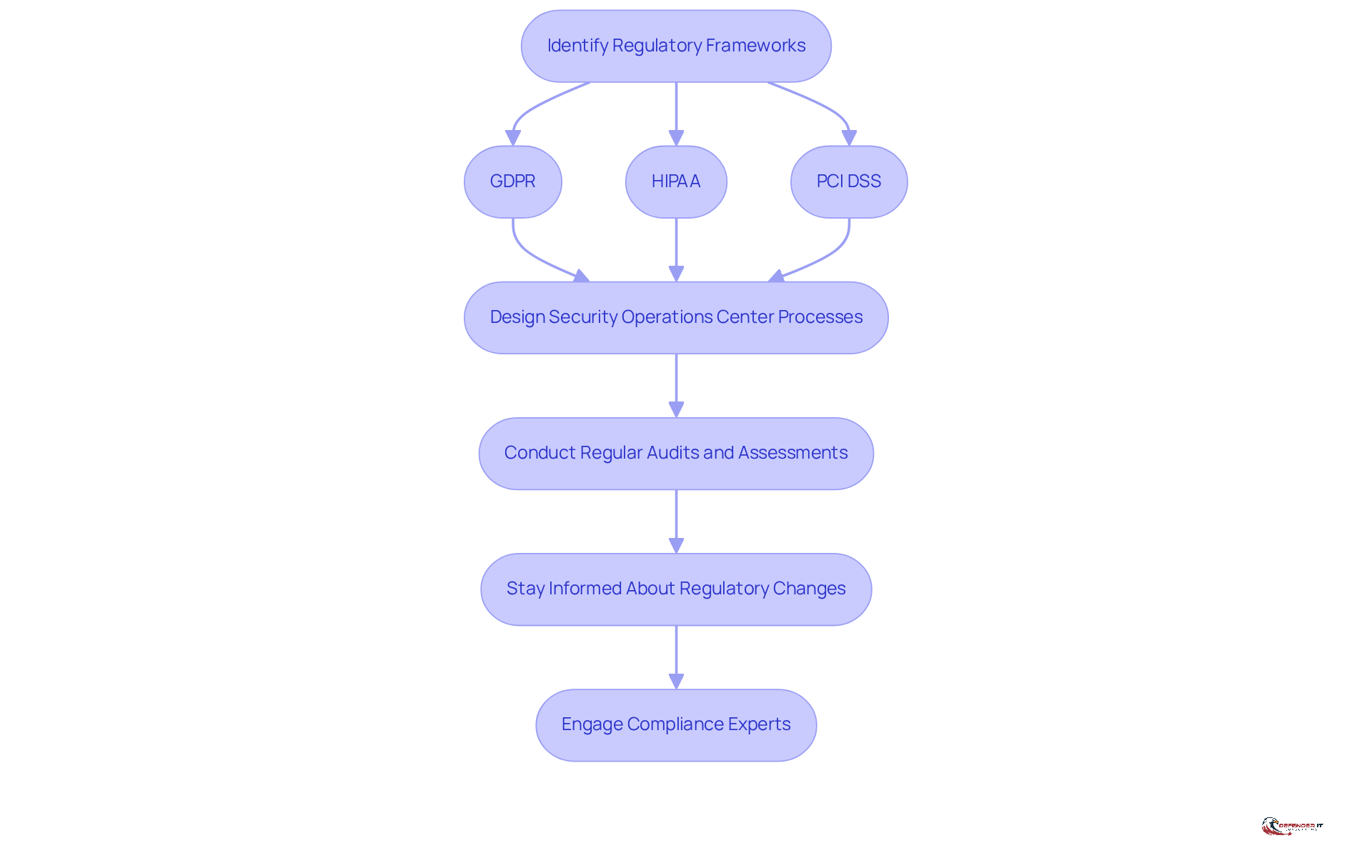
Organizations must first identify the applicable regulations to their industry, such as GDPR, HIPAA, or PCI DSS. This understanding is crucial for designing systems that not only protect data but also ensure compliance. For example, organizations are required to adhere to standards and reported guidelines.
To maintain compliance, audits should be conducted. Organizations must also stay informed about any changes in regulations. Legal experts can provide tailored guidance, ensuring that organizations remain compliant.
Design an Effective SOC Infrastructure
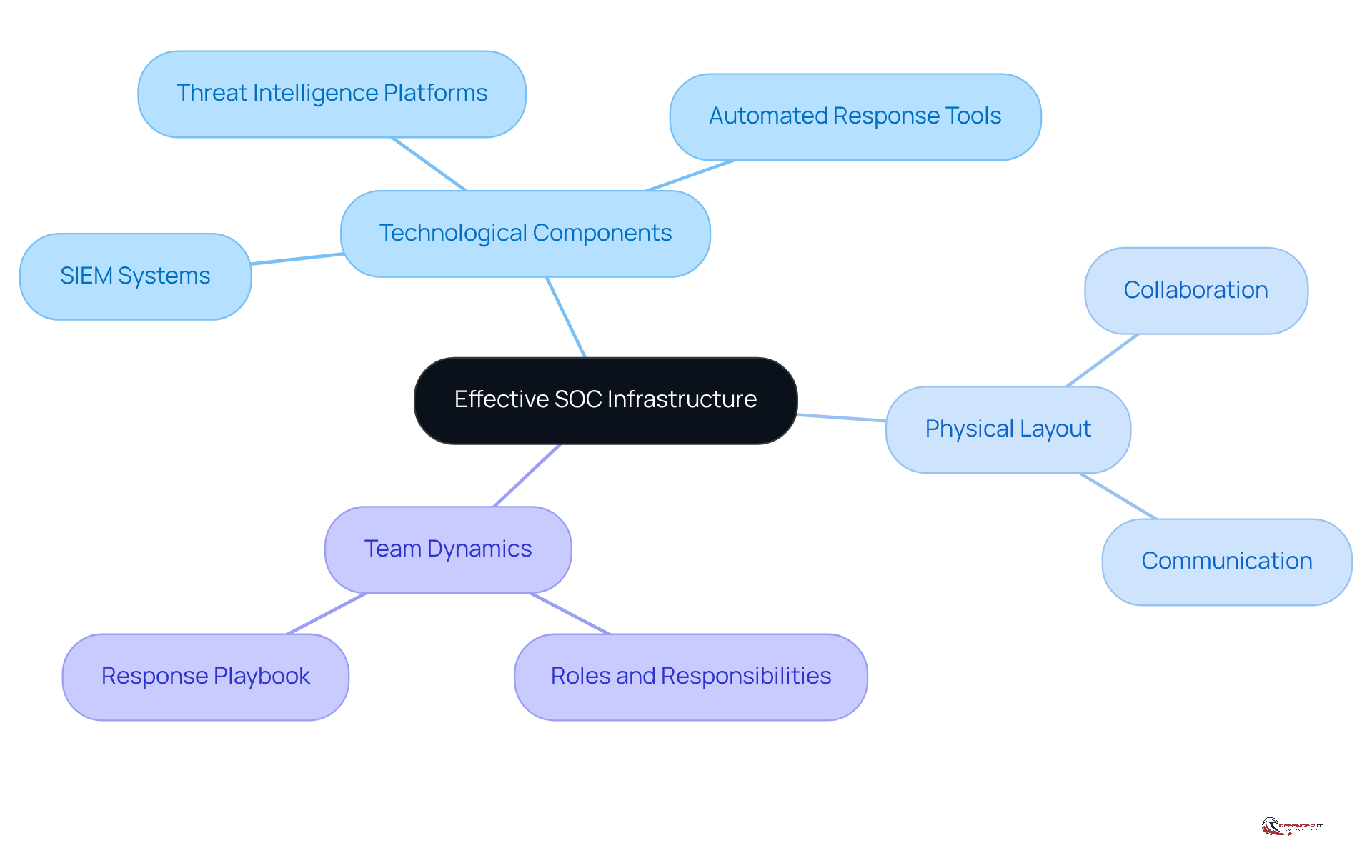
A proficient security operations center (SOC) infrastructure must integrate a combination of advanced technologies, including:
This technological foundation is crucial for security operations.
Moreover, the physical layout of the SOC should promote collaboration among team members, fostering an environment conducive to teamwork and efficient communication. Clearly defining distinct roles and responsibilities within the SOC is essential to ensure comprehensive coverage of all monitoring and response aspects.
For example, implementing a well-defined incident response plan can significantly enhance operational procedures and reduce reaction times during a security breach. This structured approach not only streamlines processes but also empowers team members to act decisively and effectively in critical situations.
Implement Continuous Monitoring and Incident Response
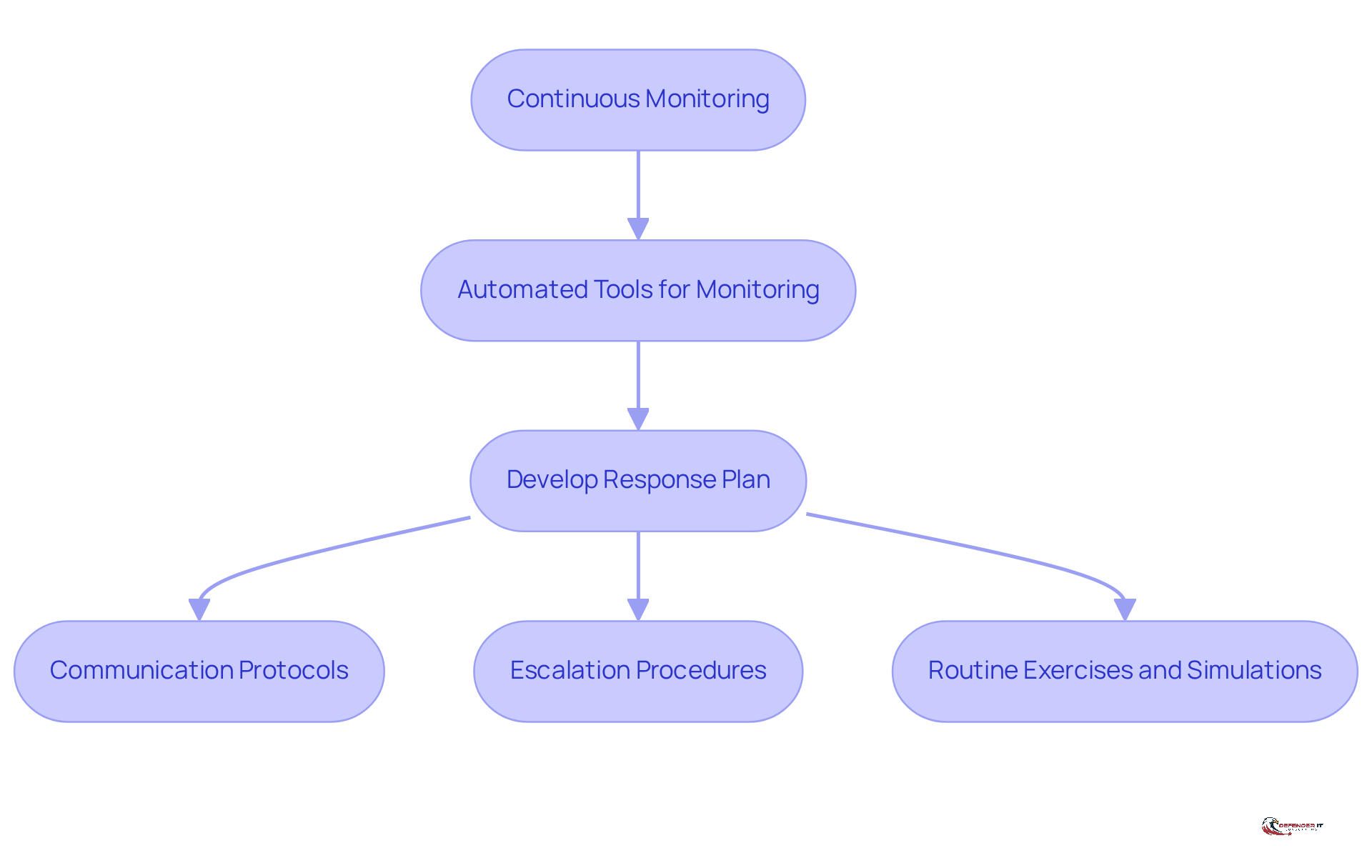
Continuous monitoring involves the process to identify anomalies and potential threats. Organizations should implement tools, facilitating quicker detection of security events.
Moreover, it is essential to have an incident response plan. This plan must outline the steps to be taken during an event, including communication and escalation procedures.
Training programs play a crucial role in preparedness, ensuring they are well-equipped to respond effectively when an event occurs.
Establish Training and Awareness Programs
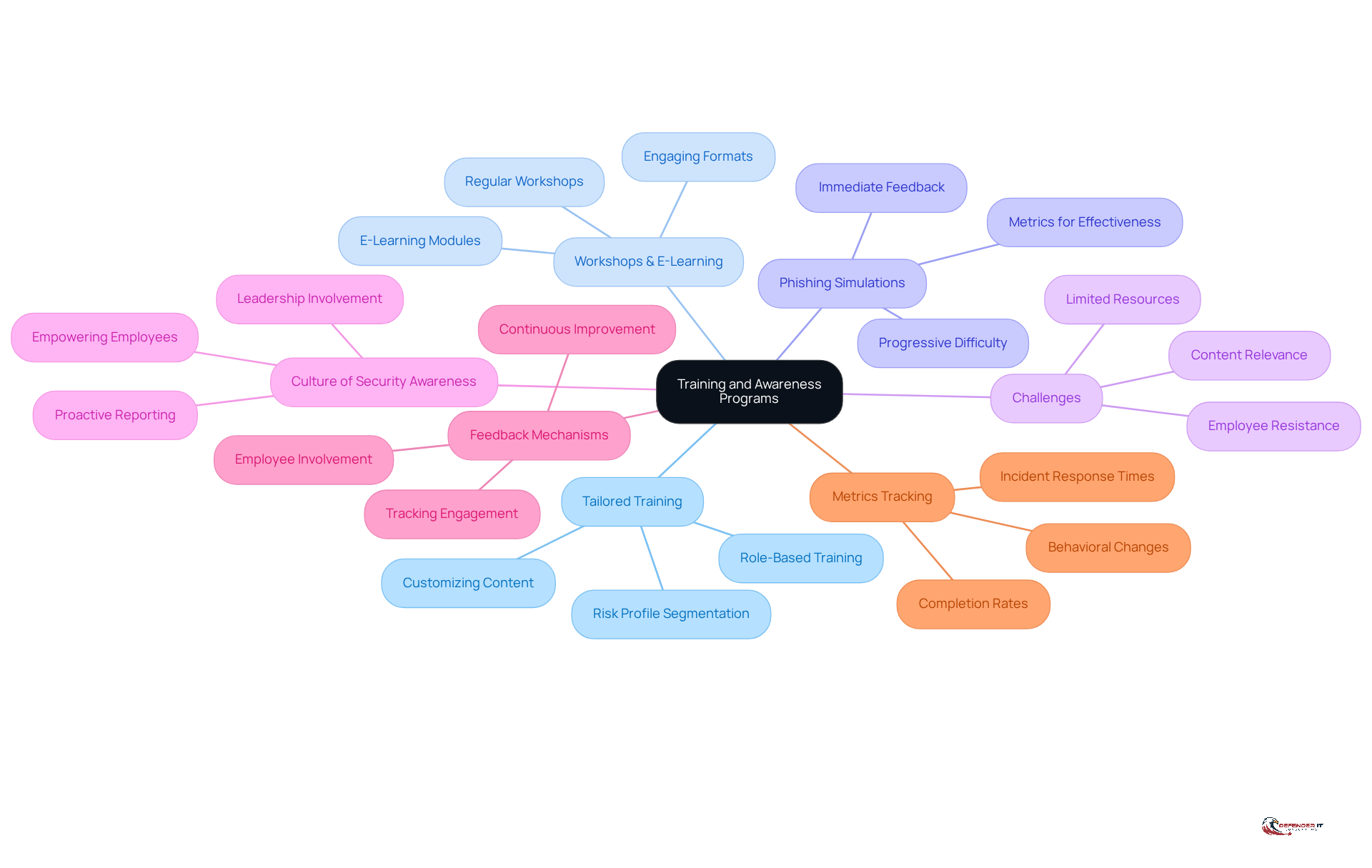
must be specifically tailored to meet the unique needs of both the company and its workforce. Regular workshops and e-learning modules are essential for keeping employees informed about the latest threats and best practices. For instance, well-organized awareness initiatives can reduce successful phishing occurrences by as much as 70 to 80%. Training programs serve as a powerful tool to educate employees on how to effectively identify and respond to phishing attempts.
However, organizations often face challenges when implementing these programs. By fostering a culture of security awareness, companies empower employees to report suspicious activities and adopt safe practices. Furthermore, implementing a feedback mechanism allows for the continuous enhancement of training materials, ensuring they remain relevant in the face of emerging threats.
Tracking metrics to measure effectiveness is also crucial, as it helps organizations identify areas for improvement and adapt their strategies accordingly.
Conclusion
Implementing a successful Security Operations Center (SOC) is a multifaceted endeavor that requires careful consideration of various best practices. By prioritizing regulatory compliance, organizations can safeguard sensitive data and adhere to essential legal frameworks. This foundational step establishes a robust SOC capable of addressing the complexities of modern cybersecurity.
A key strategy is designing an effective SOC infrastructure that integrates advanced technologies and promotes team collaboration. Continuous monitoring and incident response are critical for identifying threats in real time, ensuring that teams are prepared to act swiftly. Furthermore, establishing training and awareness programs empowers employees, fostering a culture of security that is vital in today’s threat landscape.
Ultimately, the success of a Security Operations Center hinges on a proactive approach that combines compliance, technology, and training. Organizations are encouraged to embrace these best practices to enhance their security posture and cultivate a resilient operational framework. As cyber threats evolve, staying ahead through continuous improvement and adaptation will be essential for maintaining a secure environment.
Frequently Asked Questions
What are regulatory compliance requirements?
Regulatory compliance requirements are the specific laws and regulations that organizations must follow based on their industry, such as GDPR, HIPAA, or PCI DSS.
Why is it important for organizations to understand regulatory frameworks?
Understanding regulatory frameworks is crucial for designing security operations center processes that protect data and ensure compliance with industry-specific regulations.
What are some examples of industries with strict regulatory requirements?
Financial institutions are an example of an industry that must adhere to stringent regulations regarding how customer data is handled and reported.
How can organizations maintain ongoing compliance?
Organizations can maintain ongoing compliance by conducting regular audits and assessments, staying informed about changes in regulations, and engaging with compliance experts for tailored guidance.
What role do compliance experts play in regulatory compliance?
Compliance experts provide tailored guidance to organizations, helping them effectively meet specific regulatory requirements and navigate the complexities of compliance.
List of Sources
- Understand Regulatory Compliance Requirements
- Cybersecurity & Privacy 2026: Enforcement & Regulatory Trends (https://morganlewis.com/pubs/2026/03/cybersecurity-privacy-2026-enforcement-regulatory-trends)
- Cybersecurity Regulations for Financial Services for 2026 and Beyond (https://hypr.com/blog/top-financial-services-cybersecurity-regulations)
- poliwriter.com (https://poliwriter.com/news?framework=nist-csf)
- Countdown to Compliance: Navigating 2026 Privacy Laws and Regulations (https://bassberry.com/news/countdown-to-compliance-navigating-2026-privacy-laws-and-regulations)
- bitlyft.com (https://bitlyft.com/resources/cybersecurity-compliance-by-industry-choosing-a-framework-that-fits)
- Design an Effective SOC Infrastructure
- nflo.tech (https://nflo.tech/knowledge-base/building-soc-costs-technologies-2026)
- proficio.com (https://proficio.com/cybersecurity-best-practices-ai-soc-operator-2026)
- allintechnology.com (https://allintechnology.com/modern-security-operations-2026)
- crn.com (https://crn.com/news/security/2026/10-hot-agentic-soc-tools-in-2026)
- fortinet.com (https://fortinet.com/corporate/about-us/newsroom/press-releases/2026/fortinet-advances-its-security-operations-platform-with-unified-soc-agentic-ai-and-expanded-endpoint-security)
- Implement Continuous Monitoring and Incident Response
- Cyber threats to watch in 2026 – and other cybersecurity news (https://weforum.org/stories/2026/02/2026-cyberthreats-to-watch-and-other-cybersecurity-news)
- Cybersecurity Trends in 2026: Rising Threats & Strategies | TierPoint, LLC (https://tierpoint.com/blog/cybersecurity/cybersecurity-trends)
- secureworld.io (https://secureworld.io/industry-news/rebuilding-modern-soc)
- linkedin.com (https://linkedin.com/posts/gerry-blass-917a482\_continuousmonitoring-cybersecurity-2026standards-activity-7426626399626514432-LSFE)
- Key Cyber Security Statistics for 2026 (https://sentinelone.com/cybersecurity-101/cybersecurity/cyber-security-statistics)
- Establish Training and Awareness Programs
- bluecodesecurity.com (https://bluecodesecurity.com/blog/security-training-organizations-2026)
- Benefits of Security Awareness Training for Organizations (2026) (https://symbolsecurity.com/blog/benefits-of-security-awareness-training-for-organizations)
- Effective Security Awareness Training | Elevate Cyber Defense in 2026 (https://trustcloud.ai/risk-management/how-effective-security-awareness-training-elevates-cybersecurity-in-your-organization)
- forbes.com (https://forbes.com/sites/chuckbrooks/2025/12/31/what-every-company-needs-to-know-about-cybersecurity-in-2026)
- uscsinstitute.org (https://uscsinstitute.org/cybersecurity-insights/blog/why-cybersecurity-training-is-the-smartest-investment-for-organization-in-2026)