Business
What is a Vulnerability Scanning Tool and Why It Matters
Published April 1, 2026
Introduction
In today’s landscape, where cyber threats are increasingly prevalent, the need for robust security measures is paramount. Vulnerability scanning tools stand out as vital allies in the fight against potential breaches, enabling organizations to proactively identify and rectify weaknesses within their IT infrastructure. Given that a significant percentage of companies have fallen victim to ransomware attacks, it is crucial to consider how these tools can not only bolster security but also ensure compliance with the growing complexity of regulations. A closer examination of vulnerability scanning tools reveals their essential functionality and their pivotal role in protecting both assets and reputations in an ever-evolving digital environment.
Define Vulnerability Scanning Tools
A vulnerability scanning tool serves as a vital software solution designed to detect, evaluate, and report on security weaknesses within an entity’s IT infrastructure. A vulnerability scanning tool automates the examination of networks, systems, and applications, identifying vulnerabilities that cybercriminals may exploit. By comparing system configurations and software versions against records of known vulnerabilities, organizations can proactively manage their security posture.
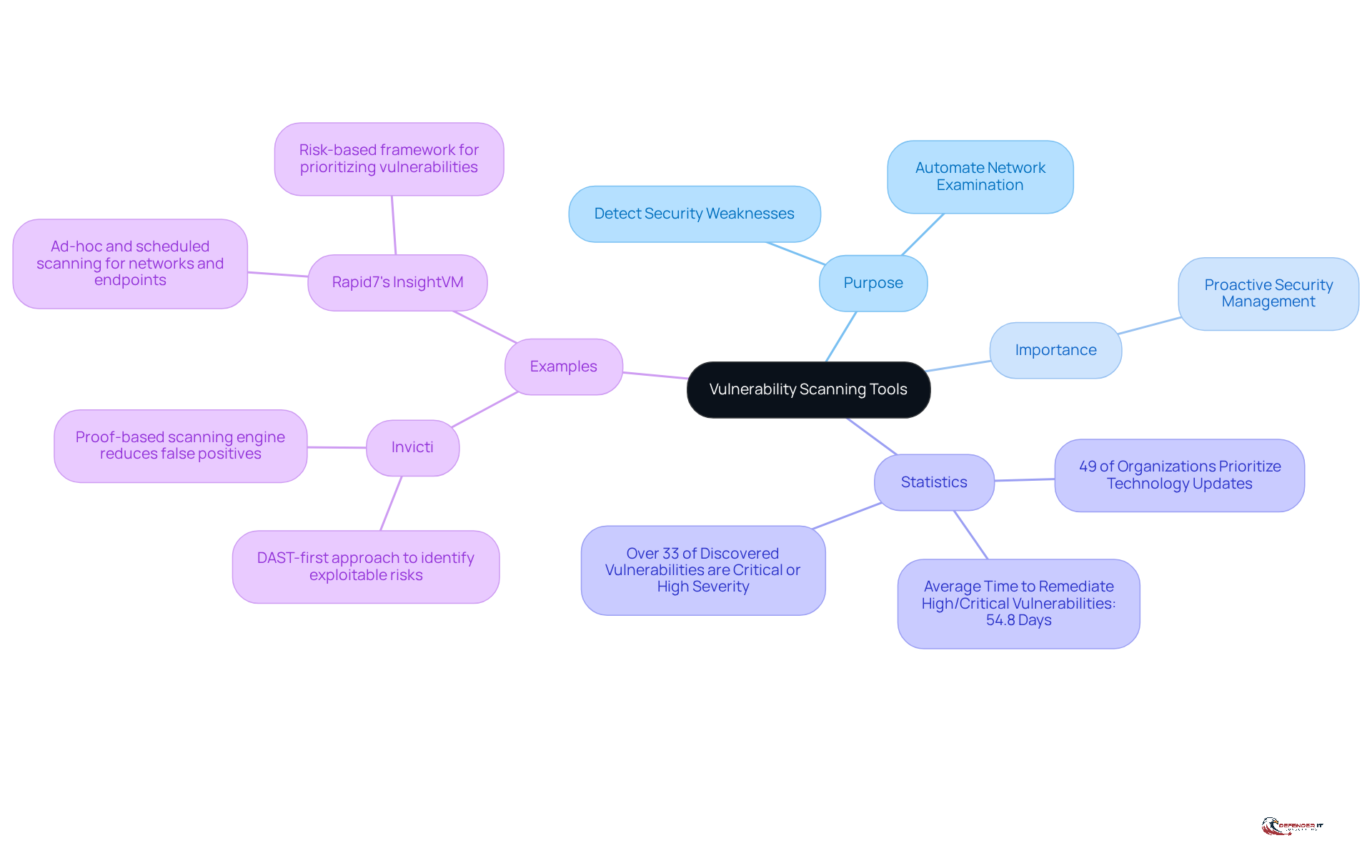
In 2026, approximately 49% of organizations prioritize security measures, including the adoption of vulnerability scanning tools, to mitigate unaddressed vulnerabilities. A vulnerability scanning tool is an essential component of a comprehensive security strategy, enabling organizations to identify and rectify weaknesses before they can be exploited.
For instance, Invicti, a sophisticated enterprise-level risk assessment platform, employs a DAST-first approach to validate genuine, exploitable threats in applications. This significantly reduces false positives and enhances compliance with industry standards. Similarly, Rapid7’s InsightVM offers both ad-hoc and scheduled assessments, categorizing results within a dashboard that facilitates efficient mitigation.
As the landscape of cybersecurity evolves, the implementation of a vulnerability scanning tool becomes increasingly critical for maintaining robust IT security.
Contextualize the Importance of Vulnerability Scanning
In the current digital landscape, the significance of risk assessment instruments cannot be overstated. As cyber threats evolve at an unprecedented pace, organizations face vulnerabilities within their systems. A vulnerability scanning tool is an essential component of a proactive security strategy, enabling organizations to pinpoint weaknesses before they can be exploited by malicious actors. Alarmingly, nearly 78% of companies reported being victims of ransomware attacks in the past year, highlighting the urgent need for robust security measures.
Various industries, particularly those in regulated sectors such as finance and healthcare, are required to conduct regular assessments to comply with stringent regulations. For instance, entities governed by PCI-DSS or HIPAA must demonstrate adherence to patching and verification protocols. By employing vulnerability scanning tools, organizations not only bolster their security frameworks but also ensure compliance, thereby safeguarding their reputation and financial stability.
Cybersecurity experts emphasize the risks associated with neglecting security assessments. As one expert remarked, “What matters is having a clear and up-to-date understanding of exposure.” Without this awareness, organizations may become targets that could lead to significant financial and reputational damage. Furthermore, the complexity of regulations is expected to intensify by 2026, as regulatory frameworks grow increasingly complex, often referred to as a ‘Gordian Mess.’ In fact, 69% of organizations find regulations to be overly complicated, underscoring the challenges they encounter. Organizations that proactively address vulnerabilities will be better equipped to navigate this evolving landscape and maintain compliance, ultimately enhancing their resilience against cyber threats. Additionally, nearly 25% of ransomware victims experience substantial disruption or data loss, further underscoring the critical need for security assessments.

Trace the Origins and Evolution of Vulnerability Scanning Tools
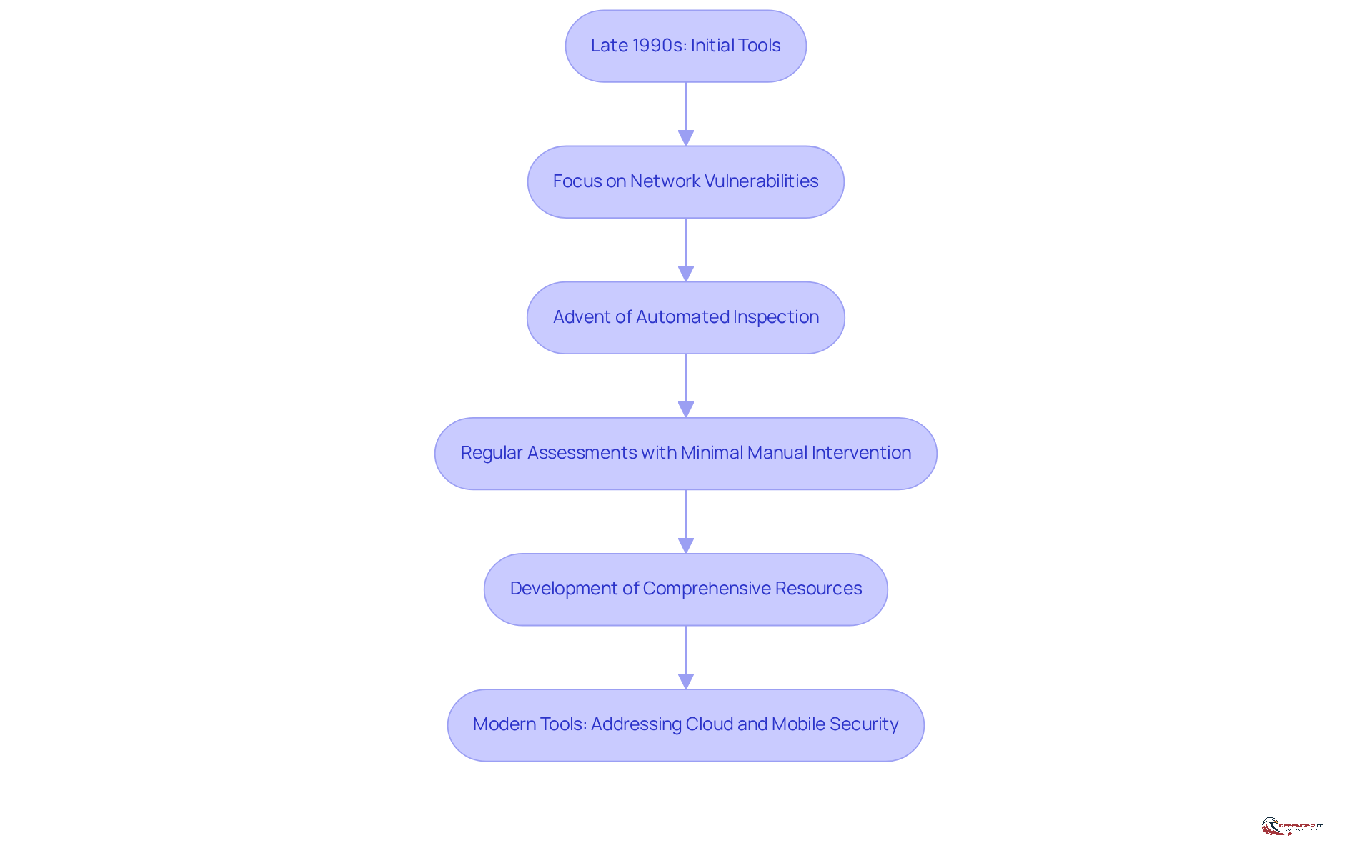
The evolution of vulnerability scanning tools began in the late 1990s, driven by the growing need for cybersecurity. Initially, these tools were rudimentary, focusing primarily on network vulnerabilities. However, as cyber threats evolved, so too did the strategies developed to combat them. The advent of automated inspection capabilities enabled organizations to perform comprehensive assessments.
Over the years, advancements in technology have led to the development of more sophisticated tools that not only identify vulnerabilities but also provide actionable insights. Today, the use of a vulnerability scanning tool is integral to maintaining security, adapting to address the complexities of modern IT environments, including cloud computing and mobile applications.
Identify Key Characteristics of Vulnerability Scanning Tools
Efficient instruments are characterized by several essential attributes, with automation being paramount. Automation significantly enhances the efficiency of these tools by enabling frequent and uniform evaluations without the need for constant human oversight. This capability is vital for maintaining an up-to-date security posture. Notably, 49% of business leaders identify technology modernization, including cybersecurity tools, as a top priority for the coming year. This trend underscores the importance of innovation within organizations’ processes to improve both efficiency and accuracy.
Another critical attribute is versatility, which allows tools to evaluate various components of an IT environment, such as networks, applications, and cloud services. This extensive assessment is crucial for identifying vulnerabilities across diverse infrastructures. Furthermore, user-friendly interfaces are essential for translating complex scan results into actionable insights. These insights empower security teams to prioritize vulnerabilities based on their severity and potential impact, thereby facilitating more effective remediation.
Integration capabilities with existing security tools further enhance the functionality of the scanning tools, enabling seamless workflows and improved threat management. Effective integration fosters a cohesive and responsive security infrastructure, which is essential for organizations. Additionally, support for compliance is vital, as organizations must comply with various regulatory requirements. Finally, the ability to conduct both authenticated and unauthenticated scans using a single tool ensures a thorough assessment of security postures, making these resources indispensable in the fight against cyber threats. The increasing focus on automation is shaping the future of cybersecurity management.
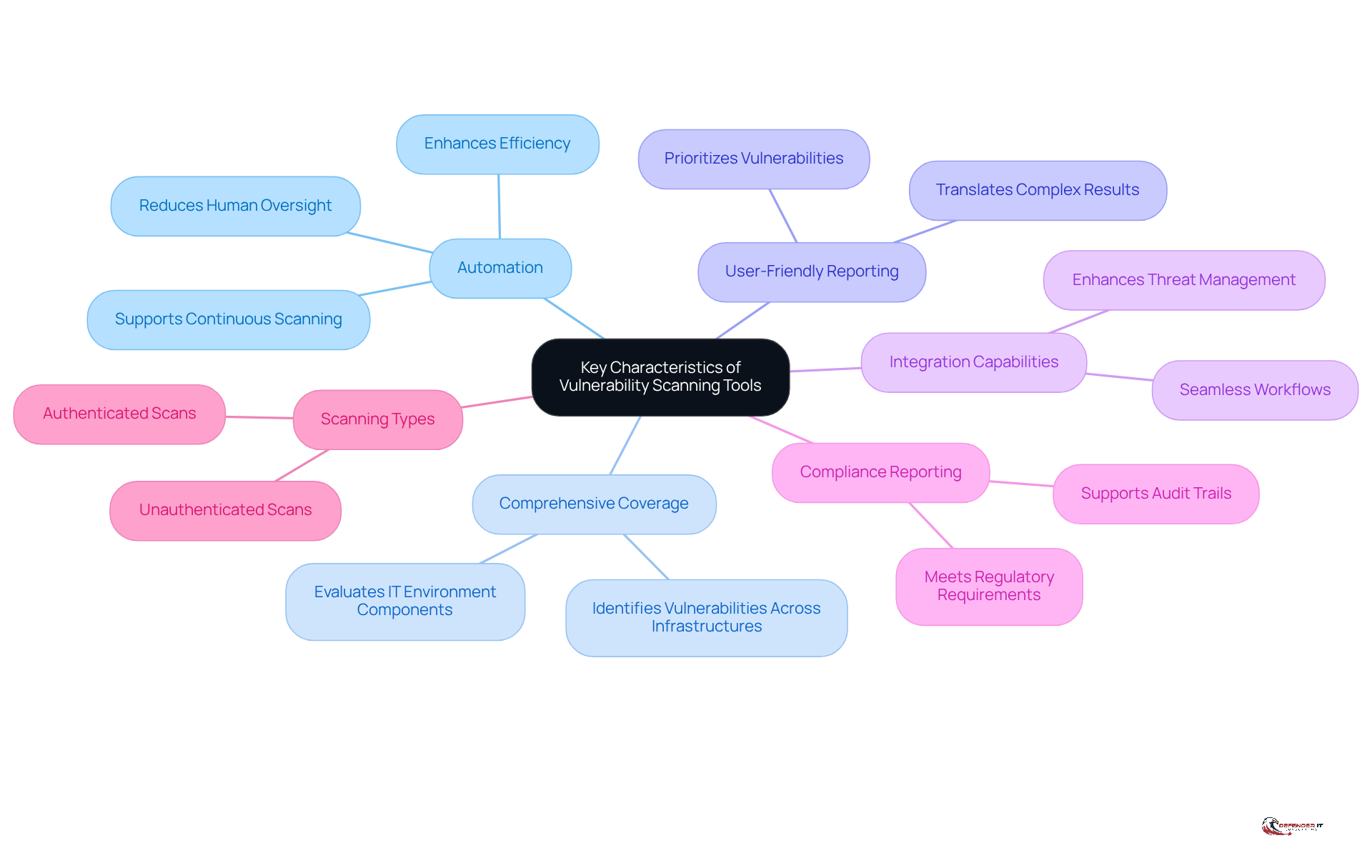 s. Follow the branches to explore each attribute and its importance in enhancing cybersecurity.”)
Examine Examples of Popular Vulnerability Scanning Tools
A vulnerability scanning tool plays a critical role in cybersecurity. Numerous tools are extensively utilized in the sector, each offering distinct features and capabilities.
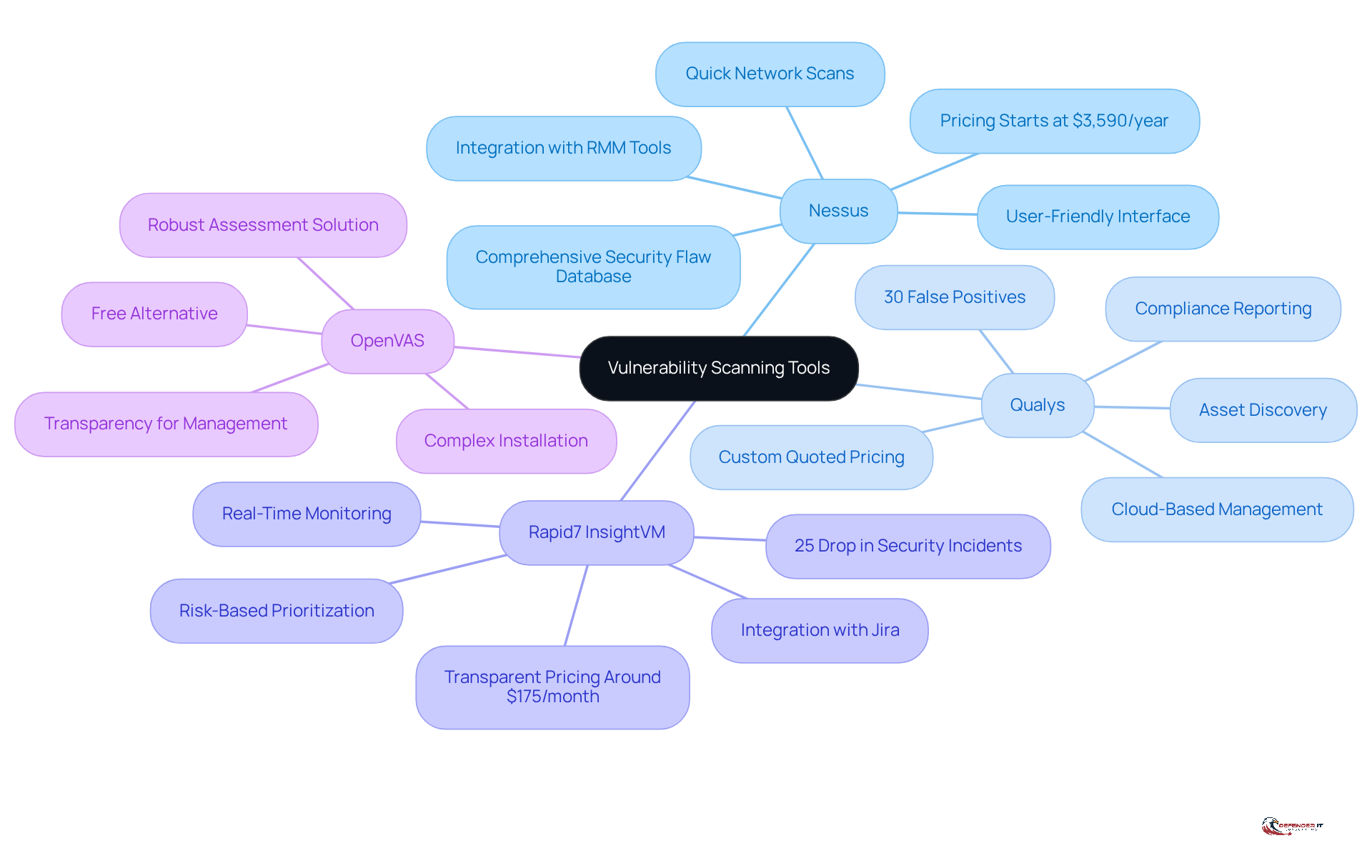
- Intruder is renowned for its comprehensive security flaw database and user-friendly interface, establishing itself as a mainstay for many organizations.
- Qualys provides cloud-based vulnerability management that enables seamless integration with other security solutions.
- Nessus offers real-time monitoring and reporting, allowing entities to respond swiftly to emerging threats.
- For those seeking economical resources, OpenVAS serves as a free alternative.
Each of these tools exemplifies the essential function that a vulnerability scanning tool serves in the broader context of cybersecurity.
Conclusion
Vulnerability scanning tools are essential in cybersecurity, serving to identify and rectify security weaknesses within an organization’s IT infrastructure. By automating the assessment of networks, systems, and applications, these tools enable organizations to proactively manage their security posture and mitigate potential threats before exploitation occurs.
This article underscores the critical role of vulnerability scanning tools in maintaining compliance with industry regulations, such as PCI-DSS and HIPAA. It traces the evolution of these tools from basic network assessments to comprehensive solutions that address the complexities of modern IT environments. Moreover, it emphasizes the necessity for organizations to prioritize automation, extensive coverage, and user-friendly reporting features to effectively enhance their cybersecurity strategies.
As cyber threats continue to evolve, the importance of vulnerability scanning tools remains paramount. Organizations must take proactive measures to integrate these tools into their security frameworks, ensuring vigilance against potential vulnerabilities. By doing so, they not only safeguard their assets but also bolster their resilience against the dynamic landscape of cyber threats. Embracing effective risk management practices today establishes a foundation for a more secure digital future.
Frequently Asked Questions
What is a vulnerability scanning tool?
A vulnerability scanning tool is software designed to detect, evaluate, and report on security weaknesses within an organization’s IT infrastructure. It automates the examination of networks, systems, and applications to identify vulnerabilities that could be exploited by cybercriminals.
Why is vulnerability scanning important for organizations?
Vulnerability scanning is crucial because it helps organizations proactively manage their security posture by identifying and rectifying weaknesses before they can be exploited. With the rise of cyber threats, failing to address vulnerabilities can lead to significant risks, including financial and reputational damage.
What percentage of organizations prioritize technology updates to mitigate vulnerabilities?
In 2026, approximately 49% of organizations prioritize technology updates, including the adoption of risk assessment tools, to address unaddressed vulnerabilities.
Can you provide examples of vulnerability scanning tools?
Yes, Invicti is an enterprise-level risk assessment platform that uses a DAST-first approach to validate genuine threats in applications, reducing false positives. Rapid7’s InsightVM offers both ad-hoc and scheduled assessments, categorizing results in a risk-based framework for efficient mitigation.
How do regulatory requirements impact the use of vulnerability scanning tools?
Organizations in regulated sectors, such as finance and healthcare, are required to conduct regular risk assessments to comply with regulations like PCI-DSS or HIPAA. Employing risk assessment tools helps these organizations bolster their security frameworks and ensure compliance, thus safeguarding their reputation and financial stability.
What are the risks of neglecting security assessments?
Neglecting security assessments can leave organizations vulnerable to cyber attacks, which may result in significant financial losses and reputational damage. Experts emphasize the importance of having an up-to-date understanding of exposure to avoid these risks.
What is the expected trend regarding compliance and security scanning by 2026?
The impact of security scanning on compliance is expected to intensify by 2026, as regulatory frameworks become increasingly complex. Organizations that proactively address vulnerabilities will be better equipped to navigate these changes and maintain compliance.
What are the consequences of ransomware attacks for organizations?
Nearly 25% of ransomware victims experience substantial disruption or data loss, highlighting the critical need for effective risk management to protect against such attacks.
List of Sources
- Define Vulnerability Scanning Tools
- patrowl.io (https://patrowl.io/en/actualites/vulnerability-forecast-2026-what-organizations-can-expect)
- sentinelone.com (https://sentinelone.com/cybersecurity-101/cybersecurity/8-vulnerability-management-tools)
- invicti.com (https://invicti.com/blog/web-security/10-best-vulnerability-scanning-tools)
- Vulnerability Statistics Report (https://edgescan.com/stats-report)
- Contextualize the Importance of Vulnerability Scanning
- patrowl.io (https://patrowl.io/en/actualites/vulnerability-forecast-2026-what-organizations-can-expect)
- securityweek.com (https://securityweek.com/cyber-insights-2026-regulations-and-the-tangled-mess-of-compliance-requirements)
- Cyber threats to watch in 2026 – and other cybersecurity news (https://weforum.org/stories/2026/02/2026-cyberthreats-to-watch-and-other-cybersecurity-news)
- sentinelone.com (https://sentinelone.com/cybersecurity-101/cybersecurity/container-vulnerability-scanning-tools)
- Top Cybersecurity Statistics for 2026 | Cobalt (https://cobalt.io/blog/top-cybersecurity-statistics-for-2026)
- Trace the Origins and Evolution of Vulnerability Scanning Tools
- slcyber.io (https://slcyber.io/blog/how-continuous-threat-exposure-management-is-evolving-in-2026)
- getastra.com (https://getastra.com/blog/security-audit/cyber-security-vulnerability-statistics)
- sentinelone.com (https://sentinelone.com/cybersecurity-101/cybersecurity/history-of-vulnerability-management)
- deepstrike.io (https://deepstrike.io/blog/vulnerability-statistics-2025)
- nist.gov (https://nist.gov/publications/historical-and-statistical-study-software-vulnerability-landscape)
- Identify Key Characteristics of Vulnerability Scanning Tools
- torq.io (https://torq.io/blog/top-cybersecurity-automation-tools)
- securityboulevard.com (https://securityboulevard.com/2025/12/best-vulnerability-scanning-tool-for-2026-top-10-list)
- sentinelone.com (https://sentinelone.com/cybersecurity-101/cybersecurity/8-vulnerability-management-tools)
- brightsec.com (https://brightsec.com/blog/vulnerability-scanners-4-key-features-types-and-how-to-choose)
- invicti.com (https://invicti.com/blog/web-security/10-best-vulnerability-scanning-tools)
- Examine Examples of Popular Vulnerability Scanning Tools
- intruder.io (https://intruder.io/blog/the-top-vulnerability-scanning-tools)
- kratikal.com (https://kratikal.com/blog/best-vulnerability-scanning-tool-for-2026-top-10-list)
- securityboulevard.com (https://securityboulevard.com/2025/12/best-vulnerability-scanning-tool-for-2026-top-10-list)
- sentinelone.com (https://sentinelone.com/cybersecurity-101/cybersecurity/8-vulnerability-management-tools)
- luniq.io (https://luniq.io/en/resources/blog/qualys-vs-tenable-vs-rapid7-best-vulnerability-scanner-for-engineering-firms-in-2026)