General
Master Cloud Network Security: Essential Best Practices for Protection
Published January 21, 2026
Introduction
As organizations transition to cloud-based solutions, the significance of robust cloud network security is paramount. The landscape is increasingly fraught with evolving cyber threats, making it essential to understand best practices for protecting sensitive data and ensuring compliance. Given the growing complexity of these threats, organizations must consider how to effectively safeguard their assets while navigating the intricate realm of cloud security.
Define Cloud Network Security and Its Importance
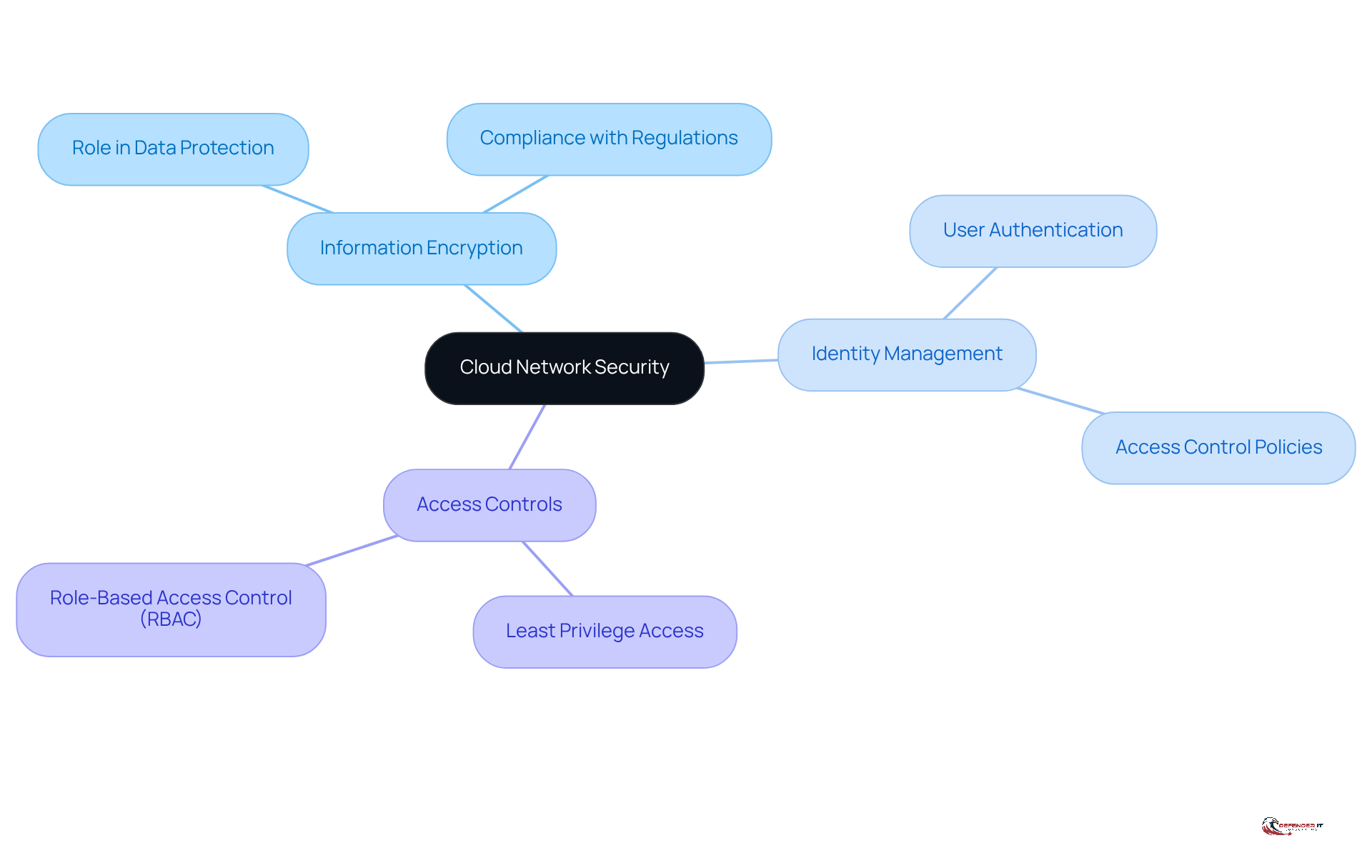
encompasses a comprehensive set of policies, technologies, and controls designed to safeguard information, applications, and infrastructure associated with computing services. This includes a range of measures:
- Information encryption
- Identity management
- Access controls
All aimed at shielding sensitive data from unauthorized access and breaches.
The importance of robust cloud network security is paramount, especially as organizations increasingly rely on remote services for their operations. A well-structured security framework not only defends against threats but also ensures compliance with regulations, thereby enhancing and fostering trust with clients.
As cyber risks continue to evolve, understanding and implementing effective security measures is essential for any organization operating in today’s digital landscape.
Identify Common Threats to Cloud Networks
Organizations encounter a range of threats in cloud environments, which include:
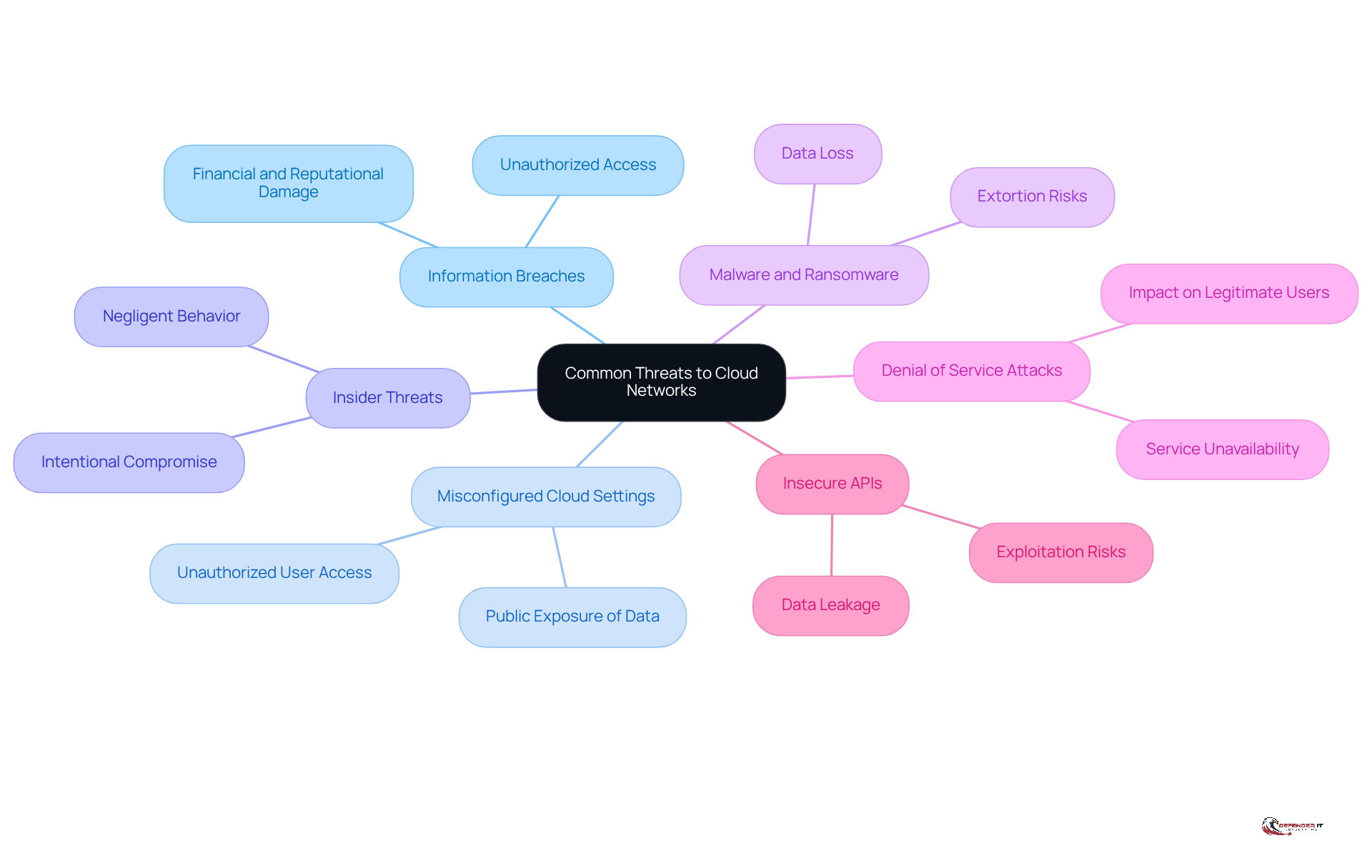
- [Information Breaches](https://thehackernews.com/search/label/Cloud security): Unauthorized access to sensitive information can result in significant financial and reputational damage.
- Misconfigured Services: Incorrectly configured online services may expose information to the public or unauthorized users.
- Insider Threats: Employees with access to sensitive information might intentionally or unintentionally compromise security.
- Malware Attacks: Malicious software can infiltrate online systems, leading to data loss or extortion.
- Denial of Service: Attackers may overwhelm online services, making them unavailable to legitimate users.
- API Vulnerabilities: Poorly designed application programming interfaces can be exploited to gain unauthorized access to online resources.
Understanding these risks is crucial for organizations to develop and implement best practices that safeguard their online environments.
Outline Key Capabilities of Effective Cloud Network Security
Effective cloud network security includes several key capabilities that are essential for safeguarding sensitive information and ensuring compliance. These capabilities include:
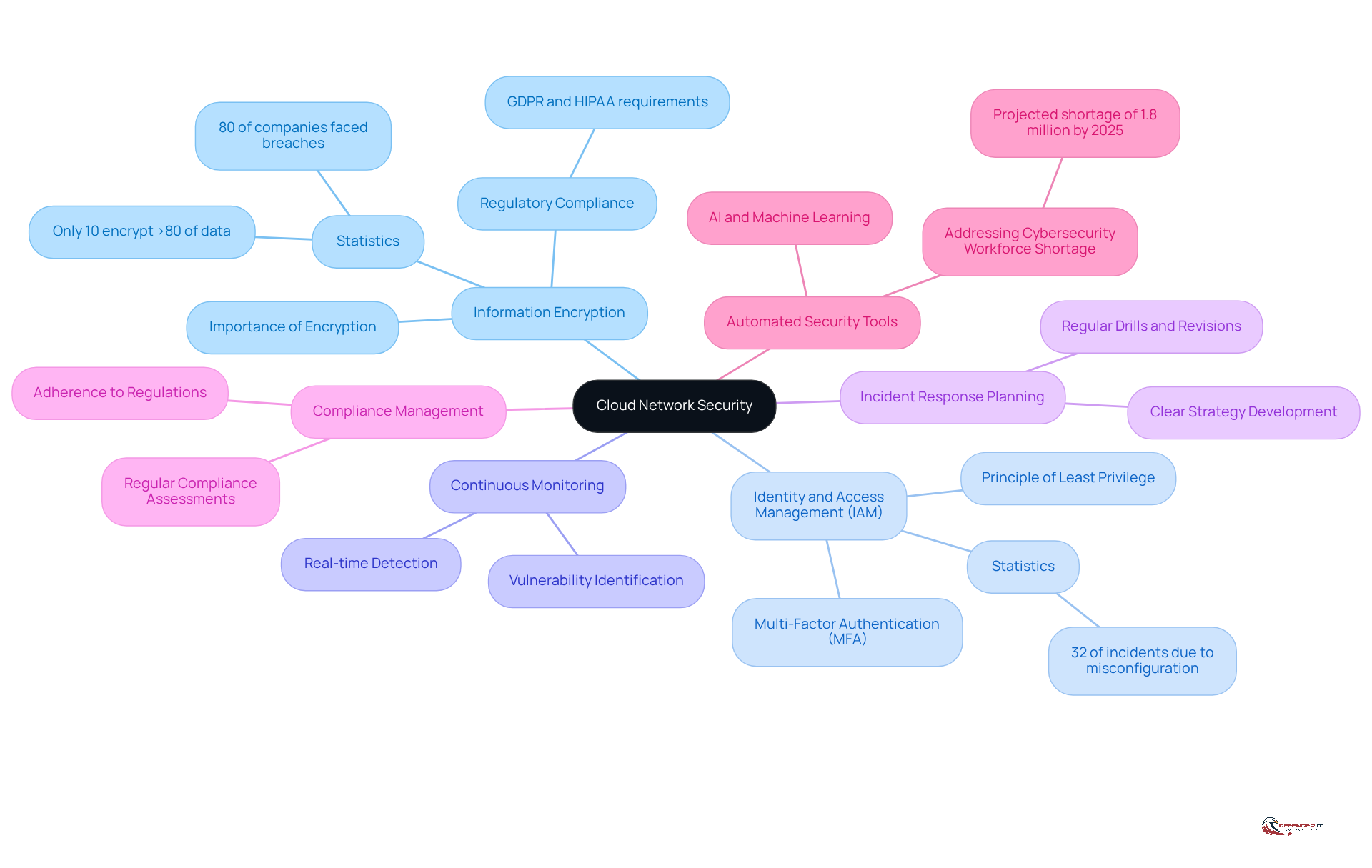
- Encrypting information both at rest and in transit is crucial to prevent unauthorized access. This practice safeguards sensitive information and aids adherence to regulations such as GDPR and HIPAA, which require strict protection measures. A recent study emphasized that 80% of companies encountered cloud protection breaches in the past year, underscoring the urgency of implementing strong encryption practices.
- Implementing robust IAM protocols ensures that only authorized users can access critical data. This includes utilizing multi-factor authentication (MFA) and adhering to the principle of least privilege, which limits user access based on their roles. This approach is vital, especially considering that misconfiguration accounts for 32% of security incidents globally.
- Regularly monitoring cloud environments for suspicious activities and vulnerabilities is vital. Ongoing observation allows organizations to identify irregularities in real-time, enabling rapid reactions to possible risks.
- Creating a clear incident response plan is essential for reducing damage and recovery time in the case of a breach. Regular exercises and revisions to the plan guarantee readiness against changing challenges.
- Adhering to industry regulations and standards is critical to avoid legal repercussions. Organizations should regularly assess their compliance frameworks and ensure that their protective measures align with current regulations.
- Utilizing automation and machine learning improves detection and response capabilities. Automation can significantly reduce the time required to identify and mitigate risks, addressing the projected skills gap to reach 1.8 million by 2025.
These capabilities constitute the foundation of a strong online protection strategy focused on risk management, allowing organizations to proactively guard against evolving cyber risks and uphold the integrity of their digital assets.
Implement Best Practices for Cloud Network Security
To enhance security, organizations should implement the following best practices:
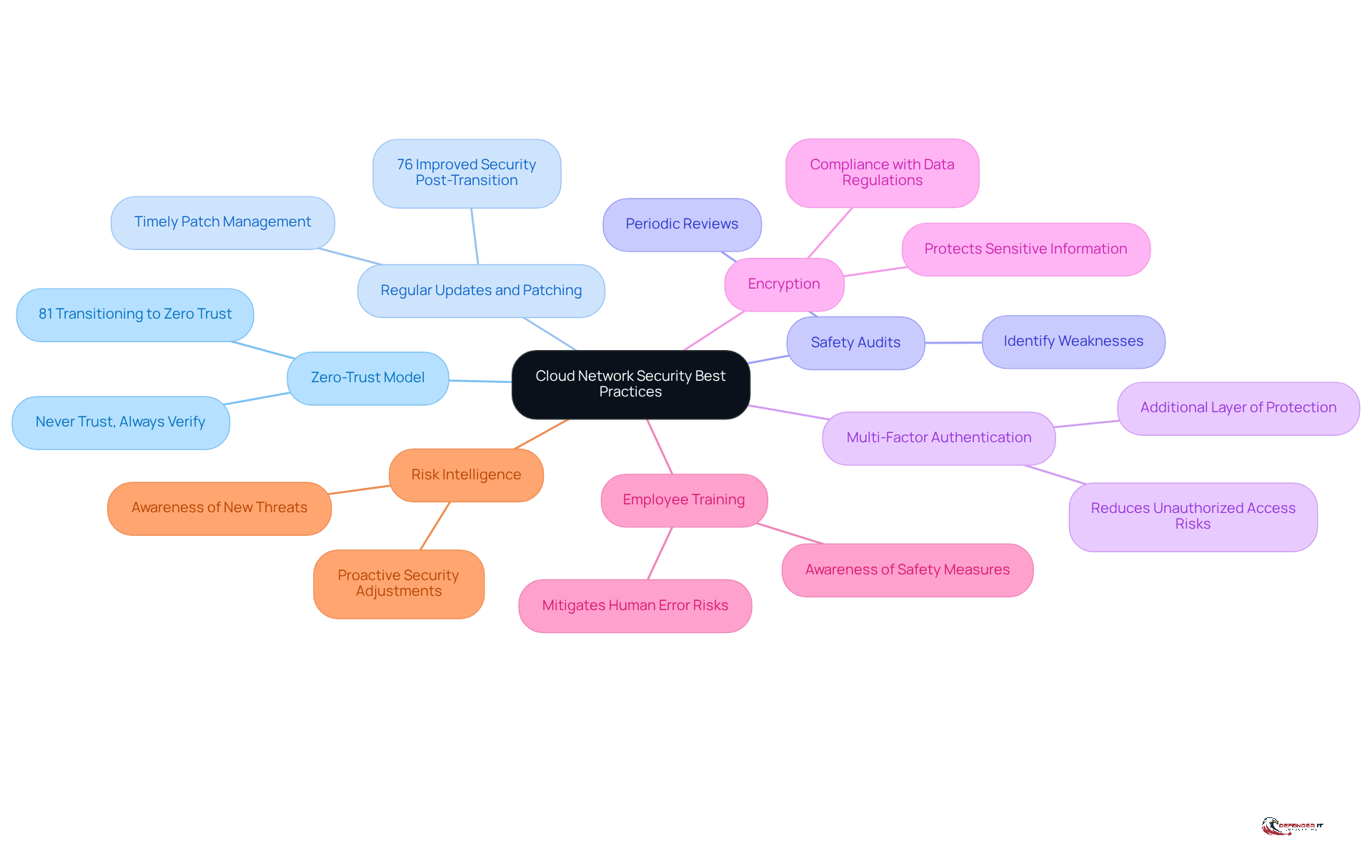
- Adopt a Zero-Trust model: This approach assumes that threats can originate from both outside and inside the organization. Every request should be verified as if it comes from an open network, ensuring that only authenticated and authorized entities gain access. The principle of least privilege is essential to this model, especially in online environments where the attack surface is continuously changing. Notably, within the next year, Zero-Trust will be critical, highlighting its growing importance in cybersecurity.
- Regularly Update and Patch Systems: Keeping all cloud services and applications up-to-date is crucial for protecting against known vulnerabilities. Frequent updates not only tackle vulnerabilities but also improve overall system resilience. Organizations that prioritize timely patch management report significant improvements in safety and compliance, with 76% noting enhanced protection after transitioning to a Zero-Trust framework. For instance, AWS GuardDuty effectively employs regular updates to improve its protective measures.
- Conduct Security Audits: Periodic reviews of protection policies and configurations help identify and rectify potential weaknesses. These audits are essential for maintaining a strong defensive stance and ensuring compliance with regulatory requirements.
- Implement Multi-Factor Authentication: Requiring multiple forms of verification adds an additional layer of protection, significantly lowering the risk of unauthorized access. MFA is a critical component of a comprehensive security strategy, especially in cloud environments where credential theft is prevalent.
- Use Strong Encryption: Utilizing robust encryption techniques for information at rest and in transit protects against unauthorized access. This practice is vital for protecting sensitive information and maintaining compliance with data protection regulations.
- Train Employees on Cybersecurity Awareness: Regular training sessions inform staff about security threats and the significance of following safety protocols. A knowledgeable workforce is a crucial safeguard against cyber risks, as human mistakes are frequently a major contributor to breaches.
- Employ Risk Intelligence: Utilizing risk intelligence enables organizations to remain aware of new dangers and modify protective measures accordingly. Ongoing observation and assessment of risk landscapes allow proactive reactions to possible dangers.
By adhering to these best practices, organizations can greatly enhance their security posture and better safeguard their digital assets from evolving threats. The implementation of a Zero-Trust model, combined with continuous training, creates a resilient defense against the increasing sophistication of cyber attacks.
Conclusion
Mastering cloud network security is not just a technical requirement; it is essential for any organization aiming to thrive in the digital age. This article underscores the critical need for robust security measures to protect sensitive information and maintain client trust. As cyber threats evolve, a proactive approach to cloud network security is vital for safeguarding digital assets.
Key components of effective cloud network security include:
- Encryption
- Identity and access management
- Continuous monitoring
- Incident response planning
By recognizing common threats such as:
- Information breaches
- Misconfigured settings
- Insider threats
Organizations can devise strategies to mitigate these vulnerabilities. Implementing best practices like the Zero-Trust model, regular system updates, and employee training further strengthens defenses against potential attacks.
The landscape of cloud security is dynamic, necessitating that organizations remain vigilant in adapting to new challenges. By prioritizing cloud network security and committing to continuous improvement, businesses can protect their valuable data and cultivate a culture of security awareness. Taking decisive action today will pave the way for a more secure digital future, ensuring resilience against the ever-evolving cyber threats of tomorrow.
Frequently Asked Questions
What is cloud network security?
Cloud network security refers to a comprehensive set of policies, technologies, and controls designed to protect information, applications, and infrastructure associated with cloud computing services.
What are the key protective measures involved in cloud network security?
Key protective measures include information encryption, identity management, and access controls, all aimed at shielding sensitive data from unauthorized access and cyber threats.
Why is cloud network security important for organizations?
Cloud network security is crucial as organizations increasingly rely on remote services. It defends against data breaches, ensures compliance with regulatory requirements, maintains the organization’s reputation, and fosters trust with clients.
How do evolving cyber risks affect cloud network security?
As cyber risks continue to evolve, it is essential for organizations to understand and implement effective cloud network security measures to protect against new and emerging threats in today’s digital landscape.
List of Sources
- Define Cloud Network Security and Its Importance
- How to Improve Your Cloud Security in 2026 | Built In (https://builtin.com/articles/best-practices-cloud-security)
- exeedcollege.com (https://exeedcollege.com/blog/top-cloud-security-threats-in-2026-and-how-to-overcome-them)
- darkreading.com (https://darkreading.com/cloud-security/heres-cloud-security-holds-year-ahead)
- Palo Alto Networks Report Reveals AI Is Driving a Massive Cloud Attack Surface Expansion (https://paloaltonetworks.com/company/press/2025/palo-alto-networks-report-reveals-ai-is-driving-a-massive-cloud-attack-surface-expansion)
- sentinelone.com (https://sentinelone.com/cybersecurity-101/cloud-security/cloud-security-trends)
- Identify Common Threats to Cloud Networks
- exeedcollege.com (https://exeedcollege.com/blog/top-cloud-security-threats-in-2026-and-how-to-overcome-them)
- Preparing for 2026 Cloud Threats: A Guide to Cloud Security Trends and Risk Management (https://wowrack.com/en-id/blog/cloud-2/preparing-for-2026-cloud-threats-a-guide-to-cloud-security-trends-and-risk-management)
- Cloud and SaaS risks rise in 2026 as trust and outages collide (https://scworld.com/feature/cloud-and-saas-risks-rise-in-2026-as-trust-and-outages-collide)
- thehackernews.com (https://thehackernews.com/search/label/Cloud security)
- netskope.com (https://netskope.com/resources/cloud-and-threat-reports/cloud-and-threat-report-2026)
- Outline Key Capabilities of Effective Cloud Network Security
- exeedcollege.com (https://exeedcollege.com/blog/top-cloud-security-threats-in-2026-and-how-to-overcome-them)
- The Importance of Encryption in Cloud Data Security (https://digitdefence.com/blog/the-importance-of-encryption-in-cloud-data-security)
- sentinelone.com (https://sentinelone.com/cybersecurity-101/cloud-security/cloud-security-trends)
- The Importance of Data Encryption in Cloud Security (https://cywarden.com/security-blogs/f/the-importance-of-data-encryption-in-cloud-security?blogcategory=Encyrption)
- wiz.io (https://wiz.io/academy/cloud-security/cloud-security-best-practices)
- Implement Best Practices for Cloud Network Security
- NSA releases zero trust “Primer” and “Discovery Phase” guides – TechInformed (https://techinformed.com/nsa-releases-zero-trust-primer-and-discovery-phase-guides)
- cio.com (https://cio.com/article/3962906/why-81-of-organizations-plan-to-adopt-zero-trust-by-2026.html)
- Industry News 2026 The 6 Cybersecurity Trends That Will Shape 2026 (https://isaca.org/resources/news-and-trends/industry-news/2026/the-6-cybersecurity-trends-that-will-shape-2026)
- ISACA Now Blog 2025 Zero Trust in the Age of AI Securing Cloud Environments Against Evolving Threats (https://isaca.org/resources/news-and-trends/isaca-now-blog/2025/zero-trust-in-the-age-of-ai-securing-cloud-environments-against-evolving-threats)
- Zero Trust: The Absolute Solution To Cloud Security Challenges (https://accuknox.com/blog/zero-trust-cloud-security-future)