Business
4 Essential Steps to Master Your Cloud Security Operations Center
Published February 25, 2026
Introduction
The rise of cloud computing has fundamentally transformed organizational operations, simultaneously introducing a new landscape of security challenges. As cyber threats become increasingly sophisticated, establishing a Cloud Security Operations Center (CSOC) is essential for safeguarding sensitive data and ensuring compliance with regulations. This article outlines the critical steps necessary for mastering CSOC management, addressing the complexities and challenges organizations encounter while highlighting best practices that can significantly enhance their security posture.
How can organizations effectively navigate these obstacles to ensure robust cloud security?
Define Cloud Security Operations Centers and Their Importance
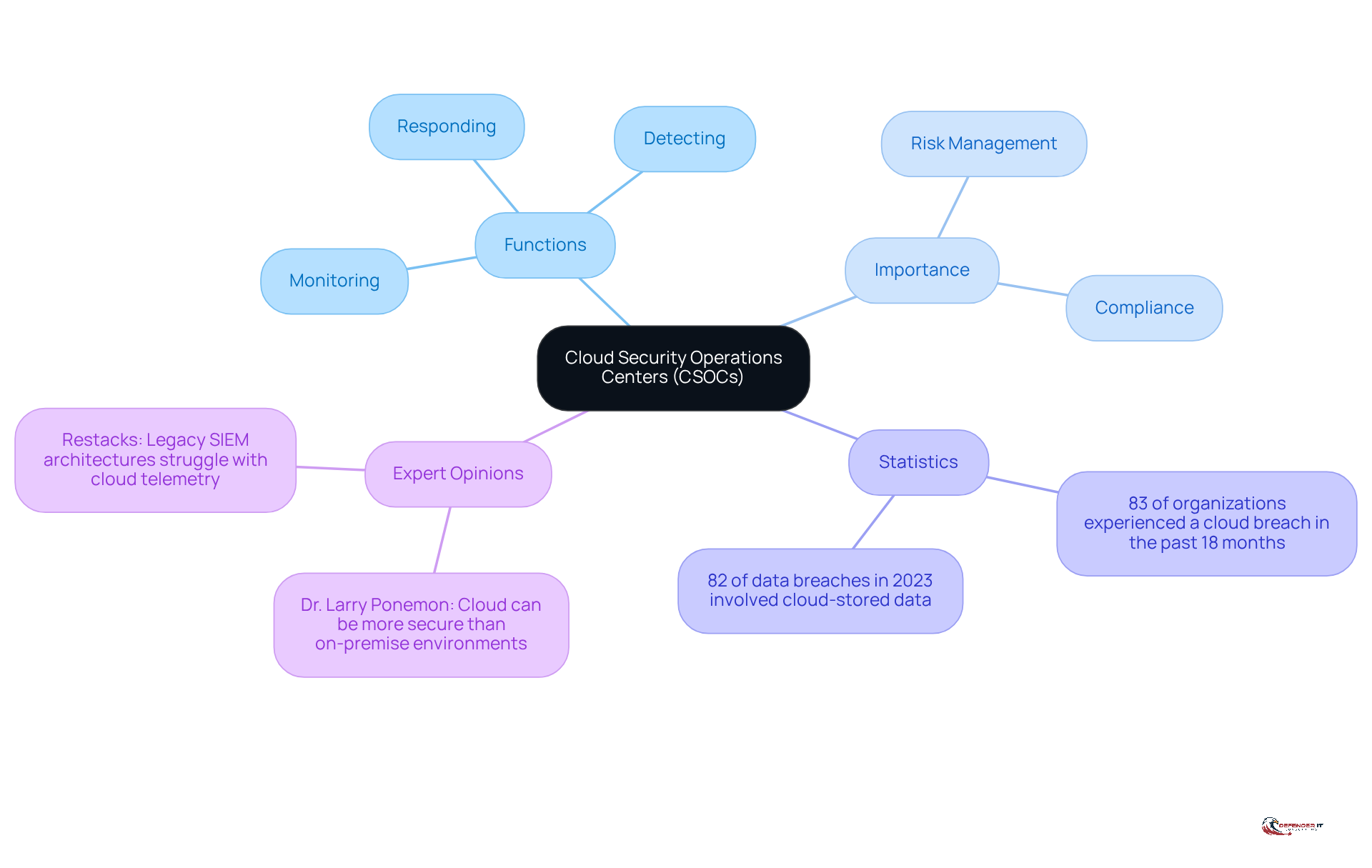
A (CSOC) serves as a centralized unit dedicated to monitoring, detecting, and responding to risks in online environments. These s play a crucial role in safeguarding cloud-based assets by integrating advanced technologies and streamlined processes. Their continuous surveillance capabilities facilitate swift and , which are vital for protecting sensitive information and ensuring compliance with regulatory standards.
In an era where cyber threats are increasingly sophisticated, with in the past 18 months, a acts as the primary defense against potential breaches. This enables organizations to operate securely in the cloud. The effectiveness of organizations’ is underscored by their impact on data compliance rates; they report improved adherence to regulatory requirements when robust frameworks are in place. Notably, , underscoring the urgent need for effective s.
Real-world examples illustrate how successful s have transformed protective measures, enabling organizations to mitigate risks and respond promptly to incidents, thereby enhancing overall cybersecurity resilience. Dr. Larry Ponemon notes a shift in the perception of cloud protection, asserting that ‘.’ This statement further highlights the critical role of the in modern .
Explore Key Components and Technologies of CSOCs
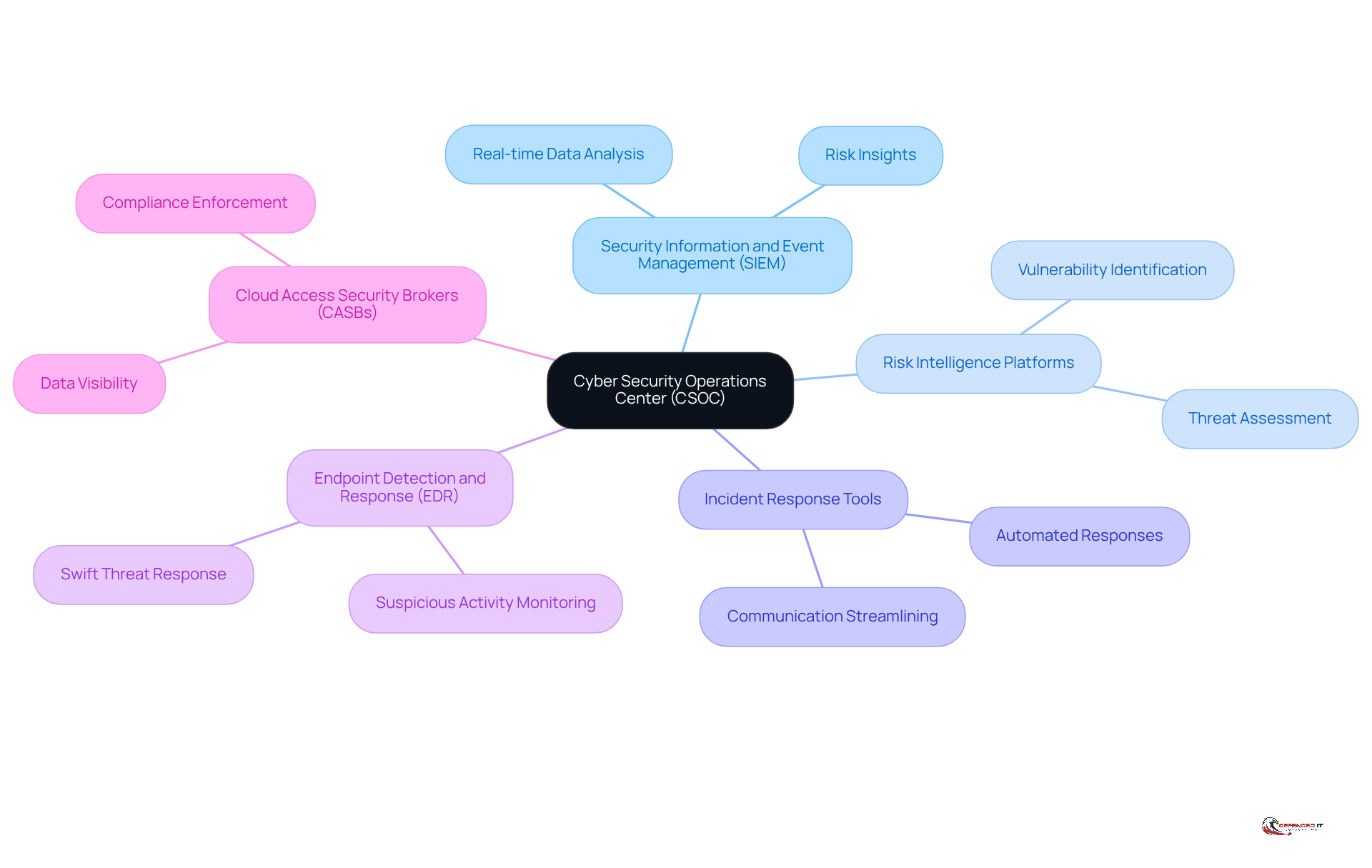
Key components of a (CSOC) are essential for effective protection of :
- : This technology collects and analyzes safety-related data from across the organization, providing real-time insights into potential risks.
- : These systems gather and assess risk data, informing defense teams about emerging threats and vulnerabilities.
- : Crucial for managing and mitigating threats, these tools automate responses and streamline communication during an attack.
- (EDR): EDR solutions monitor endpoint devices for suspicious activities, enabling swift detection and response to threats.
- (CASBs): CASBs provide visibility and control over data and applications in the cloud, ensuring compliance with .
Understanding these components is vital for constructing a that is capable of effectively .
Implement Best Practices for Building and Managing a CSOC
To build and manage an effective , organizations should adopt the following :
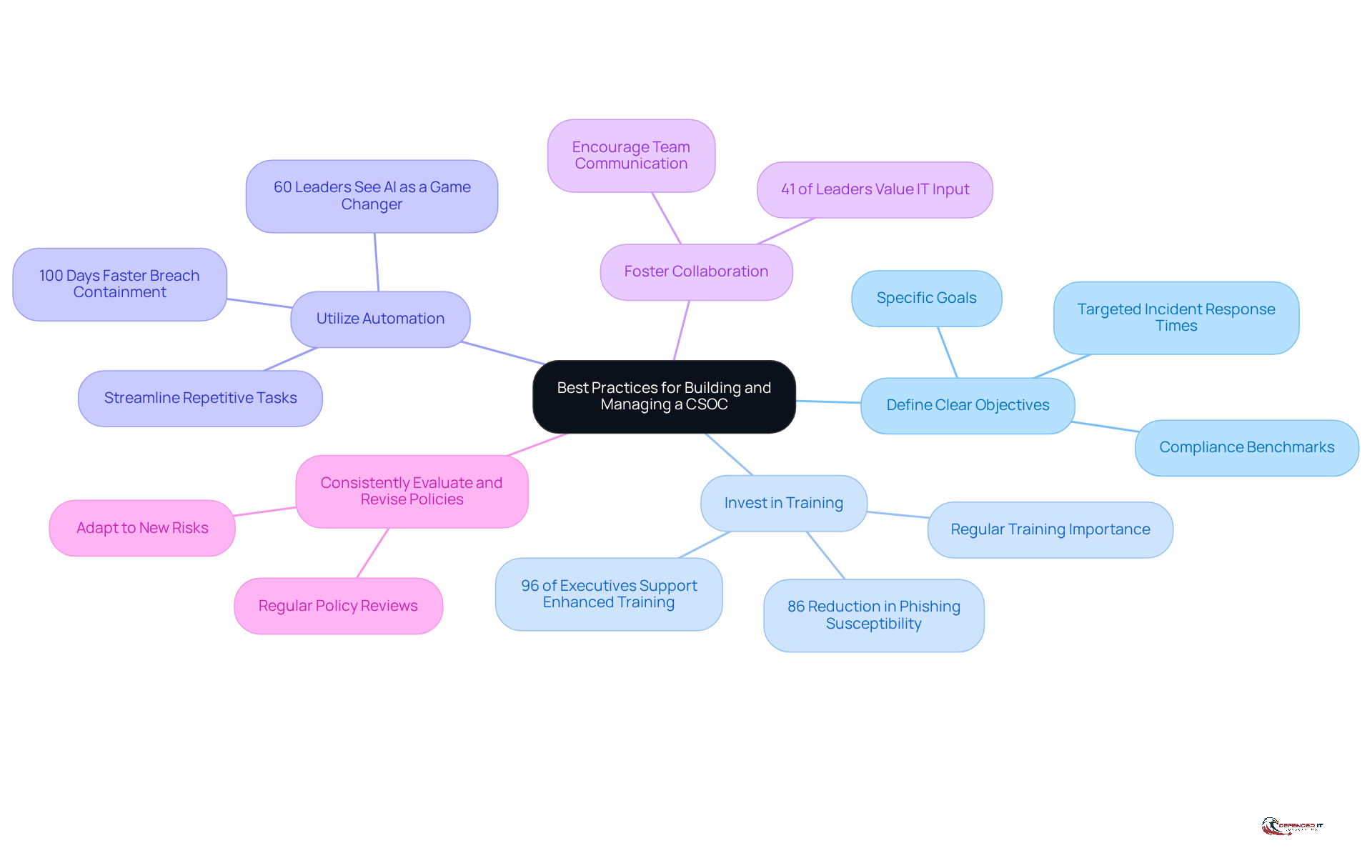
- : Establish specific goals for the CSOC, such as targeted times and compliance benchmarks. This clarity helps align team efforts and measure success effectively.
- Invest in Training: Regular training is crucial for staff to stay updated on the latest cybersecurity threats and response techniques. Research indicates that organizations with can by up to 86%. Furthermore, 96% of executives believe that would significantly reduce cyberattacks, underscoring the importance of a robust training framework.
- Utilize Automation: Implement automation tools to streamline repetitive tasks, allowing analysts to concentrate on more complex safety challenges. Organizations that extensively use AI and automation have reported a reduction in the average time to identify and contain data breaches by nearly 100 days, showcasing the efficiency gained through these technologies. At least 6 in 10 leaders in the field believe AI will be a ‘game changer’ across all functions, further emphasizing the need for automation in the CSOC.
- Foster Collaboration: Encourage communication between various teams, including IT, compliance, and safety, to ensure a unified approach to protection. This collaboration is essential, as 41% of senior technology leaders indicate that in training material development, highlighting the need for integrated efforts.
- Consistently Evaluate and Revise Policies: Continuously assess and update to adapt to new risks and changes in the regulatory environment. Organizations that prioritize regular policy reviews are better positioned to respond to evolving cyber risks, ensuring compliance and operational resilience.
By implementing these , organizations can significantly enhance their CSOC’s effectiveness and resilience against , ultimately safeguarding their operations and reputation.
Address Challenges and Compliance in Cloud Security Operations
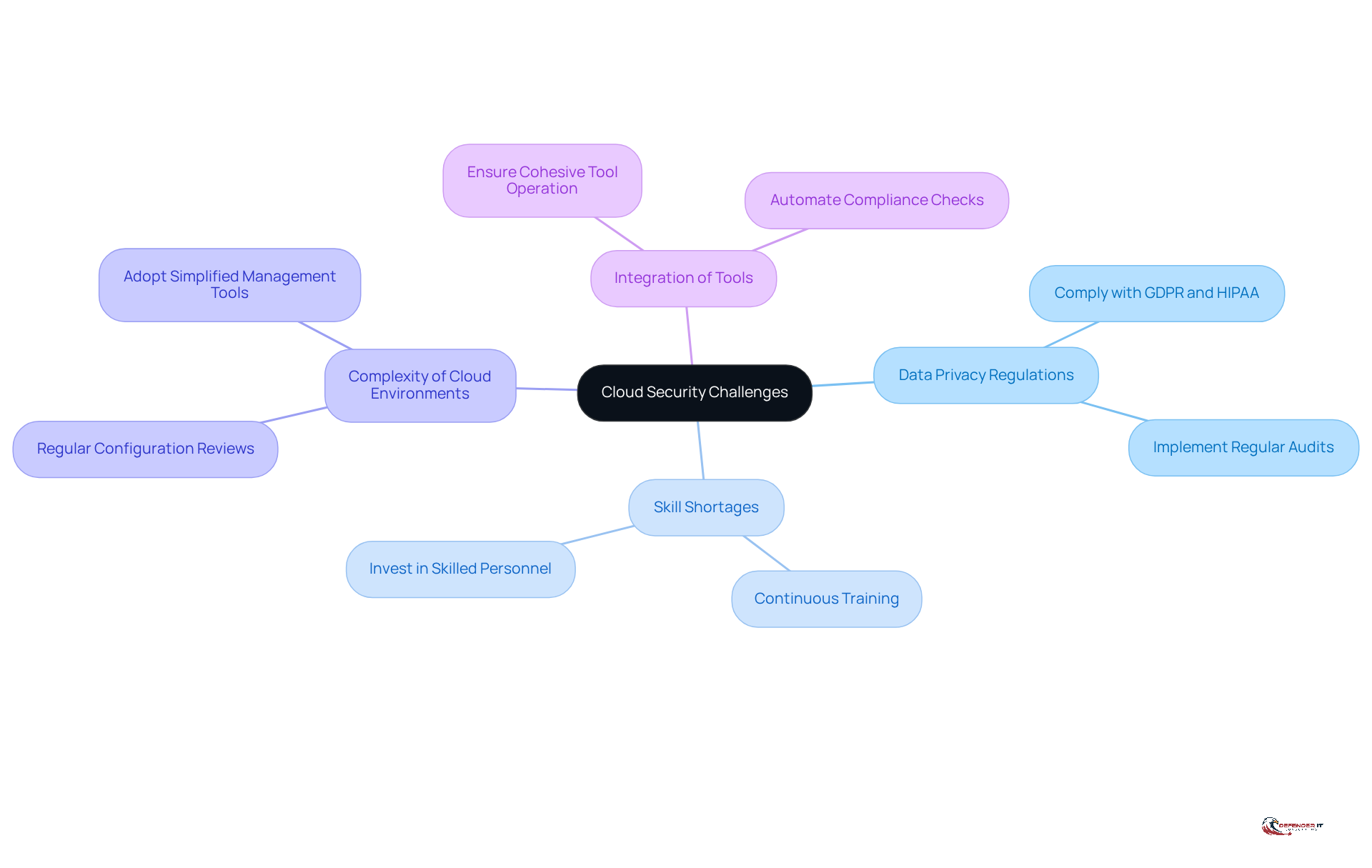
Organizations encounter several challenges in managing cloud security operations, which include:
- : Compliance with regulations such as is crucial for safeguarding sensitive data and avoiding substantial fines.
- are complicating the recruitment of qualified personnel to effectively manage cloud security operations centers (CSOCs).
- : The ever-evolving nature of cloud services can result in misconfigurations and vulnerabilities if not properly managed.
- : Ensuring that various protective tools operate cohesively presents a significant challenge, often resulting in gaps in protection coverage.
To effectively address these challenges, organizations should prioritize , invest in skilled personnel, and adopt a that includes . By proactively managing these issues, entities can enhance their and ensure adherence to relevant regulations.
Conclusion
Establishing a robust cloud security operations center (CSOC) is essential for organizations seeking to protect their cloud environments from increasingly sophisticated cyber threats. By implementing the critical steps outlined in this article, organizations can significantly enhance their ability to monitor, detect, and respond to potential risks, thereby ensuring the safety of sensitive data and compliance with regulatory standards.
This article has discussed the fundamental components and technologies that constitute effective CSOCs, including Security Information and Event Management (SIEM) systems and Incident Response Tools. It has also highlighted best practices for building and managing a CSOC, such as:
- Defining clear objectives
- Investing in training
- Utilizing automation
- Fostering collaboration
- Consistently evaluating policies
Addressing challenges like data privacy regulations and skill shortages is equally vital for maintaining a resilient security posture.
In an era where cloud breaches are alarmingly prevalent, the significance of a well-structured CSOC cannot be overstated. Organizations are urged to prioritize the development of their cloud security operations centers, not only to safeguard their assets but also to enhance their overall cybersecurity resilience. Taking proactive steps today will ensure a more secure and compliant future in the cloud.
Frequently Asked Questions
What is a Cloud Security Operations Center (CSOC)?
A Cloud Security Operations Center (CSOC) is a centralized unit dedicated to monitoring, detecting, and responding to risks in online environments, specifically focused on safeguarding cloud-based assets.
Why are Cloud Security Operations Centers important?
CSOCs are crucial for protecting sensitive information, ensuring compliance with regulatory standards, and facilitating swift incident response and proactive risk management in the face of sophisticated cyber threats.
What statistics highlight the need for Cloud Security Operations Centers?
83% of organizations experienced a cloud breach in the past 18 months, and 82% of data breaches in 2023 involved cloud-stored data, emphasizing the urgent need for effective CSOCs.
How do Cloud Security Operations Centers improve data compliance?
Organizations with robust CSOC frameworks report improved adherence to regulatory requirements, which is vital for maintaining data compliance.
Can Cloud Security Operations Centers enhance cybersecurity resilience?
Yes, successful CSOCs have transformed protective measures, enabling organizations to mitigate risks and respond promptly to incidents, thereby enhancing overall cybersecurity resilience.
What perspective does Dr. Larry Ponemon provide regarding cloud security?
Dr. Larry Ponemon notes a shift in the perception of cloud protection, asserting that “the cloud can be more secure than on-premise environments,” highlighting the critical role of CSOCs in modern safeguarding strategies.
List of Sources
- Define Cloud Security Operations Centers and Their Importance
- The Convergence of Cloud Security and the SOC Into 2026 (https://softwareanalyst.substack.com/p/the-convergence-of-cloud-security)
- 2025 Cloud Security Research – Latest Trends (https://cpl.thalesgroup.com/cloud-security-research)
- Top 10 Quotes About Cloud Security (https://secureworld.io/industry-news/top-10-quotes-about-cloud-security)
- 61 Cloud Security Statistics You Must Know in 2025 (https://exabeam.com/explainers/cloud-security/61-cloud-security-statistics-you-must-know-in-2025)
- 205 Cybersecurity Stats and Facts for 2026 (https://vikingcloud.com/blog/cybersecurity-statistics)
- Explore Key Components and Technologies of CSOCs
- The Top 20 Expert Quotes On Cyber Risk and Security (https://surtech.co.za/20-expert-quotes-on-cyber-risk-and-security)
- Security Information and Event Management (SIEM) Market 2033 (https://custommarketinsights.com/report/security-information-and-event-management-siem-market)
- Top 10 Quotes About Cloud Security (https://secureworld.io/industry-news/top-10-quotes-about-cloud-security)
- Modern SIEM Market to Reach $13.55 Billion by 2029, Driven by AI, Cloud-Native Platforms, and Rising Cyber Threats (https://frost.com/news/press-releases/modern-siem-market-to-reach-13-55-billion-by-2029-driven-by-ai-cloud-native-platforms-and-rising-cyber-threats)
- SIEM, Latest News, Reports & Analysis | The Hacker News (https://thehackernews.com/search/label/SIEM)
- Implement Best Practices for Building and Managing a CSOC
- Security Awareness Training: USA 2025 Statistics | Infrascale (https://infrascale.com/security-awareness-training-statistics-usa)
- Security Awareness Training Statistics 2025 [100+ Studies] | Brightside AI Blog (https://brside.com/blog/security-awareness-training-statistics-2025-100-studies)
- Cybersecurity AI statistics for 2025 with links to sources (https://cybersecstats.com/security-ai-statistics-for-2025)
- The Top 20 Expert Quotes On Cyber Risk and Security (https://surtech.co.za/20-expert-quotes-on-cyber-risk-and-security)
- Fortinet Report Finds Nearly 70% of Organizations Say Their Employees Lack Fundamental Security Awareness (https://fortinet.com/corporate/about-us/newsroom/press-releases/2024/fortinet-report-finds-70-percent-of-organizations-lack-fundamental-security-awareness-for-employees)
- Address Challenges and Compliance in Cloud Security Operations
- Cloudnosys – Modern Cloud Management Solutions (https://cloudnosys.com/blog/cloud-compliance-challenges-2026)
- Report: Compliance, security challenges persist in cloud adoption (https://scworld.com/brief/report-compliance-security-challenges-persist-in-cloud-adoption)
- Top Cloud Security Challenges Businesses Face in 2026 [Updated] – Kratikal Blogs (https://kratikal.com/blog/top-cloud-security-challenges-businesses-face)
- 20 Quotes Proving The Need for Security Integrations (https://synqly.com/moving-from-ok-to-best-in-class-20-quotes-from-experts-proving-the-need-for-security-integrations)
- Top 10 Quotes About Cloud Security (https://secureworld.io/industry-news/top-10-quotes-about-cloud-security)